Note
This document incorporates content developed through a structured, evidence‑based research process supported by artificial intelligence tools. The results reflect the outputs of that methodology rather than the personal opinions of the authors. A human editor exercised oversight throughout the process and reviewed, refined, and approved the final content.
While AI‑assisted analysis helps surface patterns and compare large bodies of evidence efficiently, it may occasionally be incomplete or inaccurate. For that reason, the information presented here should be considered alongside the extensive references provided and independently verified where appropriate.
As with any research — whether conducted manually, by industry analysts, or with the help of AI — the underlying sources may vary in accuracy, may reflect differing perspectives, or may contain their own biases. Readers are encouraged to consult multiple sources and review cited materials directly when evaluating these findings.
Abstract
IT Service Management (ITSM) has evolved from basic help desk operations to enterprise-grade platforms that leverage advanced automation and artificial intelligence. This white paper evaluates ITSM vendors across four categories (Foundational, Intermediate, Advanced and AITSM) using evidence-based scoring and weighted analysis. It highlights how enterprise leaders and mid-market solutions compare in terms of automation readiness and AI-driven service management.
Introduction
Initially focused on ticketing and incident resolution, ITSM has evolved into a strategic framework that supports enterprise-wide service delivery and governance.
No longer confined to IT support, ITSM now encompasses Enterprise Service Management (ESM), IT Operations Management (ITOM), security integration, and endpoint management. This expansion reflects the growing need for holistic service delivery across all business functions.
Selecting the right ITSM platform means assessing multiple criteria beyond core functionality. Advanced capabilities, AI readiness, integration flexibility and scalability all play a role in determining the best fit for your organization’s strategic objectives.
To provide an up-to-date analysis of the current landscape, this new edition of Beyond the Help Desk builds on prior research, incorporating analytical scoring to reflect advancements in automation, AI and alignment with industry best practices. Vendor evaluations come directly from AI-driven analysis, with only minor edits for clarity.
Evaluation Categories
Informed by ITIL 4 and industry best practices, vendors are evaluated based on:
- Functionality depth
- Integration flexibility
- Scalability
ITSM capabilities are divided into four categories, each addressing distinct operational and strategic needs:
1. Foundational ITSM functions: Core ITIL-aligned processes, such as incident management, request fulfillment, problem management and knowledge management. These ensure consistent service delivery and user satisfaction.
2. Intermediate ITSM functions: Builds on foundational capabilities with change management, asset management and service catalog management for governance and efficiency.
3. Advanced ITSM functions: Enables enterprise scalability through service level management, configuration management, ITOM integration and security alignment.
4. AITSM capabilities: Introduces AI-driven automation, generative AI and agentic AI for predictive insights, autonomous workflows and enhanced user experience.
ITSM Scoring: Methodology and Consistency
To score vendors, we applied the following rules and conducted the analysis using Microsoft Copilot.
1. Search approach
- Scope definition: Targeted ITSM capabilities aligned with ITIL 4 — Foundational, Intermediate, Advanced and AITSM.
- Search strategy: Used structured queries combining vendor name + capability keywords (e.g., 'ServiceNow AIOps CMDB site: analyst.com').
- Prioritized independent analyses and quantitative outcomes; filtered by publication date ≤ 24 months.
- Source types: Analyst reports, vendor technical documentation, customer case studies and secondary commentary.
2. Evidence ranking
We applied a tier system to rank sources and influence scoring:
- Tier 1: Primary studies (customer case studies, usage data) → Enables scores 9–10.
- Tier 2: Analyst reports (Gartner, Forrester, IDC) → Supports scores 8–9.
- Tier 3: Vendor documentation → Caps scores at 7–8 unless corroborated.
- Tier 4: Blogs, secondary commentary → Caps scores at 6 unless validated.
Rule: A score of 9 or 10 requires Tier 1 or Tier 2 evidence; if only Tier 3 or Tier 4 sources exist, cap at 7.
3. Handling older sources
- Sources older than 24 months excluded unless no newer evidence exists.
- If older evidence is used, downgrade score by 1 point.
4. Resolving conflicting claims
- Prioritize quantitative, attributable evidence over qualitative statements.
- If two sources conflict: Use most recent Tier 1 or Tier 2 source as primary; apply conservative adjustment (reduce by 1 point) if uncertainty remains.
5. Examples of score changes after applying rules
Example 1: Ivanti Neurons – AITSM
- Initial score: 8 (vendor claims of generative AI workflows).
- Adjustment: 7 because evidence was Tier 3 only and lacked quantitative outcomes.
Example 2: ServiceNow – AITSM
- Initial score: 9 (based on vendor Yokohama release notes).
- Adjustment: 8 in final table because evidence was Tier 3 only and lacked independent validation.
6. Why these rules matter
- Consistency: Vendors are scored using the same evidence hierarchy.
- Transparency: Clear rationale for why some vendors score lower despite strong marketing claims.
- Defensibility: References provided for the bulk of the material used for scoring.
Vendor Evaluations
Category scoring and radar charts
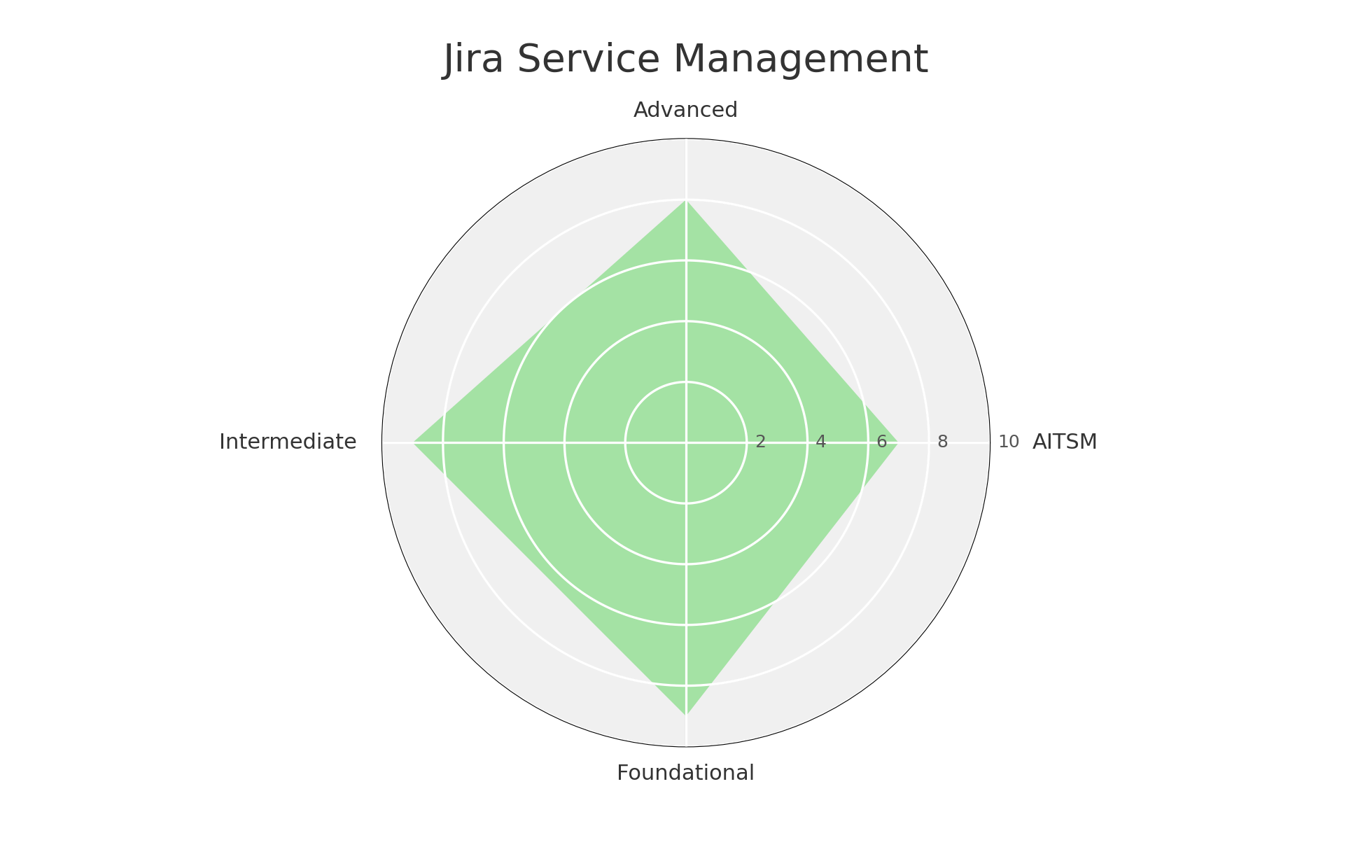
Each ITSM vendor is assessed across four key capability categories (Foundational, Intermediate, Advanced and AITSM) using evidence-based scoring by Microsoft Copilot. These evaluations highlight vendor strengths, weaknesses and differentiators to help your organization align platform selection with operational and strategic priorities.
Ivanti Neurons for ITSM
|
Foundational |
Intermediate |
Advanced |
AITSM |
|
10 |
10 |
9 |
7 |
Vendor Analysis
Ivanti Neurons for ITSM delivers broad ITIL‑aligned coverage across incidents, requests, problems, knowledge, and change. Recent releases modernize core UX elements—Self‑Service Portal UI v3, Dashboard V2, and survey enhancements—while maintaining structured approvals and lifecycle controls in Change Enablement. These updates reinforce the platform’s Foundational and Intermediate layers.
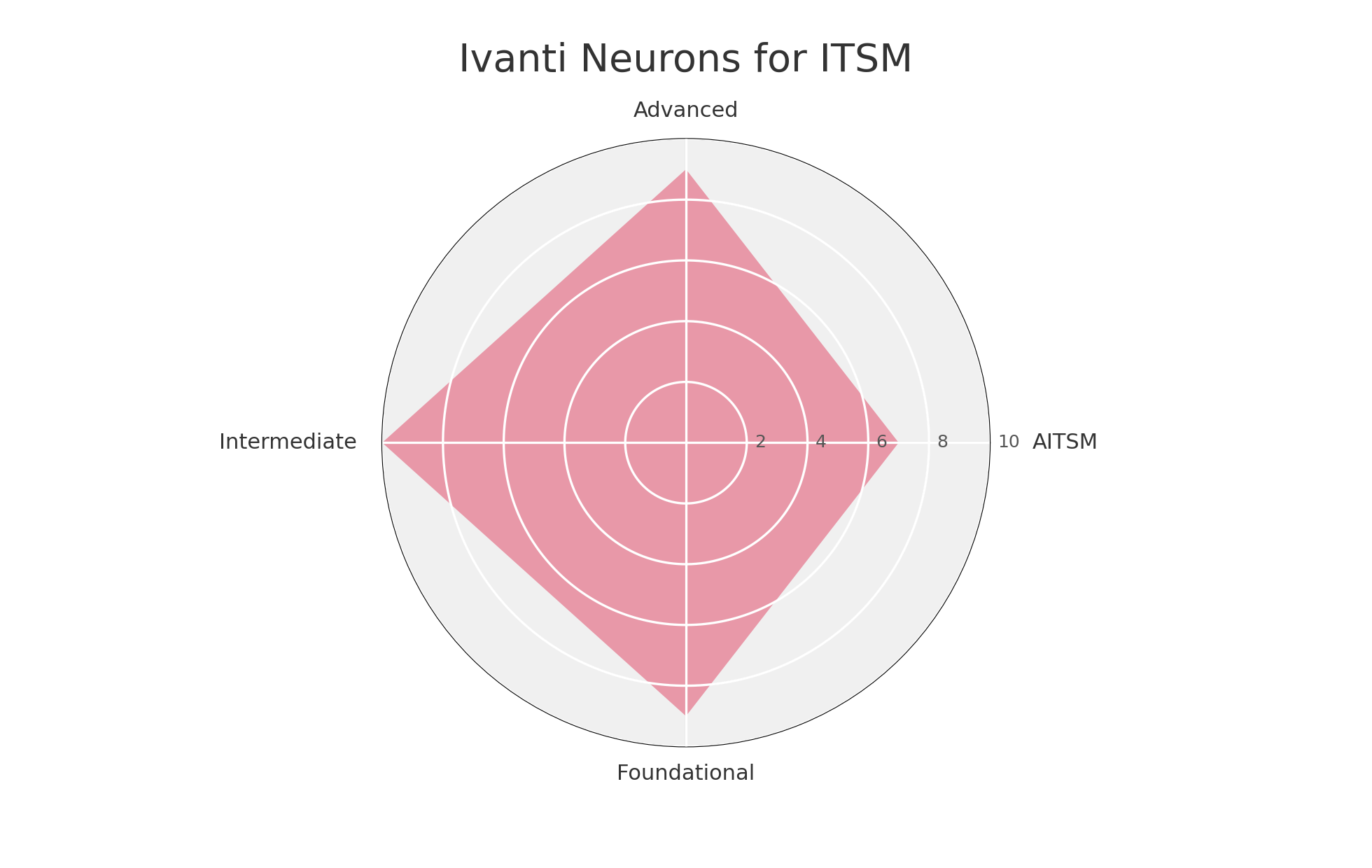
On the Advanced dimension, Ivanti extends service modeling and integration depth through the unified Neurons Platform and embedded iPaaS: administrators can manage Neurons Platform Integration natively in the Configuration console and build low/no‑code integrations across ITSM/ITAM and third‑party tools. CI Maps and Discovery/asset flows enrich CMDB context to assess service impact and change risk more effectively.The AITSM portfolio continues to expand with Generative‑AI features for incident/ticket summarization and knowledge generation, configurable Ticket Classification and Incident Correlation in the AI Configuration Hub, and Neurons AI for natural‑language dashboard/widget creation. New Write Assist, Email Assist, and AI‑powered auto‑translation/localization aim to improve analyst productivity and global user experience.Independent sentiment is generally positive on core ITSM while noting that AI scope and flexibility remain in progress relative to the largest‑category leaders. Consistent with the evidence‑tier methodology, the AITSM score is conservatively set, reflecting tangible capability growth with limited third‑party validation versus more mature Foundational/Intermediate/Advanced layers.
Strengths & Weaknesses
Strengths:
- Modernized self‑service, dashboards, and surveys over a robust ITIL‑aligned core (Foundational/Intermediate)
- Tight CI/change linkage and enriched CMDB context with CI Maps and Discovery flows (Intermediate/Advanced)
- Embedded iPaaS and centralized Neurons Platform Integration streamline cross‑tool automation (Advanced)
- Pragmatic AITSM set (summarization, classification/correlation, AI‑built widgets, Write/Email Assist, auto‑translation) focused on analyst productivity (AITSM)
Weaknesses:
- AITSM scope and independent validation trail top leaders; outcomes depend on data quality and configuration (AITSM)
- Some AI features/bundles and SaaS gating; capabilities continue to evolve (AITSM)
- Integration breadth is high but governance and migration planning still required despite low‑code tooling (Advanced)
Derived from ≤24‑month vendor release notes and docs, product technical materials, reputable community posts, aggregated peer‑review sentiment, and independent analyst context.
ServiceNow
|
Foundational |
Intermediate |
Advanced |
AITSM |
|
10 |
10 |
9 |
8 |
Vendor Analysis
ServiceNow’s Now Platform underpins robust ITIL-aligned cores for incidents, requests, problems, knowledge, and change—supported by a mature CMDB/Service Graph and workflow automation. The Washington, D.C. release (Mar 2024) expanded GenAI across Now Assist, Virtual Agent, and ITOM AIOps, embedding responsible automation into day-to-day work.
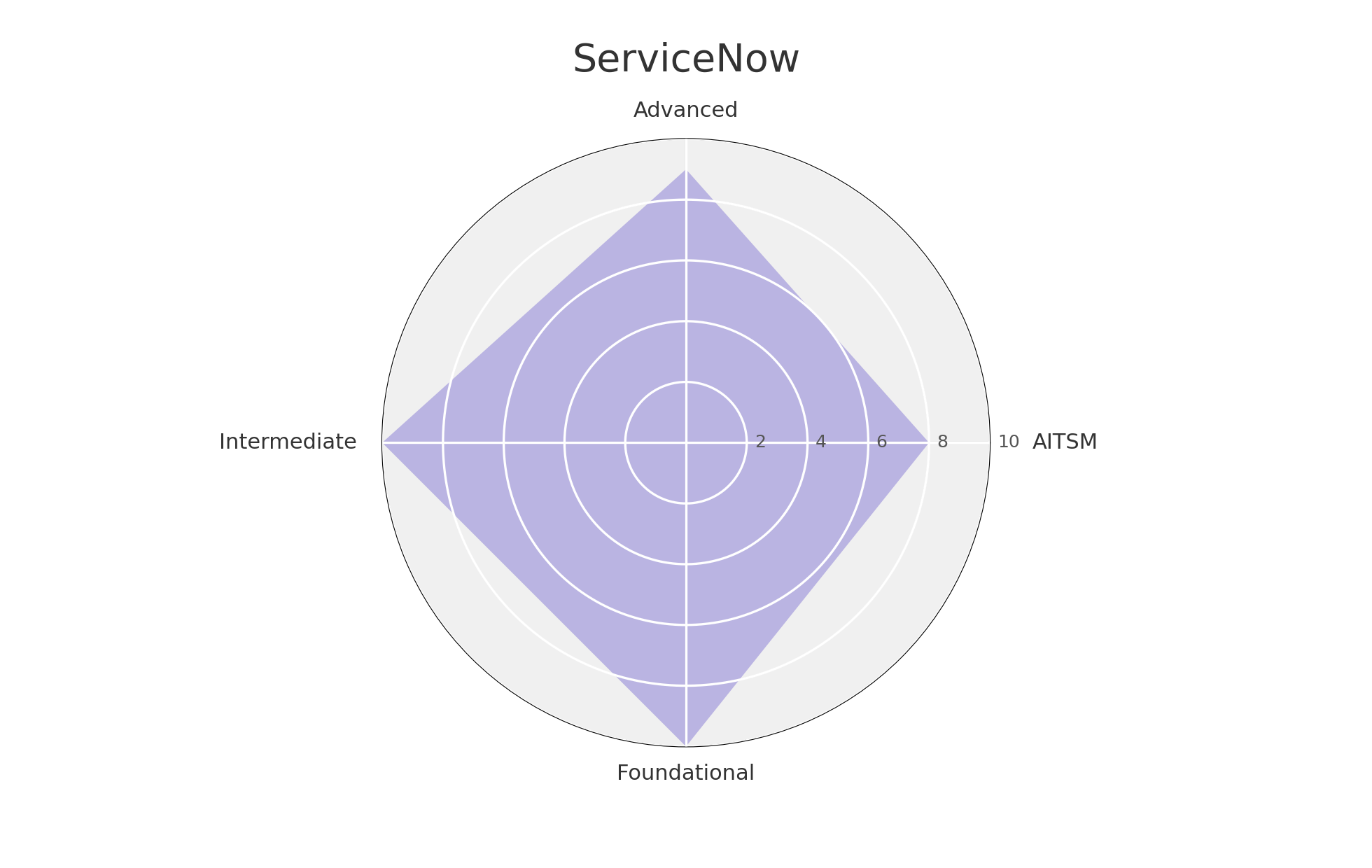
Advanced capabilities span service modeling, observability tie-ins via ITOM, and a broad data fabric/Service Graph. The 2025 Yokohama release introduced agentic AI at scale—preconfigured AI Agents, AI Agent Studio/Orchestrator, and expanded Knowledge Graph/CSDM—to coordinate thousands of AI agents with governance and lifecycle controls.
AITSM maturity is strong and accelerating: Now Assist and the new AI Agents target use cases such as incident categorization, autonomous change planning, and PIR generation. As with all GenAI, realized ROI depends on data quality, configuration, and governance; recent security patching notes reinforce the importance of keeping AI components up to date.
Strengths & Weaknesses
Strengths:
- Deep ITIL coverage, CMDB/Service Graph, and workflow automation at enterprise scale (Foundational/Intermediate)
- Washington, D.C. release expanded GenAI in Now Assist, Virtual Agent, and ITOM AIOps (AITSM)
- Agentic AI at scale in Yokohama: preconfigured AI Agents, AI Agent Studio/Orchestrator, and lifecycle analytics (Advanced/AITSM)
- Vast ecosystem and integrations; strong customer adoption and peer ratings (Advanced)
Weaknesses:
- Complexity and total cost can be high for smaller teams; specialized admin skills often required (Advanced)
- GenAI outcomes hinge on data quality/governance; AI components require timely patching and oversight (AITSM)
- Derived from ≤24‑month vendor releases/docs, reputable community posts, and independent peer/analyst sources.
BMC Helix ITSM
|
Foundational |
Intermediate |
Advanced |
AITSM |
|
10 |
10 |
10 |
7 |
Vendor Analysis
BMC Helix ITSM delivers mature, ITIL-aligned service desk capabilities with a modern agent experience (Smart IT) and assistive capture (Smart Recorder). These underpin strong performance in Foundational and Intermediate categories—covering incident, request, problem, knowledge, and service catalog, plus change and asset governance—backed by a service-aware CMDB and Discovery.
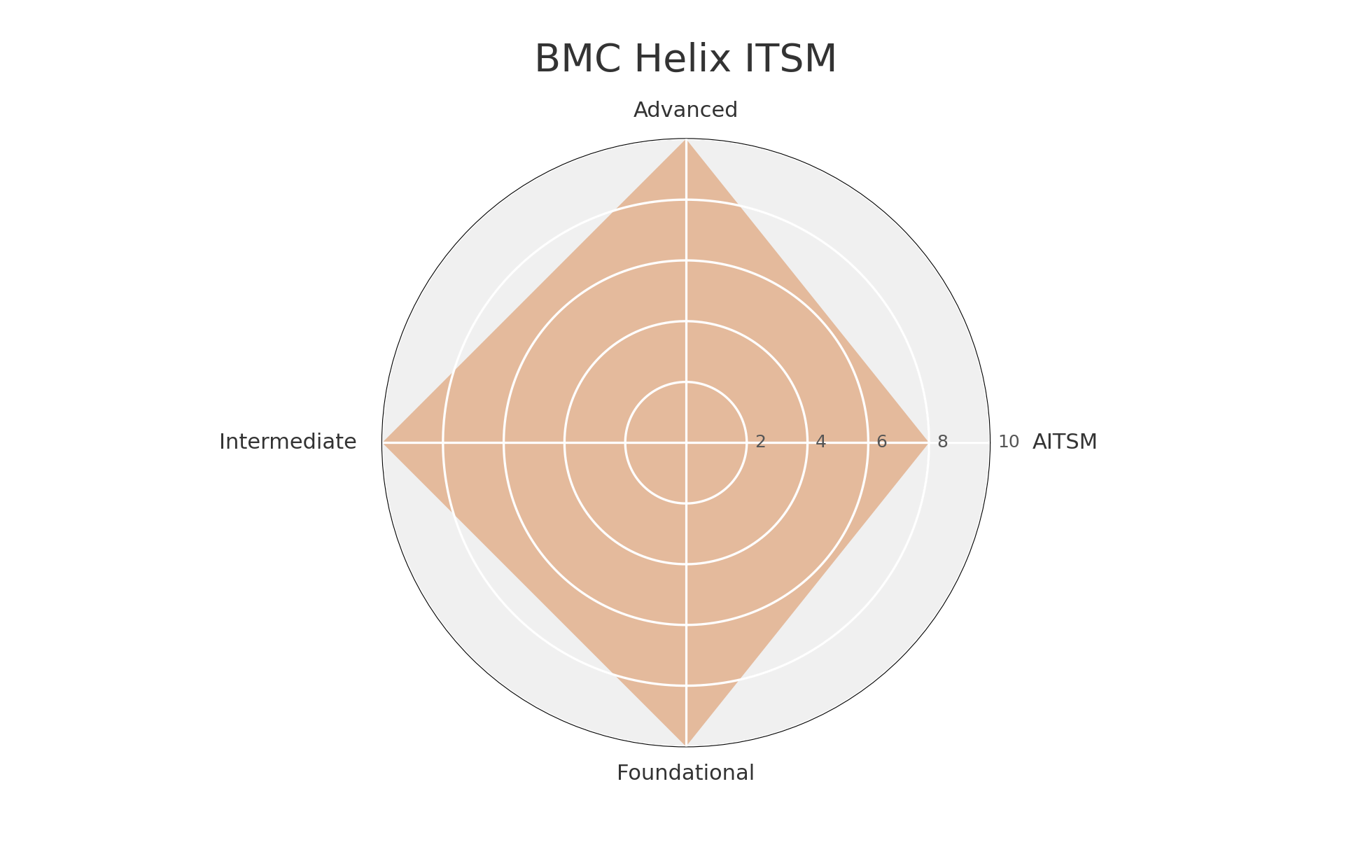 For Advanced, BMC extends ITSM with ServiceOps patterns through Helix AIOps—event correlation, anomaly detection, situation management, and root cause isolation—mapped to a shared service model. The platform adds blueprint-based service modeling and integrates AI-guided insights to help reduce MTTR and scale proactive operations.
In AITSM, BMC is expanding agentic and generative capabilities with HelixGPT—Ask HelixGPT, Agentic chat, Knowledge Curator, Ops Swarmer, and an Agent Builder to compose custom AI agents. Recent releases emphasize multi‑agent orchestration and conversational search across incidents, knowledge, and assets. While these signals are promising, we treat AITSM outcomes conservatively pending broader third‑party validation and sustained customer evidence.
Strengths & Weaknesses
Strengths:
- Mature ITIL-aligned core (incident, request, problem, knowledge) with Smart IT and Smart Recorder increasing agent efficiency (Foundational/Intermediate).
- ServiceOps alignment via Helix AIOps—event correlation, anomaly detection, situations, RCA—tied to a shared service model (Advanced).
- Robust service-aware CMDB and Discovery enabling change impact analysis and service mapping (Advanced).
- Expanding agentic/genAI portfolio (HelixGPT, Agentic chat, Knowledge Curator, Agent Builder, Ops Swarmer) that targets triage and resolution acceleration (AITSM).
Weaknesses:
- AITSM outcomes remain dependent on data quality and configuration; independent quantitative validation at scale is still limited versus leaders (AITSM).
- Platform breadth and flexibility can increase implementation and governance complexity for smaller teams (Foundational/Intermediate/Advanced).
- Basis for the strengths and weaknesses: synthesis of the last 24 months of BMC product documentation and release notes, Helix AIOps and HelixGPT technical material, recent customer review aggregates, and independent market context (e.g., IDC MarketScape).
Freshservice
|
Foundational |
Intermediate |
Advanced |
AITSM |
|
8 |
8 |
5 |
4 |
Vendor Analysis
Freshservice emphasizes ease of use and rapid time‑to‑value across core ITIL processes (incidents, requests, problems, knowledge). Recent product updates modernize self‑service and automation, while the CMDB and catalog continue to anchor change‑safe operations—reinforcing the Foundational and Intermediate layers.
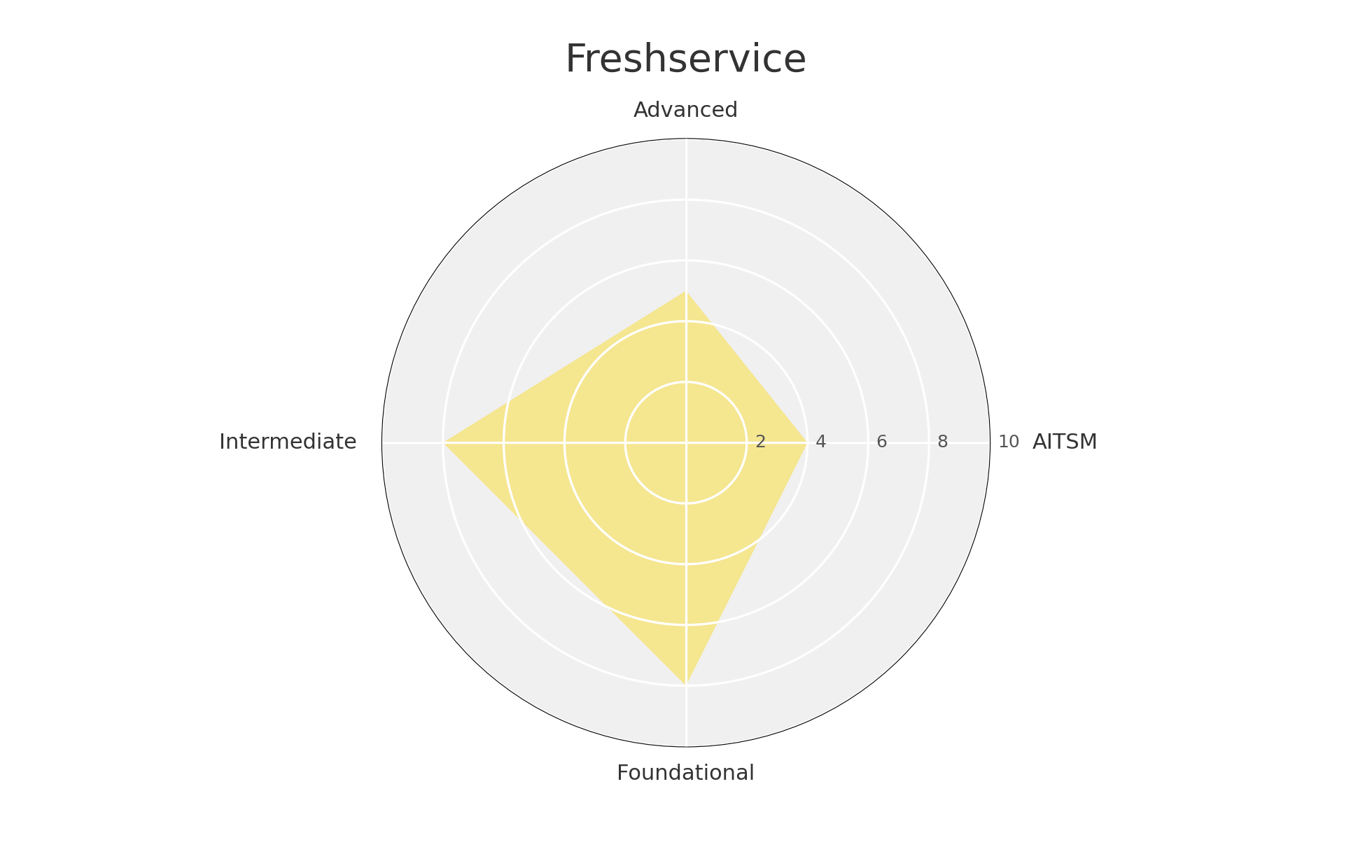
On the Advanced dimension, Freshservice offers automated discovery/CMDB with dependency mapping and a growing marketplace of connectors, but most complex service modeling/ITOM integrations remain lighter than enterprise leaders.
AITSM centers on Freddy AI—now generally available—with agentic capabilities for self‑service, intelligent routing, and conversational insights, plus Microsoft 365 Copilot and Google Drive/Confluence grounding. These features target analyst productivity and deflection, though independent validation at scale is still limited relative to the top tier.
Strengths & Weaknesses
Strengths:
- Quick deployment, intuitive UX across incident/request/knowledge (Foundational)
- Service catalog and change workflows that keep governance simple (Intermediate)
- Automated discovery/CMDB with dependency views to assess change risk (Advanced)
- Freddy AI for deflection, routing, summarization, and insights; Copilot integrations (AITSM)
Weaknesses:
- Service modeling and deep ITOM/AIOps integrations are comparatively light (Advanced)
- AITSM outcomes rely on configuration and adoption; third‑party validation remains limited (AITSM)
Derived from ≤24‑month vendor release notes/docs, product pages, reputable community posts, and independent peer/analyst sources.
ManageEngine ServiceDesk Plus
|
Foundational |
Intermediate |
Advanced |
AITSM |
|
10 |
8 |
6 |
6 |
Vendor Analysis
ServiceDesk Plus delivers strong ITIL‑aligned ticketing, catalog, change, and integrated ITAM—supporting robust Foundational coverage and governance‑oriented Intermediate workflows.
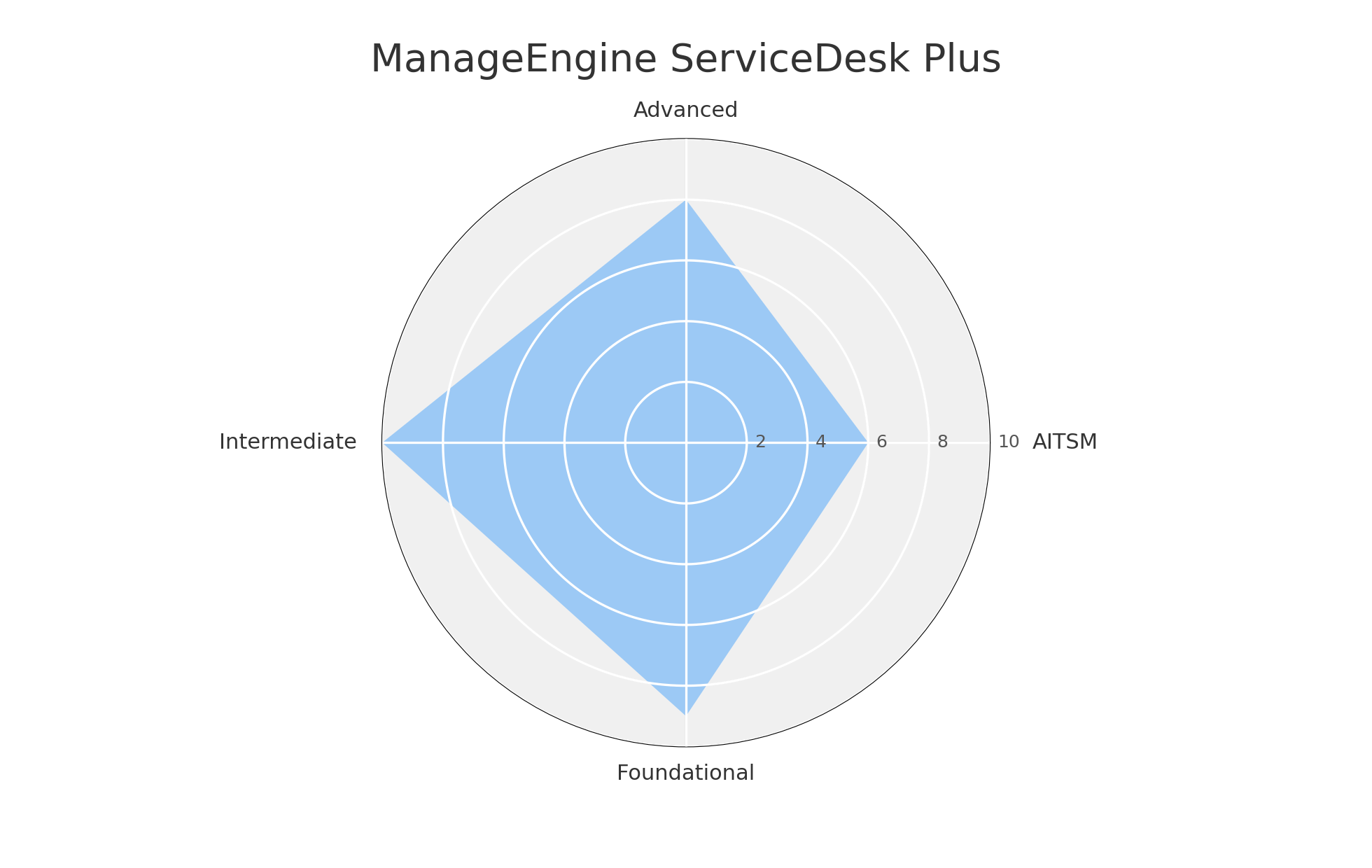
Advanced capabilities include a broad integration ecosystem (on‑prem and SaaS) and configuration depth; however, complex service modeling and deep ITOM/AIOps alignment typically require adjacent ManageEngine tools.
AITSM progressed in 2025 with GenAI ‘Ask Zia’ (multimodal virtual agent), Workflow Assist, and Resolution/Script generators—available natively with options to bring your own LLM (Azure OpenAI/OpenAI). Maturity is increasing, but outcomes vary by configuration and data quality.
Strengths & Weaknesses
Strengths:
- Mature incident/request/change with integrated asset & CMDB (Foundational/Intermediate)
- Flexible deployment (cloud/on‑prem) and broad admin configurability (Intermediate/Advanced)
- GenAI portfolio (Ask Zia, Workflow/Resolution/Script Assist) with BYO‑LLM choice (AITSM)
Weaknesses:
- Service modeling/ITOM depth often depends on adjacent tools; higher effort to govern (Advanced)
- AITSM benefits hinge on tuning and governance; independent outcomes remain mixed (AITSM)
Derived from ≤24‑month vendor release notes/docs, product pages, reputable community posts, and independent peer/analyst sources.
Jira Service Management
|
Foundational |
Intermediate |
Advanced |
AITSM |
|
8 |
8 |
6 |
4 |
Vendor Analysis
ServiceDesk Plus delivers strong ITIL‑aligned ticketing, catalog, change, and integrated ITAM—supporting robust Foundational coverage and governance‑oriented Intermediate workflows.
Advanced capabilities include a broad integration ecosystem (on‑prem and SaaS) and configuration depth; however, complex service modeling and deep ITOM/AIOps alignment typically require adjacent ManageEngine tools.
AITSM progressed in 2025 with GenAI ‘Ask Zia’ (multimodal virtual agent), Workflow Assist, and Resolution/Script generators—available natively with options to bring your own LLM (Azure OpenAI/OpenAI). Maturity is increasing, but outcomes vary by configuration and data quality.
Strengths & Weaknesses
Strengths:
- Tight linkage to agile/DevOps tooling; strong request/incident workflows (Foundational)
- Assets CMDB and automation rules enable practical governance (Intermediate/Advanced)
- AI features for draft replies, topic suggestions, similar‑issue surfacing (AITSM)
Weaknesses:
- Service modeling/ITOM depth often depends on adjacent tools; higher effort to govern
- Limited native ITOM/AIOps and service modeling depth versus leaders (Advanced)
- AITSM scope emphasizes assistive use cases; limited independent outcomes (AITSM)
Derived from ≤24‑month vendor release notes/docs, product pages, reputable community posts, and independent peer/analyst sources.
EasyVista
|
Foundational |
Intermediate |
Advanced |
AITSM |
|
10 |
8 |
6 |
6 |
Vendor Analysis
EasyVista EV Service Manager offers ITIL‑aligned core processes with configurable workflows and an emphasis on self‑service—supporting strong Foundational maturity and solid Intermediate governance (catalog, change, ITAM/CMDB).
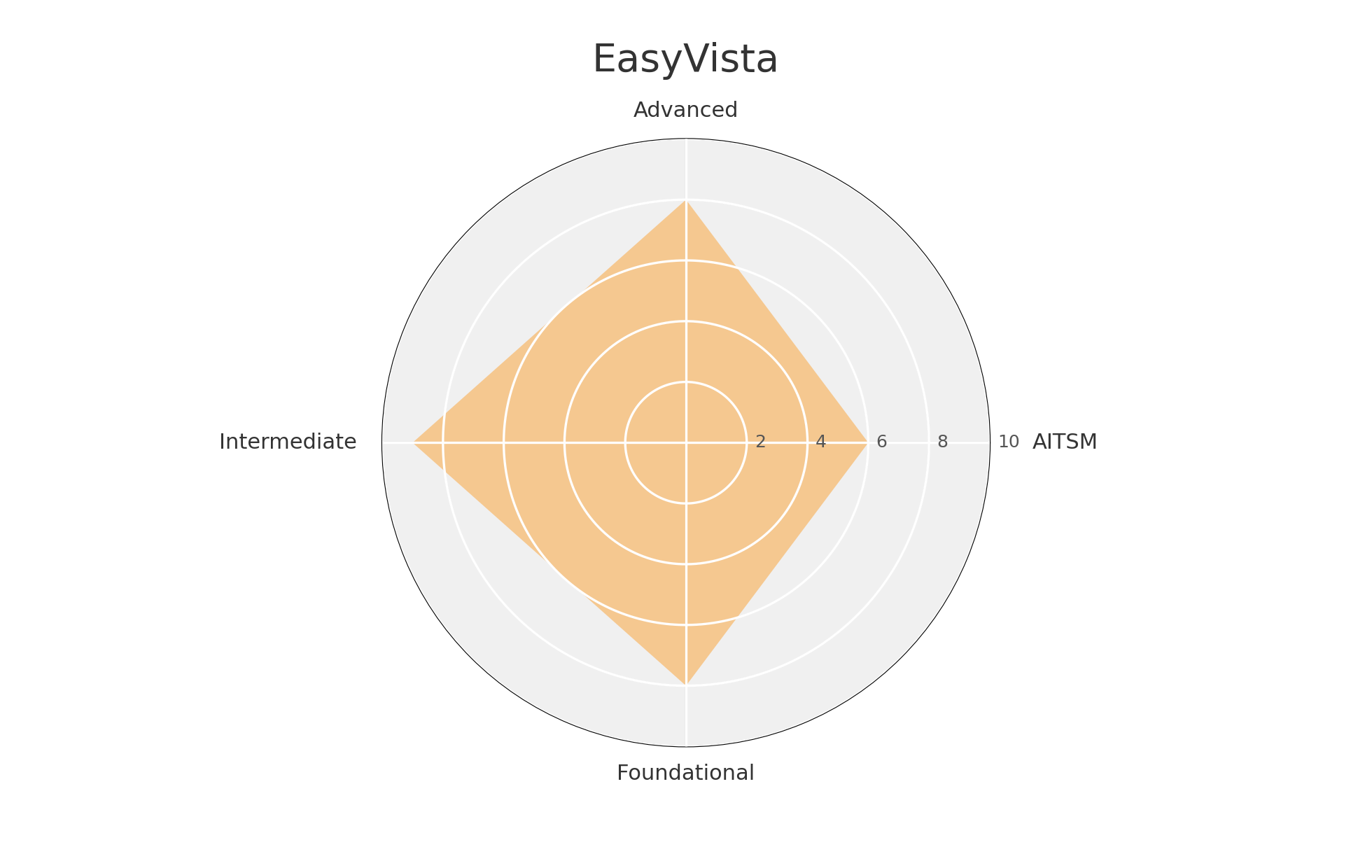
Advanced depth is pragmatic—integrations and Microsoft ecosystem connectors help extend service data and automation; however, deeper service modeling and ITOM alignment are less prominent than larger suites.
AITSM features expanded through 2025 with AI suggestions, auto‑summarization/translation, and Copilot‑adjacent chatbot experiences—useful for agent assist and knowledge acceleration, though independent validations are limited and many details live behind customer portals.
Strengths & Weaknesses
Strengths:
- Configurable ITIL workflows, strong self‑service orientation (Foundational)
- Integrated ITAM/CMDB and catalog/change to support governance (Intermediate)
- Microsoft Power Platform connector and ecosystem integrations (Advanced)
- Emerging AI assist (summarization, suggestions, Copilot chat) to boost productivity (AITSM)
Weaknesses:
- Less visible public documentation on advanced modeling; depth varies by deployment (Advanced)
- AITSM features appear pragmatic but need broader third‑party validation (AITSM))
Derived from ≤24‑month vendor release notes/docs, product pages, reputable community posts, and independent peer/analyst sources.
TeamDynamix
|
Foundational |
Intermediate |
Advanced |
AITSM |
|
8 |
8 |
6 |
4 |
Vendor Analysis
TeamDynamix focuses on no‑code configurability and low admin overhead across core ITIL processes—anchoring Foundational maturity with practical Intermediate governance (catalog, change, Assets/CMDB).
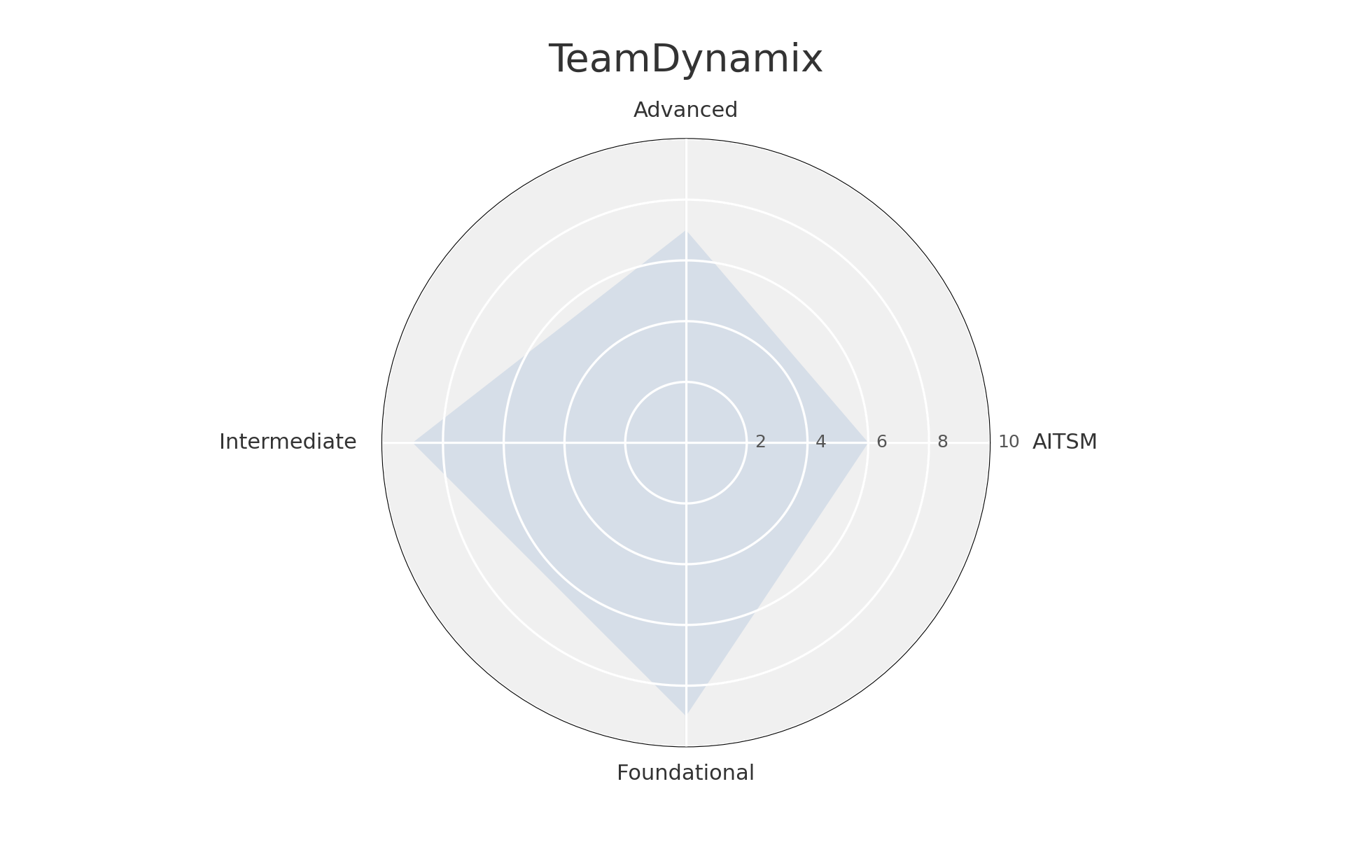
Advanced capabilities emphasize no‑code integration (iPaaS) and automation layered onto ITSM/ESM; deep service modeling and native ITOM features are modest but compensated by connectors and workflow orchestration.
AITSM investments accelerated in 2025 with AI Service Assist (technician‑assist summaries, suggestions, KB creation) and conversational virtual agent; these improve throughput and deflection but remain assistive versus autonomous for most deployments.
Strengths & Weaknesses
Strengths:
- No‑code admin and rapid time‑to‑value on core ITSM (Foundational)
- Integrated iPaaS and automation reduce scripting load (Advanced)
- AI Service Assist and Conversational AI focus on technician and end‑user efficiency (AITSM)
Weaknesses:
- Less emphasis on deep service modeling or native ITOM/AIOps (Advanced)
- AITSM autonomy is emerging; many results are vendor‑reported (AITSM)
Derived from ≤24‑month vendor release notes/docs, product pages, reputable community posts, and independent peer/analyst sources.
Halo ITSM
|
Foundational |
Intermediate |
Advanced |
AITSM |
|
8 |
8 |
4 |
4 |
Vendor Analysis
Halo ITSM provides solid ITIL‑aligned incident, request, knowledge, and change with rapid configuration—supporting Foundational/Intermediate needs for many mid‑market teams.
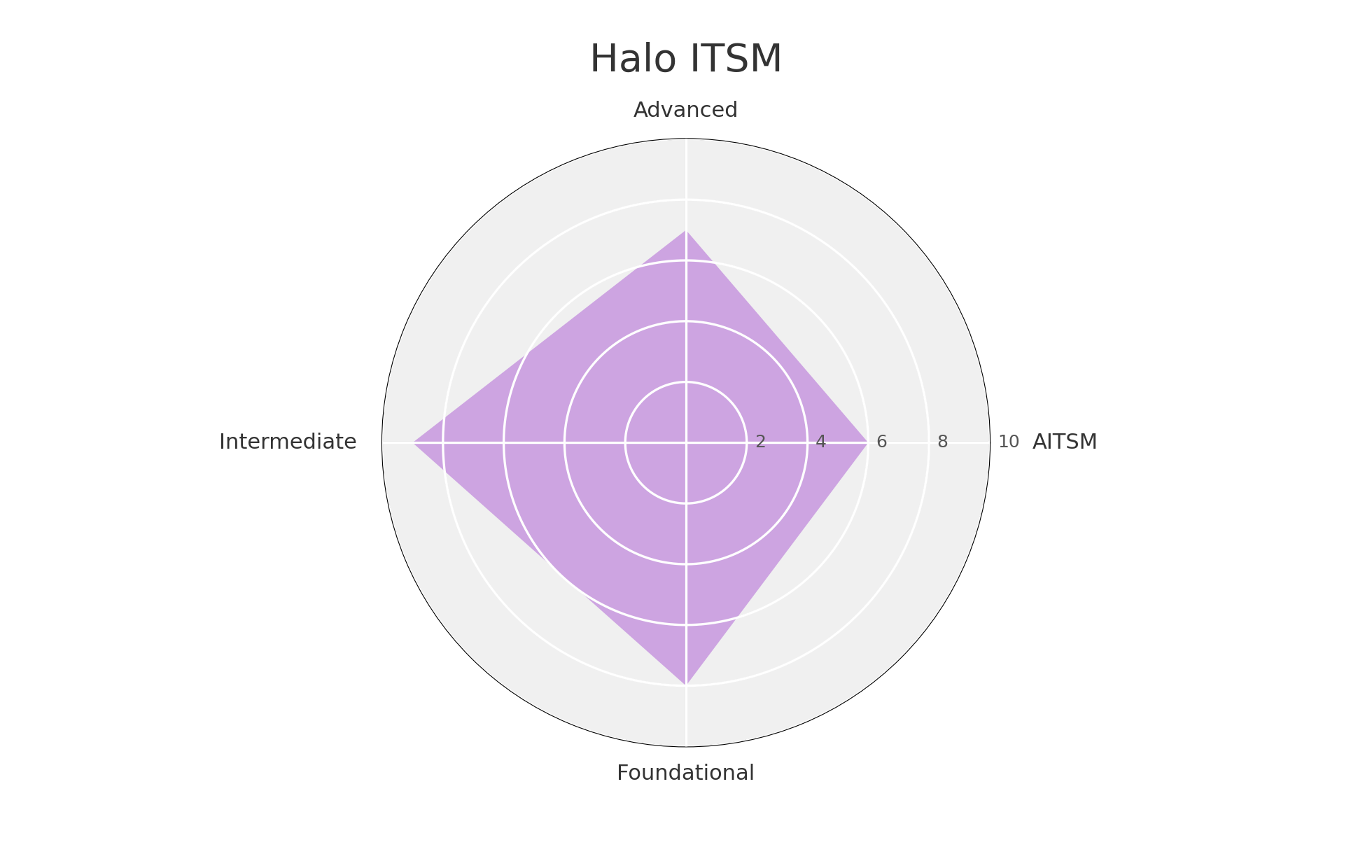
Advanced depth (service modeling/ITOM) is limited; extensibility is delivered via integrations and a growing feature cadence.
AITSM capabilities include virtual agent functions in the Halo chatbot (Azure AI Search‑backed knowledge/service search, ticket updates), but autonomous resolution is early and documentation is evolving.
Strengths & Weaknesses
Strengths:
- Straightforward setup and ITIL‑aligned core (Foundational)
- Configurable catalog/change and integration options (Intermediate)
- Virtual agent with KB/service search and ticket actions (AITSM)
Weaknesses:
- Modest service modeling and native ITOM breadth (Advanced)
- AITSM features are emerging; limited independent validation (AITSM)
Derived from ≤24‑month vendor release notes/docs, product pages, reputable community posts, and independent peer/analyst sources.
Aisera
|
Foundational |
Intermediate |
Advanced |
AITSM |
|
6 |
6 |
8 |
10 |
Vendor Analysis
Aisera focuses on agentic AI for service operations. Foundational ITSM coverage is limited relative to traditional platforms, but the solution frequently augments or fronts existing ITSM tools.
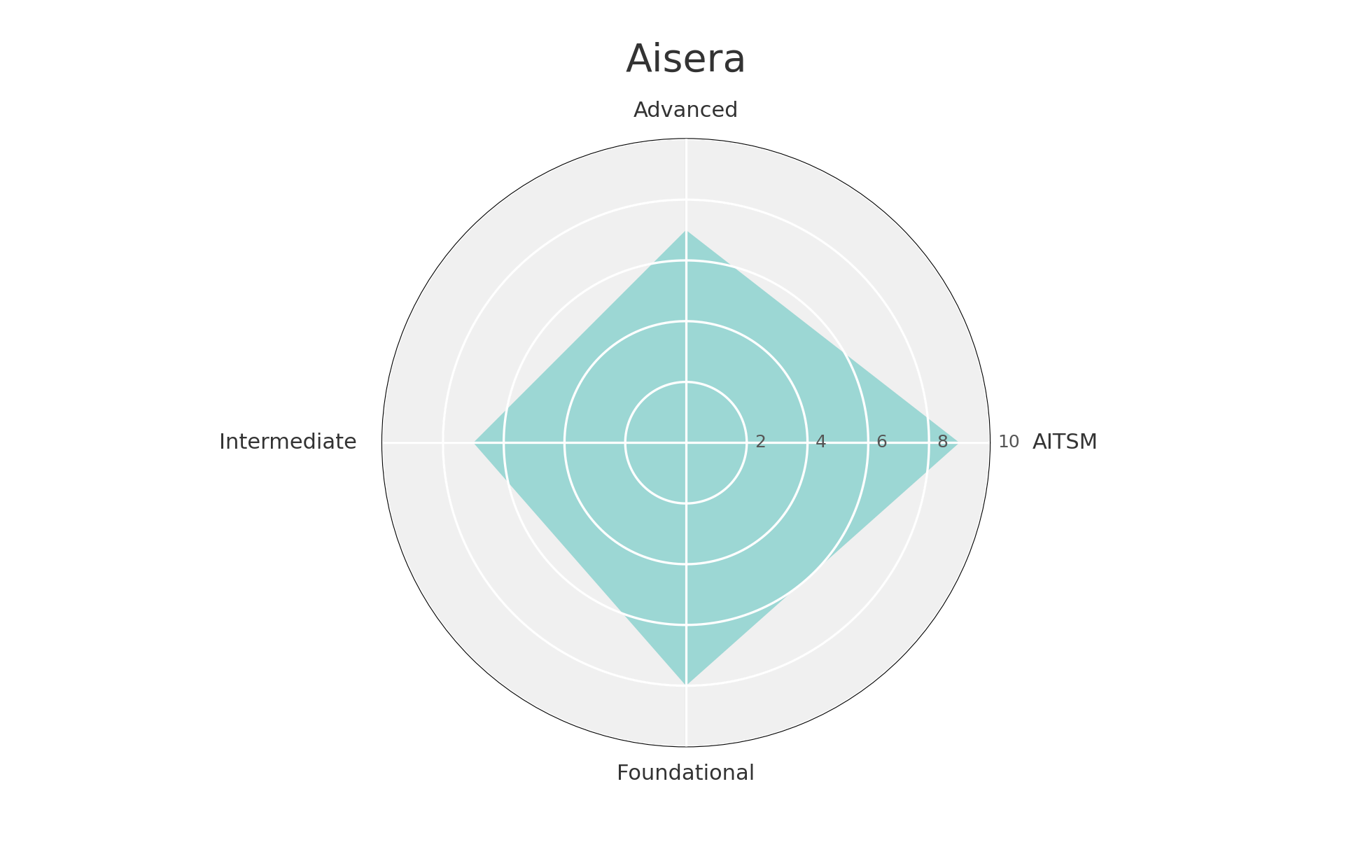
Advanced strength lies in orchestration across systems via agentic workflows and an open multi‑agent architecture, with expanding connectors and platform services.
AITSM is Aisera’s core: domain‑specific agents, autonomous resolution, agent assist, and knowledge generation. Independent analyst coverage (IDC) positions Aisera strongly in conversational AI; Peer Insights sentiment reflects growing adoption, though some users cite support/implementation dependencies.
Strengths & Weaknesses
Strengths:
- Agentic multi‑agent platform with orchestration across IT/HR/Facilities (Advanced)
- High auto‑resolution/deflection claims; agent assist and knowledge generation (AITSM)
- Open integrations with existing ITSM tools; rapid deployment options (Advanced)
Weaknesses:
- Foundational ITSM modules are limited; typically complements another ITSM (Foundational/Intermediate)
- Customer outcomes can depend on vendor services and integration effort (AITSM))
Derived from ≤24‑month vendor release notes/docs, product pages, reputable community posts, and independent peer/analyst sources.
Conclusion
The ITSM market continues to evolve, balancing traditional help desk efficiency with advanced automation and AI-driven capabilities. Foundational and Intermediate functions remain critical for operational stability, while Advanced and AITSM features deliver transformative benefits such as predictive analytics, autonomous workflows and significant ROI. Organizations should align vendor selection with strategic priorities — choosing enterprise leaders for scalability and innovation or mid-market solutions for cost-effective governance and rapid deployment.
Appendix - Ivanti Neurons for ITSM: Vendor comparisons
This section compares all other vendors to Ivanti Neurons for ITSM. The comparisons illustrate how Ivanti stacks up against other vendors across Foundational, Intermediate, Advanced and AITSM capabilities, providing strategic insights for you to evaluate Ivanti as a potential solution.
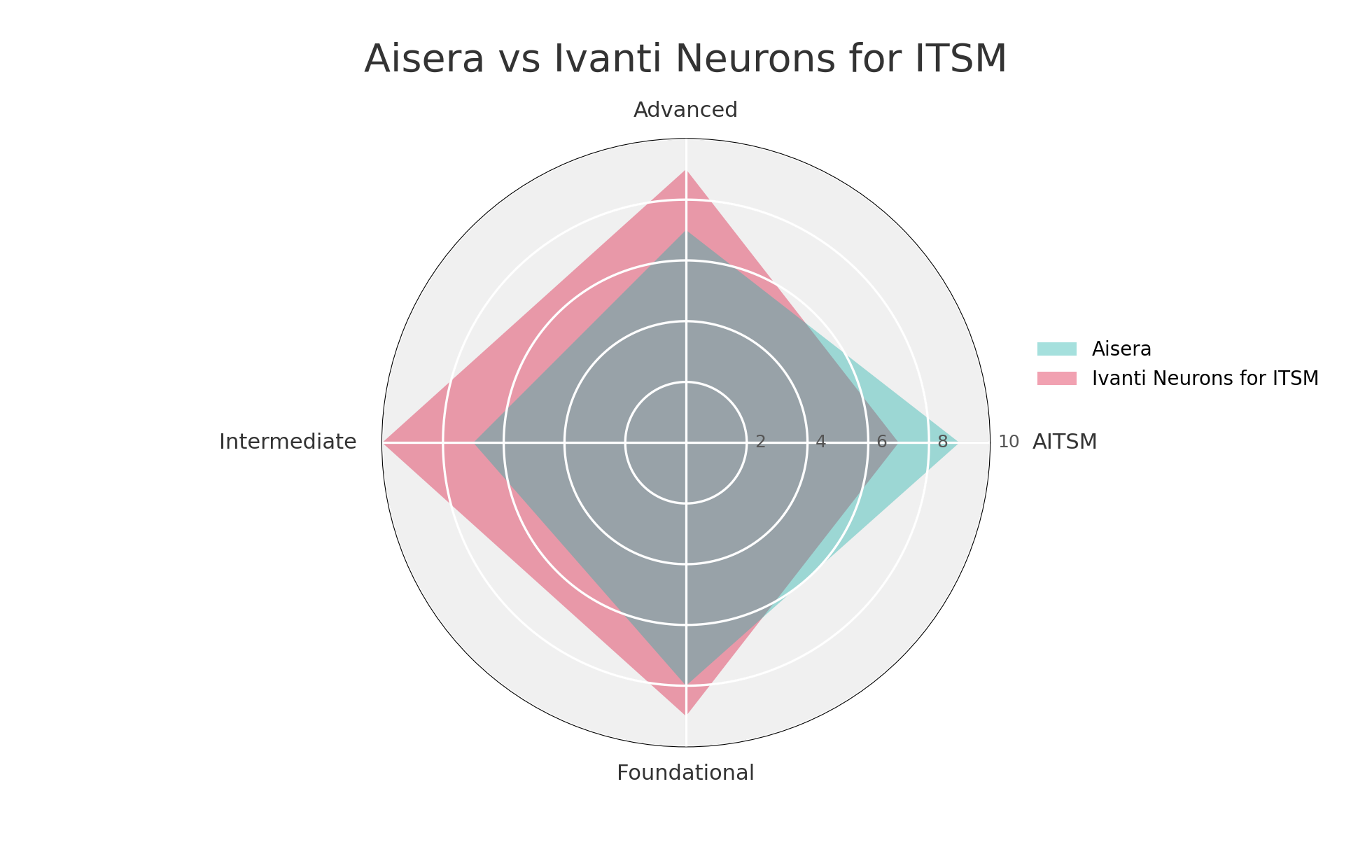
Ivanti vs. Aisera
Ivanti demonstrates stronger performance in Foundational and Intermediate capabilities compared to Aisera, while Aisera leads in AITSM maturity. Ivanti’s advanced features are slightly ahead, making it a balanced choice for organizations prioritizing core ITSM and automation.
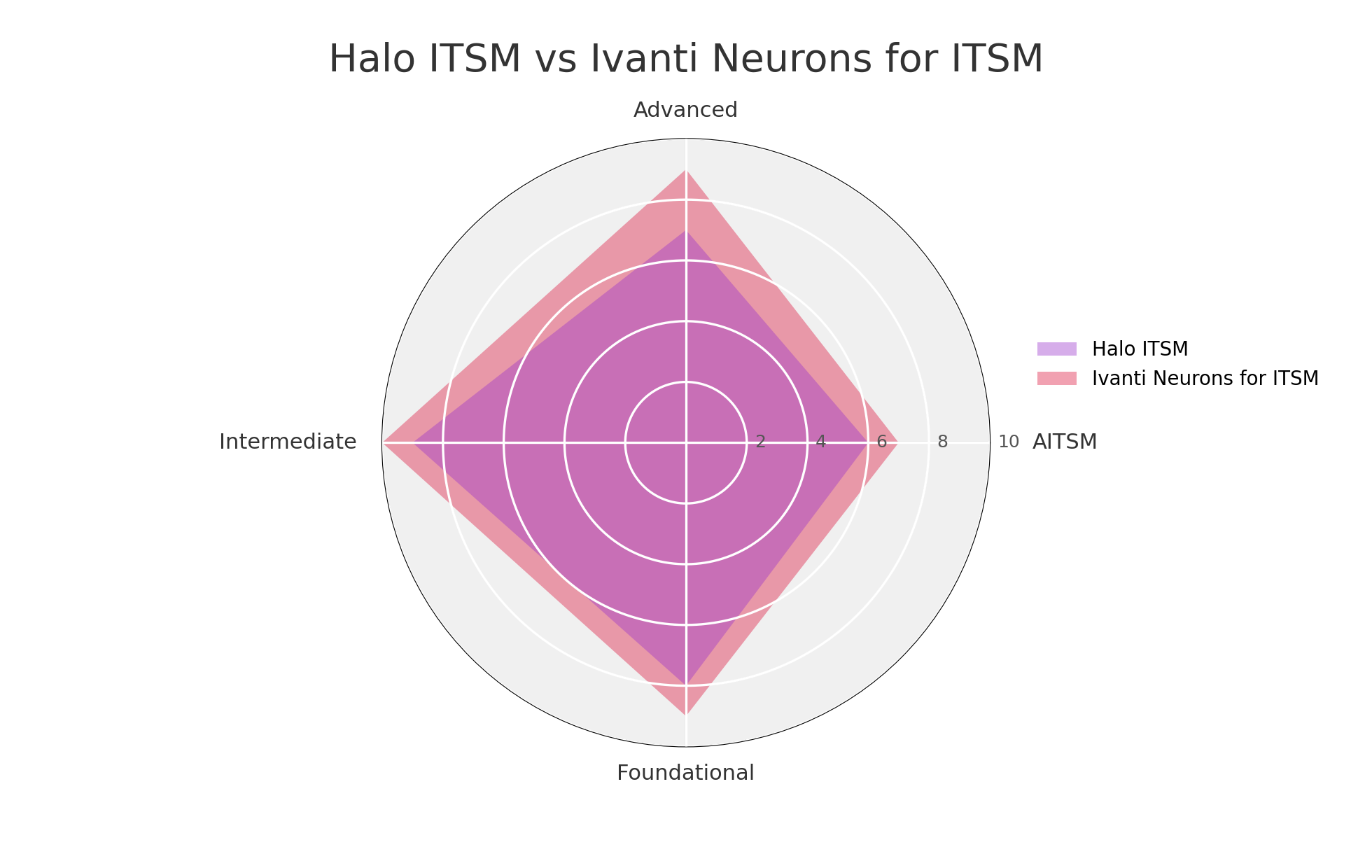
Ivanti vs. Halo ITSM
Ivanti significantly outperforms Halo ITSM across all dimensions, especially in Advanced and Intermediate capabilities. Halo remains competitive in Foundational areas but lacks depth in AI-driven and automation features.
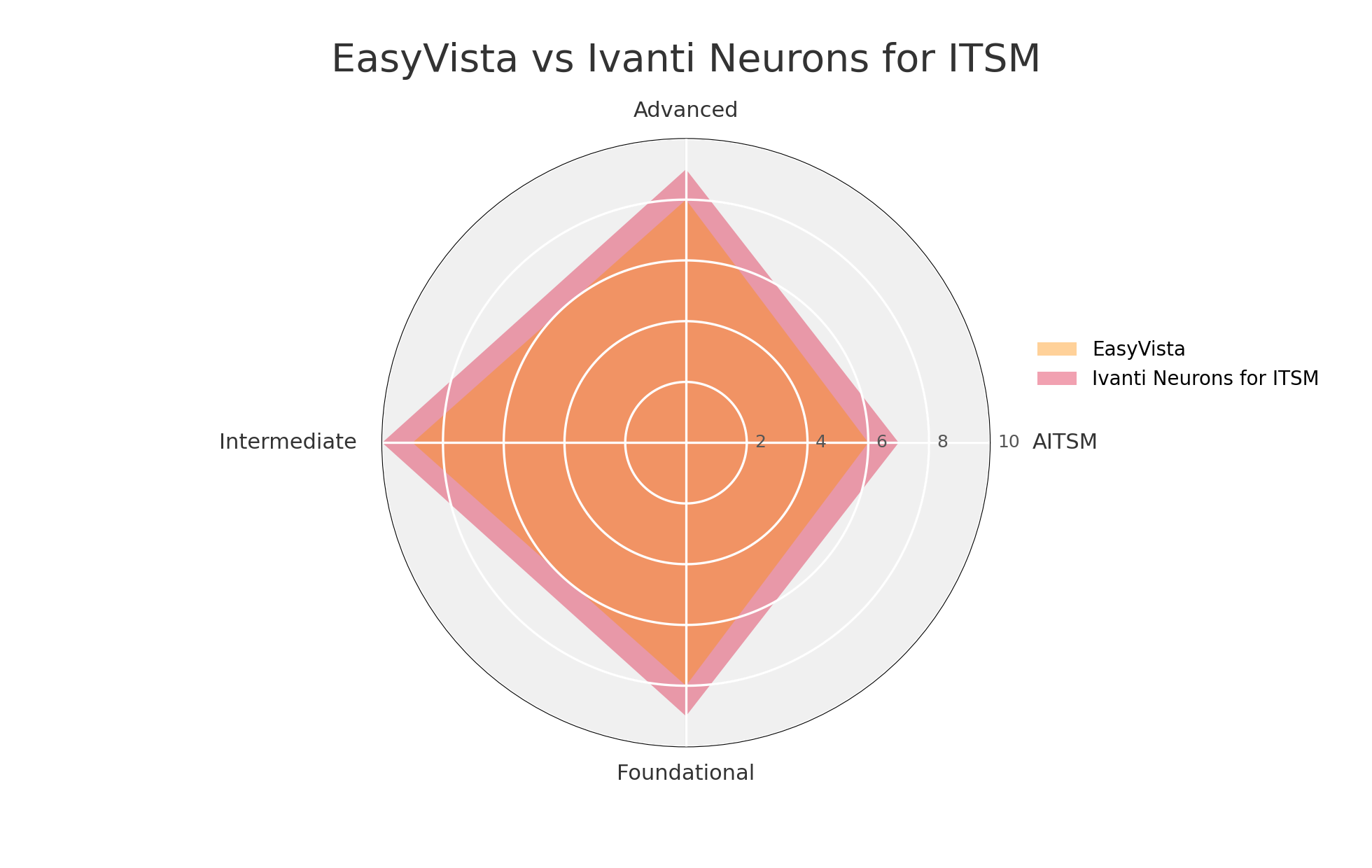
Ivanti vs. EasyVista
Ivanti holds an advantage in Advanced and Intermediate capabilities, while both vendors are comparable in Foundational maturity. EasyVista lags slightly in AITSM, giving Ivanti a stronger overall position for AI and automation readiness.
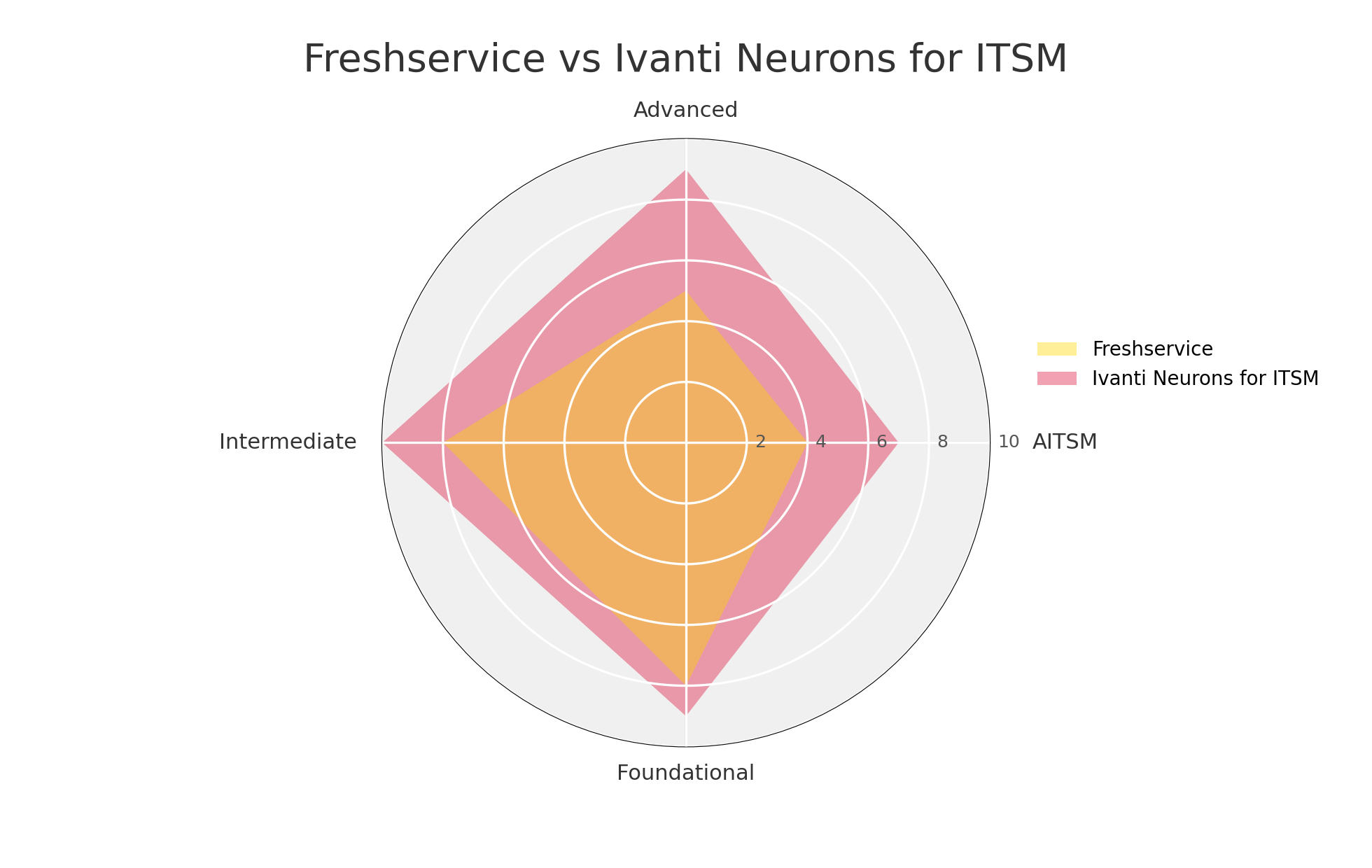
Ivanti vs. Freshservice
Ivanti surpasses Freshservice in Advanced and Intermediate areas, offering more robust automation and AI capabilities. Freshservice remains competitive in Foundational aspects but trails in AITSM innovation.
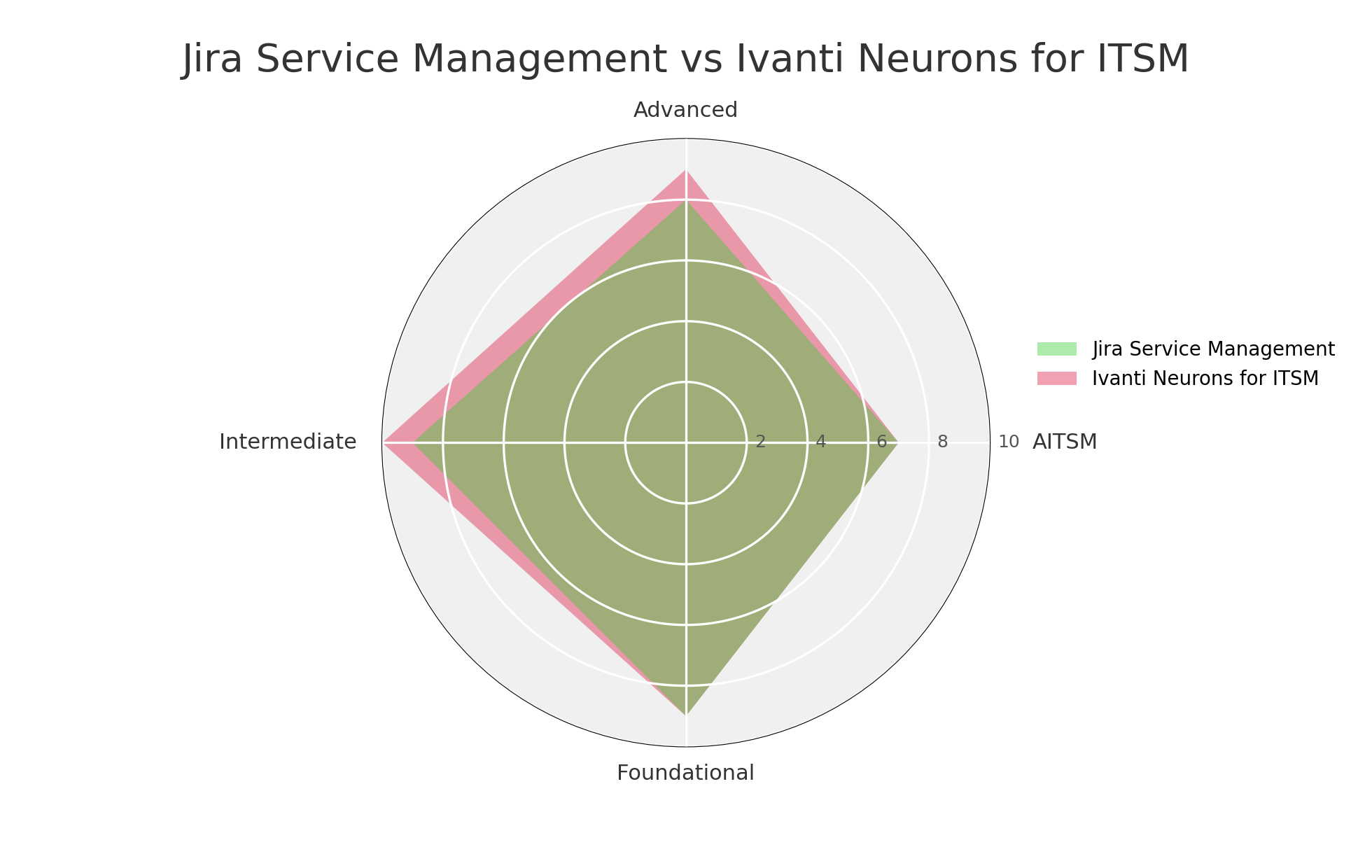
Ivanti vs. Jira Service Management
Ivanti outperforms Jira Service Management in Advanced and Intermediate dimensions, while both are similar in Foundational maturity. Jira’s AITSM capabilities are limited compared to Ivanti’s emerging AI-driven workflows.
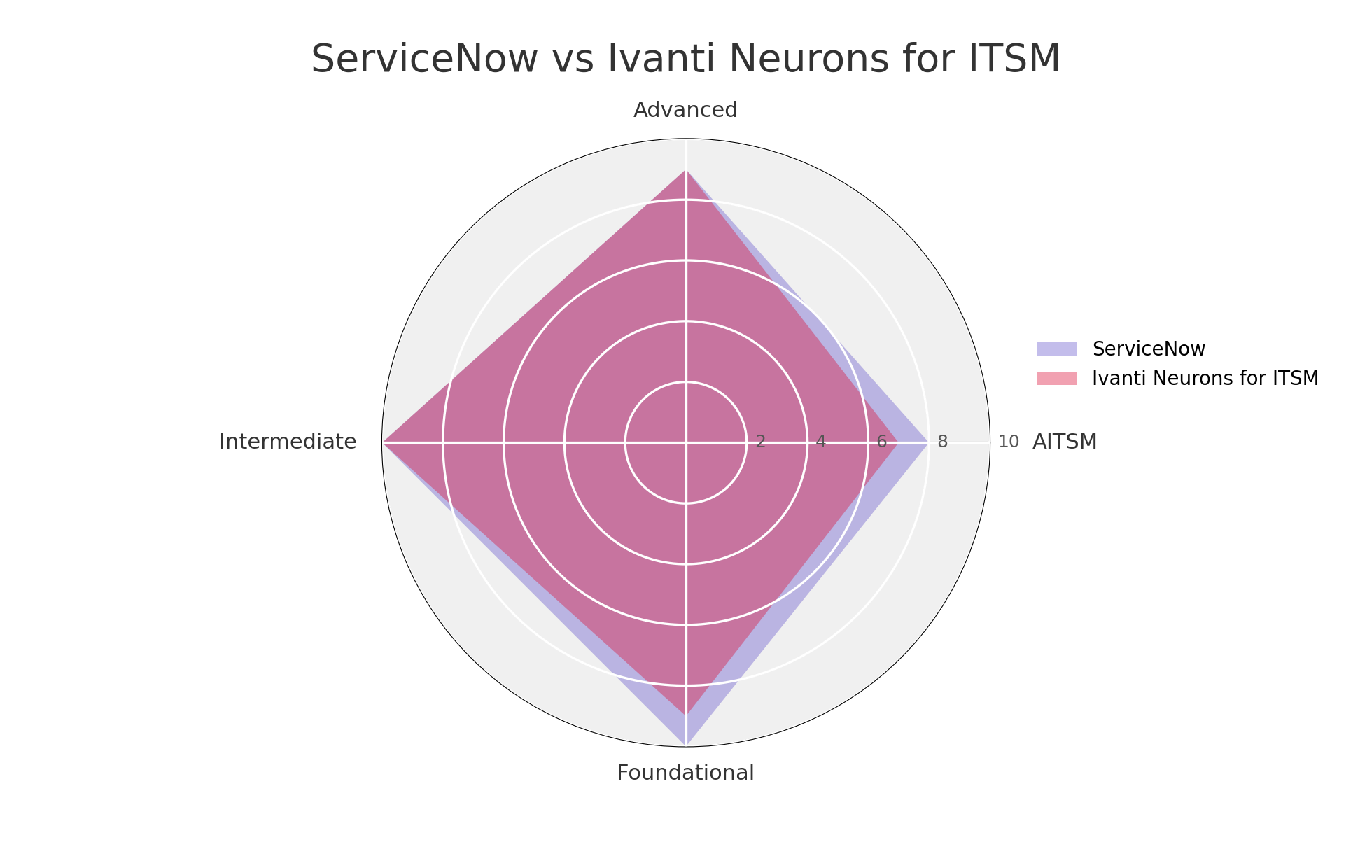
Ivanti vs. ServiceNow
Ivanti and ServiceNow are closely matched across all dimensions, with ServiceNow slightly ahead in AITSM maturity. Ivanti offers comparable strength in Foundational and Intermediate areas, making it a viable alternative for enterprises seeking flexibility.
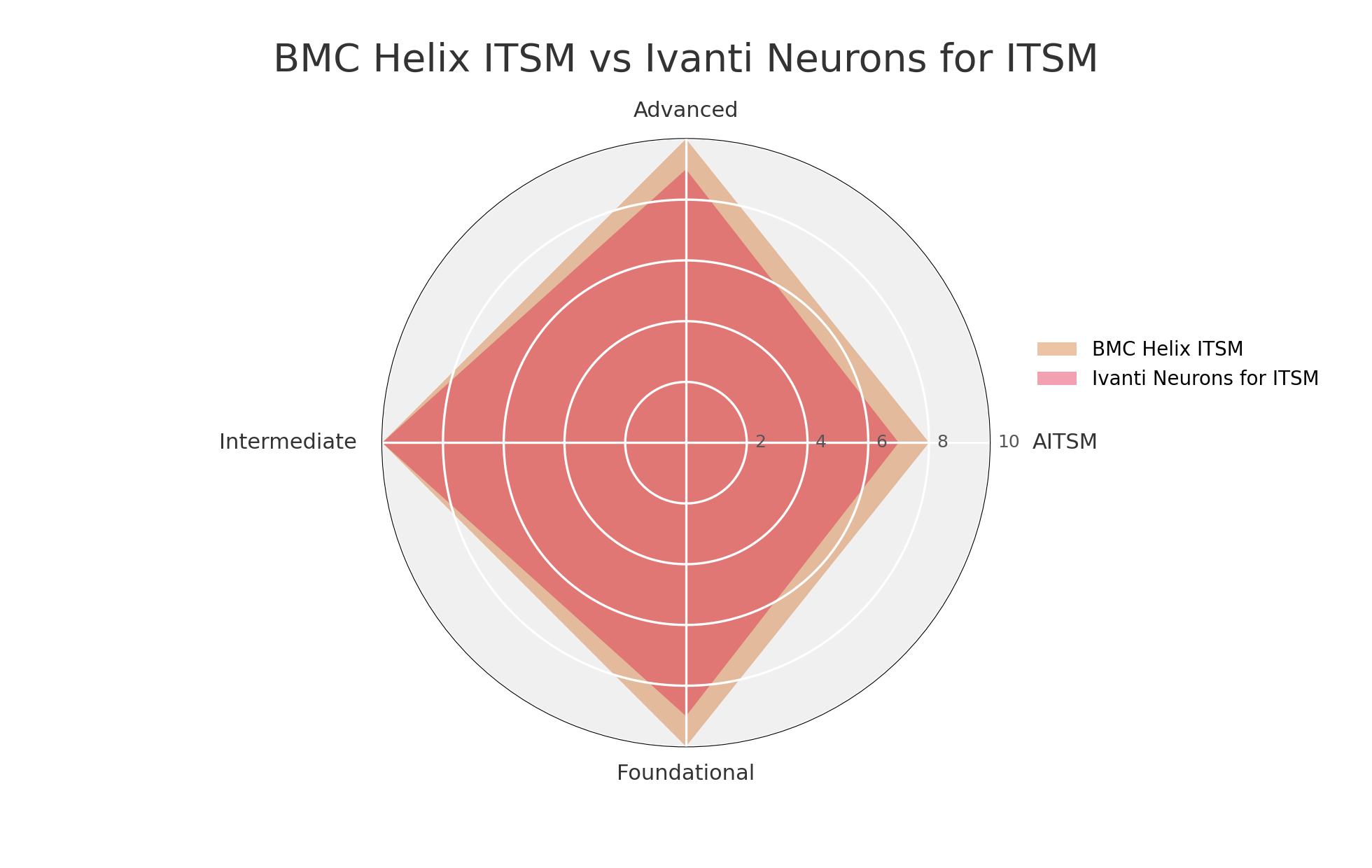
Ivanti vs. BMC Helix ITSM
Ivanti and BMC Helix ITSM show near parity in most dimensions, with BMC slightly stronger in Advanced capabilities. Ivanti remains competitive in Foundational and Intermediate areas, positioning well for organizations balancing cost and functionality.
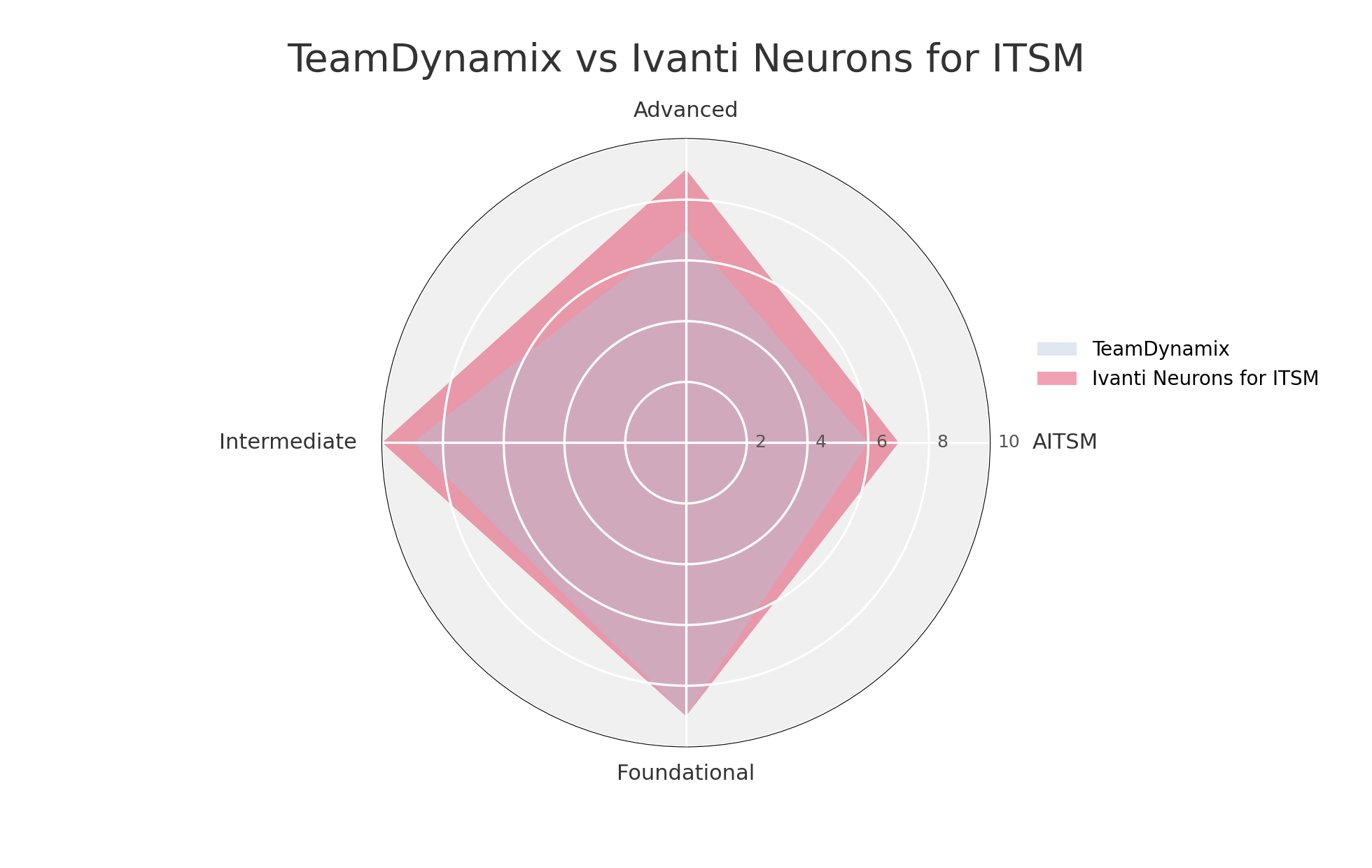
Ivanti vs. TeamDynamix
Ivanti demonstrates superior performance in Advanced and Intermediate capabilities compared to TeamDynamix. Both vendors are similar in Foundational maturity, but Ivanti’s AI and automation features provide a clear edge.
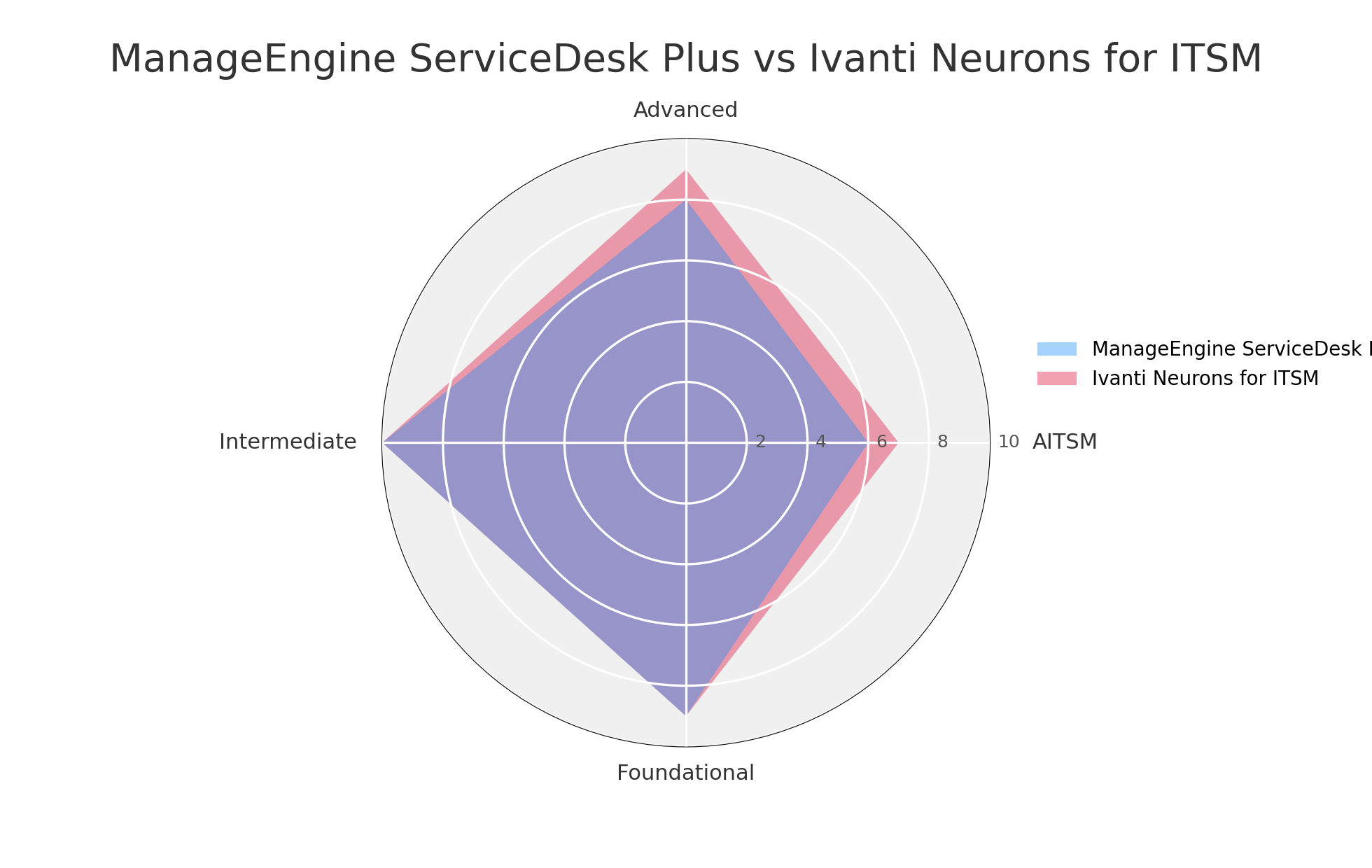
Ivanti vs. ManageEngine ServiceDesk Plus
Ivanti leads in Advanced and Intermediate dimensions, while ManageEngine matches Ivanti in Foundational maturity. Ivanti’s broader AI and automation capabilities make it better suited for organizations seeking innovation.
References
Ivanti
Foundational & Intermediate:
- https://help.ivanti.com/ht/help/en_US/ISM/2025/Release%20Notes/Content/Whats-New/What's-New-2025.2.htm
- https://help.ivanti.com/ht/help/en_US/ISM/2025/Release%20Notes/Content/Whats-New/What's-New-2025.3.htm
- https://help.ivanti.com/ht/help/en_US/ISM/2025/admin-user/Content/ServiceDesk/Change/About-Change-Management.htm
- https://help.ivanti.com/ht/help/en_US/ISM/2025/admin-user/Content/ServiceDesk/Change/Working-with-Change-Management.htm
Advanced (ITOM/AIOps, service modeling):
- https://help.ivanti.com/ht/help/en_US/ISM/2025/admin-user/Content/Configure/Integrations/ITSM-Neurons-Integration.htm
- https://help.ivanti.com/iv/help/en_US/iPaaS/2024/Neurons-iPaaS/LandingPage.htm
- https://help.ivanti.com/ht/help/en_US/ISM/2025/admin-user/Content/ServiceDesk/ConfigurationMgmt/Working_with_the_CI_Map.htm
- https://help.ivanti.com/ht/help/en_US/ISM/2024/admin-user/Content/Configure/ISM-Neurons-Integrations-BestPractices/ISM-Neurons-Integration-Best-Practices.htm
AITSM (Agentic/GenAI):
- https://help.ivanti.com/ht/help/en_US/ISM/2025/admin-user/Content/AITSM/ITSM-Gen-AI.htm
- https://help.ivanti.com/ht/help/en_US/ISM/2025/admin-user/Content/AITSM/Neurons-AI.htm
- https://help.ivanti.com/ht/help/en_US/ISM/2025/Release%20Notes/Content/Whats-New/What's-New-2025.4.htm
ServiceNow
Foundational & Intermediate
- https://newsroom.servicenow.com/press-releases/details/2024/ServiceNow-furthers-generative-AI-leadership-with-new-capabilities-in-the-Washington-DC-platform-release-03-20-2024-traffic/default.aspx
- https://www.crn.com/news/channel-news/2024/servicenow-washington-dc-release-goes-deep-on-ai-genai
Advanced (e.g., ITOM/AIOps, service modeling, integration depth)
- https://newsroom.servicenow.com/press-releases/details/2025/ServiceNows-latest-platform-release-adds-to-thousands-of-AI-agents-across-CRM-HR-IT-and-more-for-faster-smarter-workflows-and-maximum-business-impact-03-12-2025-traffic/default.aspx
- https://www.servicenow.com/community/itsm-blog/introducing-ai-agents-in-the-yokohama-release-for-it-service/ba-p/3156505
AITSM (agentic/genAI, automation)
- https://www.servicenow.com/community/employee-center-blog/september-2025-enhancements-to-now-assist-for-employee/ba-p/3377938
- https://cyberscoop.com/servicenow-fixes-critical-ai-vulnerability-cve-2025-12420/
BMC
Foundational & Intermediate:
- https://docs.bmc.com/xwiki/bin/view/Service-Management/IT-Service-Management/BMC-Helix-ITSM/
- https://docs.bmc.com/xwiki/bin/view/Service-Management/IT-Service-Management/BMC-Helix-CMDB/ac254/Getting-started/Product-overview/
- https://docs.bmc.com/xwiki/bin/view/Service-Management/IT-Service-Management/BMC-Helix-ITSM-Smart-IT/smartit213/Getting-started/Key-concepts/Smart-Recorder-overview/
- https://bmcapps.my.site.com/casemgmt/sc_KnowledgeArticle?sfdcid=kA33n000000YFTxCAO
Advanced (ITOM/AIOps, service modeling):
- https://docs.bmc.com/xwiki/bin/view/IT-Operations-Management/Operations-Management/BMC-Helix-AIOps/aiops244/
- https://docs.bmc.com/xwiki/bin/view/IT-Operations-Management/Operations-Management/BMC-Helix-AIOps/aiops241/
- https://docs.bmc.com/xwiki/bin/view/Service-Management/IT-Service-Management/BMC-Helix-CMDB/ac254/Getting-started/Product-overview/
AITSM (Agentic/GenAI):
- https://docs.bmc.com/xwiki/bin/view/Service-Management/Employee-Digital-Workplace/BMC-HelixGPT/HelixGPT/Getting-started/BMC-HelixGPT-overview/
- https://docs.bmc.com/xwiki/bin/view/Service-Management/Employee-Digital-Workplace/BMC-HelixGPT/HelixGPT/
- https://www.helixops.ai/newsroom/releases/bmc-helix-extends-agentic-ai-across-service-operations-management.html
Freshservice
Foundational & Intermediate
- https://www.freshworks.com/freshservice/product-updates/
- https://www.freshworks.com/freshservice/cmdb/
- https://www.freshworks.com/freshservice/it-service-management/change-management/
Advanced (e.g., ITOM/AIOps, service modeling, integration depth)
- https://www.freshworks.com/freshservice/itim/dependency-mapping/
- https://www.freshworks.com/freshservice/integration/device42/
AITSM (agentic/genAI, automation)
- https://www.freshworks.com/freshservice/ai-itsm/
- https://ir.freshworks.com/news/news-details/2025/Freshworks-Launches-AI-Powered-Capabilities-to-Elevate-the-Employee-Experience-and-Turn-Complexity-into-Growth/default.aspx
ManageEngine
Foundational & Intermediate
- https://www.manageengine.com/products/service-desk/cloud/whats-new.html
- https://www.manageengine.com/products/service-desk/on-premises/readme-new.html
Advanced (e.g., ITOM/AIOps, service modeling, integration depth)
- https://www.manageengine.com/news/gen-ai-release-for-servicedesk-plus.html
- https://www.manageengine.com/products/service-desk/ai/servicedesk-plus-gen-ai-release-2025.html
Atlassian Jira Service Management
Foundational & Intermediate
- https://confluence.atlassian.com/servicemanagement/jira-service-management-10-5-x-release-notes-1528202466.html
- https://confluence.atlassian.com/servicemanagement/jira-service-management-11-0-x-release-notes-1587941279.html
- https://www.atlassian.com/software/jira/service-management/download-archives
Advanced (e.g., ITOM/AIOps, service modeling, integration depth)
- https://confluence.atlassian.com/servicemanagement/jira-service-management-10-5-x-release-notes-1528202466.html
- https://confluence.atlassian.com/servicemanagement/jira-service-management-11-0-x-release-notes-1587941279.html
AITSM (agentic/genAI, automation)
EasyVista
Foundational & Intermediate
- https://www.gartner.com/reviews/market/it-service-management-platforms/vendor/easyvista
- https://learn.microsoft.com/en-us/connectors/easyvista/
Advanced (e.g., ITOM/AIOps, service modeling, integration depth)
- https://learn.microsoft.com/en-us/connectors/easyvistaselfhelp/
- https://learn.microsoft.com/fr-fr/connectors/easyvista/
AITSM (agentic/genAI, automation)
- https://www.cio.com/article/4107580/easyvista-launches-2025-3-update-with-expanded-ai-improved-data-consistency-and-performance-improvements.html
- https://www.marketscreener.com/news/easyvista-introduces-2025-3-platform-release-advancing-a-reliable-data-backbone-for-ai-powered-itsm-ce7d50d8d888f023
TeamDynamix
Foundational & Intermediate
- https://sfu.teamdynamix.com/TDClient/255/ITServices/Shared/FileOpen?AttachmentID=d01ab436-257b-4223-91fd-3106ad9f51d0&ItemID=4211&ItemComponent=26&IsInline=-1
- https://northcentral.teamdynamix.com/TDClient/1980/Portal/KB/ArticleDet?ID=159209
Advanced (e.g., ITOM/AIOps, service modeling, integration depth)
- https://www.teamdynamix.com/products/ipaas/
- https://secure.businesswire.com/news/home/20250212597356/en/TeamDynamix-Takes-the-Top-Spot-in-SoftwareReviews-ITSM-Data-Quadrant
AITSM (agentic/genAI, automation)
- https://www.businesswire.com/news/home/20251027420427/en/TeamDynamix-Expands-AI-ITSM-to-Target-Operational-Efficiency-and-Faster-IT-Service-Delivery
- https://www.helpnetsecurity.com/2025/10/28/teamdynamix-ai-service-assist/
Halo ITSM
Foundational & Intermediate
Advanced (e.g., ITOM/AIOps, service modeling, integration depth)
AITSM (agentic/genAI, automation)
Aisera
Foundational & Intermediate
- https://aisera.com/platform/
- https://support.aisera.com/hc/en-us/sections/33363517436941-2025-Releases
Advanced (e.g., ITOM/AIOps, service modeling, integration depth)
- https://aisera.com/press-releases/aisera-introduces-a-system-of-ai-agents-for-faster-smarter-enterprise-transformation/
- https://aisera.com/press-release/aisera-leads-the-shift-to-autonomous-it-bringing-enterprises-closer-than-ever-to-true-self-service-with-agentic-ai/
AITSM (agentic/genAI, automation)