Endpoint tools show you what exists. Ivanti ITAM tells you who owns it, what it costs and what happens next. That persistent asset intelligence makes every automated action accountable and every decision defensible.
IT Asset Management
Know every asset.
Govern every lifecycle.
Automate with confidence.
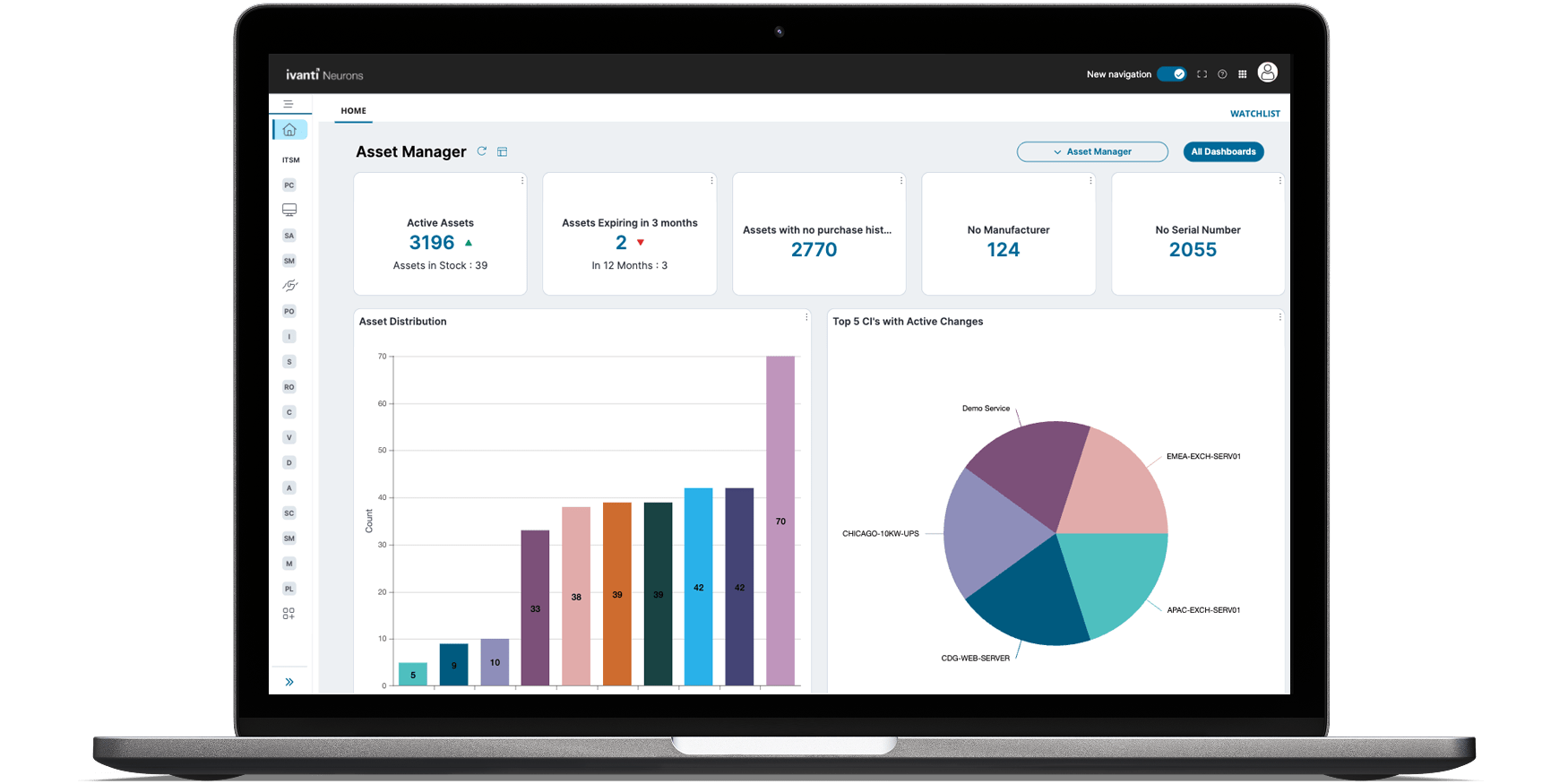
Ivanti IT Asset Management delivers continuous visibility into assets, ownership and lifecycle state, all within a trusted system of record. Built into the Ivanti Neurons platform and integrated with ITSM, it connects asset data directly to service operations, automation and decision-making.
Better IT asset data powers smarter automation
It’s coming, whether we like it or not. AI is going to be a big thing, and we'll be learning and preparing for that.
When I started at The First in 2018, we were around $4.5 billion in assets. We are now at $8.6 billion.
On top of our permanent staffing, we have 500 student nurses … two rotations of junior doctors … 1,500 volunteers … they need badges for access.
ITAM built-in, not bolted on
IT Asset Management is a core part of the Ivanti Neurons Platform, creating a structured, continuously updated asset data foundation. With asset, service and endpoint data in one system, teams work from a single source of truth, without integration gaps or stale records.
One authoritative asset record, everywhere you work
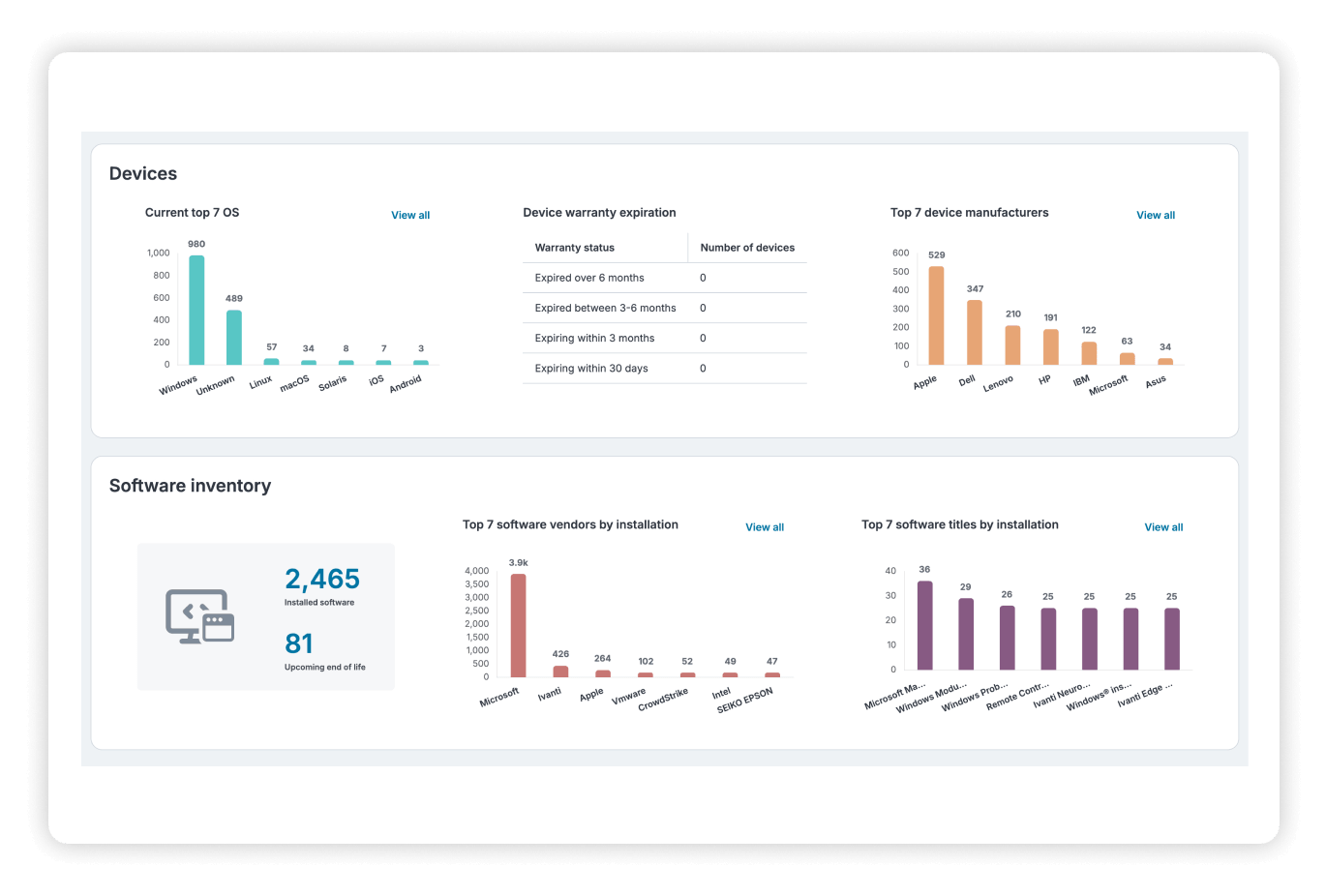
Asset data is continuously maintained across the platform, covering hardware, software, ownership and lifecycle state.
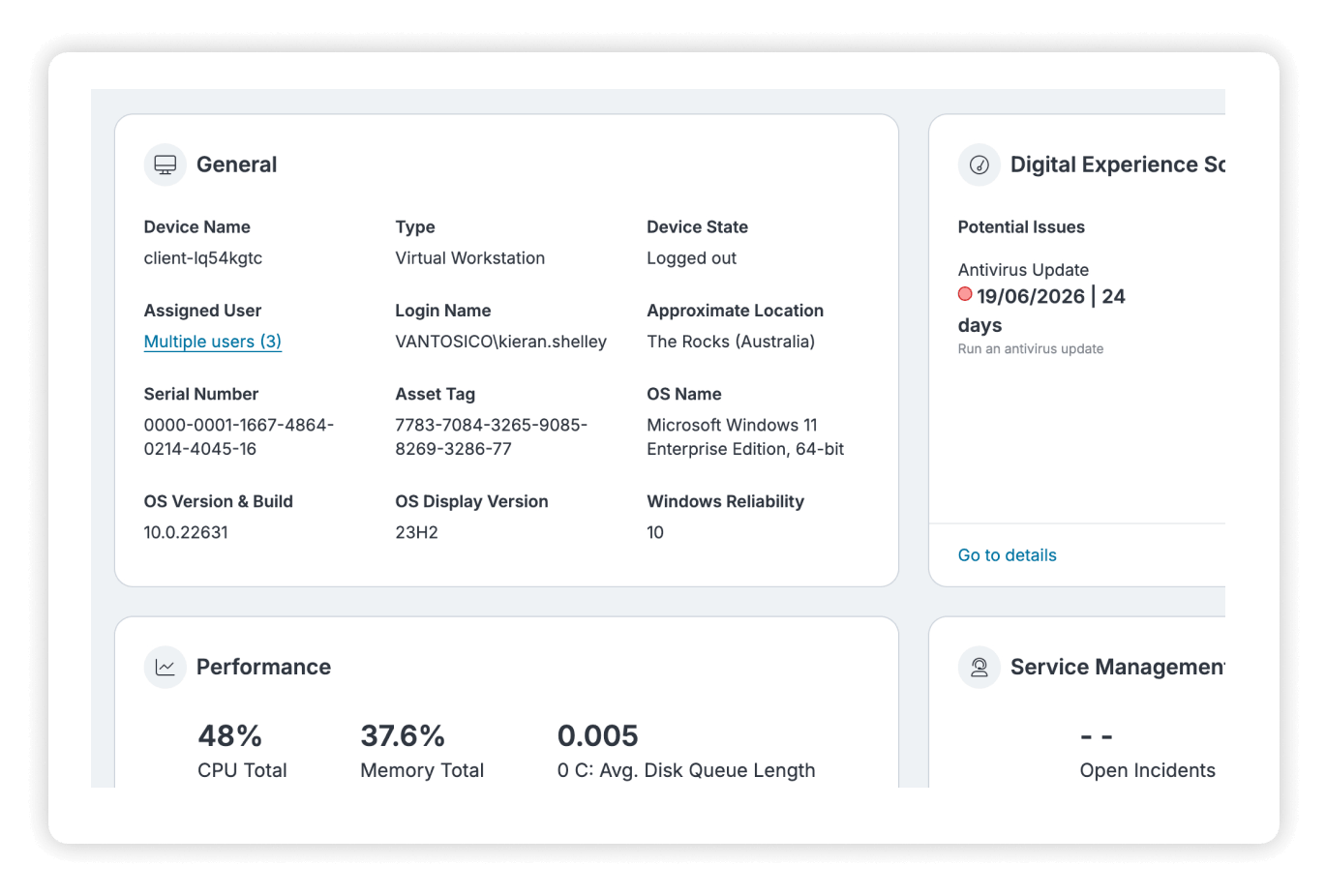
Each record combines identity, usage, financial and configuration data, giving teams the full context they need to act quickly and accurately.
Track every asset from acquisition to retirement
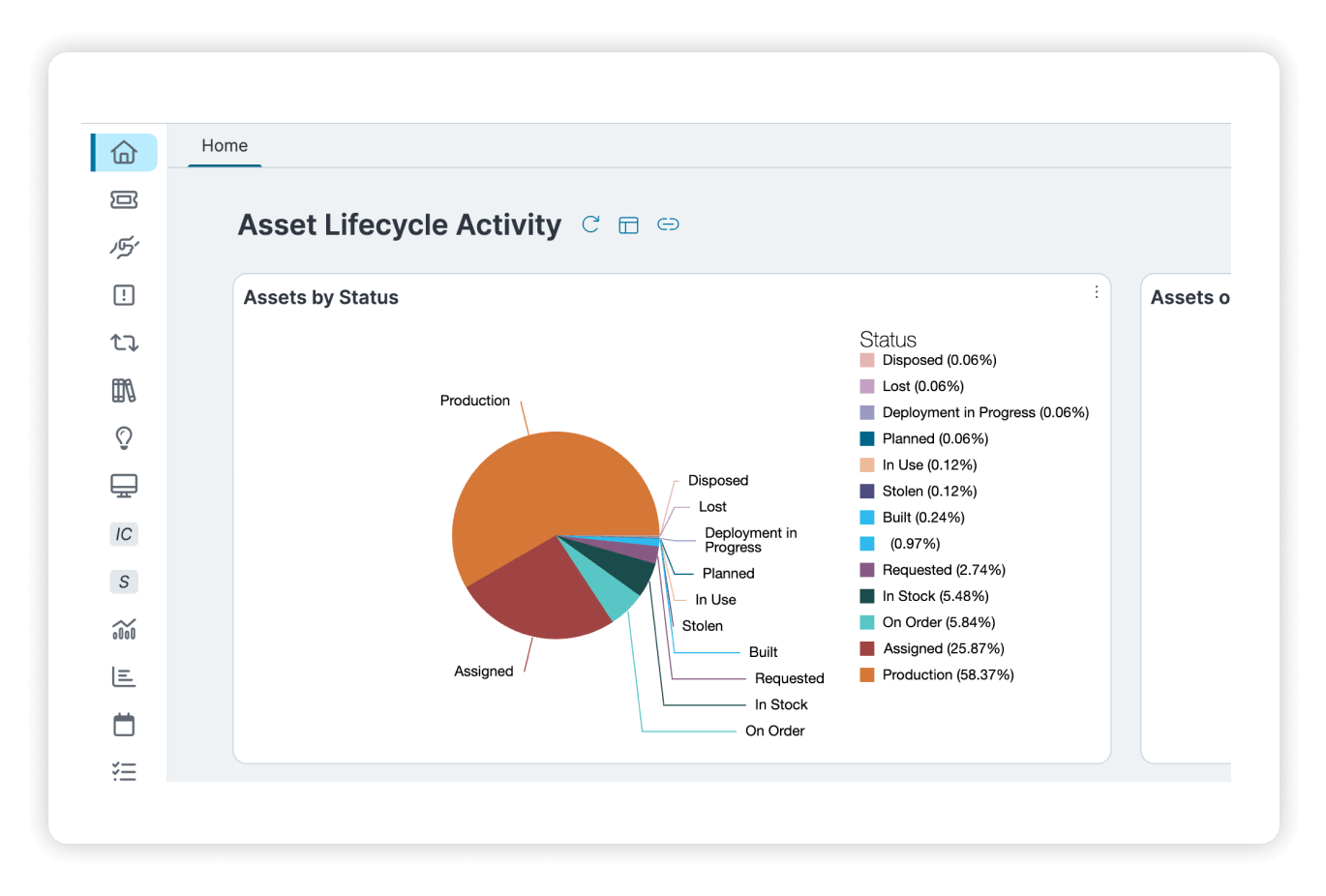
Monitor lifecycle stages, status history and end-of-life signals in one place.
Automatically surface assets approaching renewal or disposal, so teams can act before cost or compliance risks emerge.
The context automation needs to act safely at scale
Autonomous Endpoint Management requires more than real-time device data. The Ivanti asset repository provides ownership, lifecycle and financial context, so every action is governed, traceable and aligned to known assets.
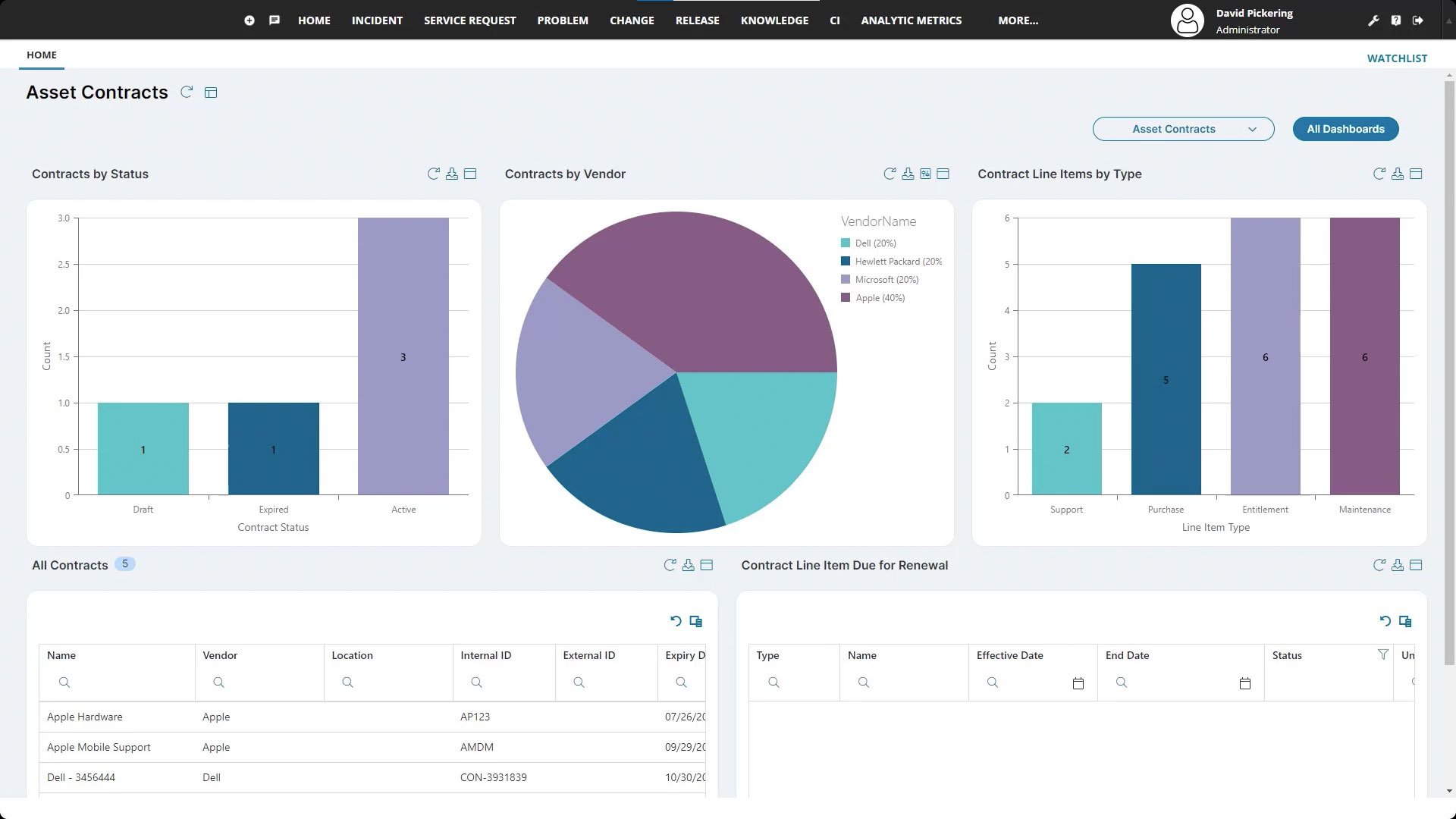
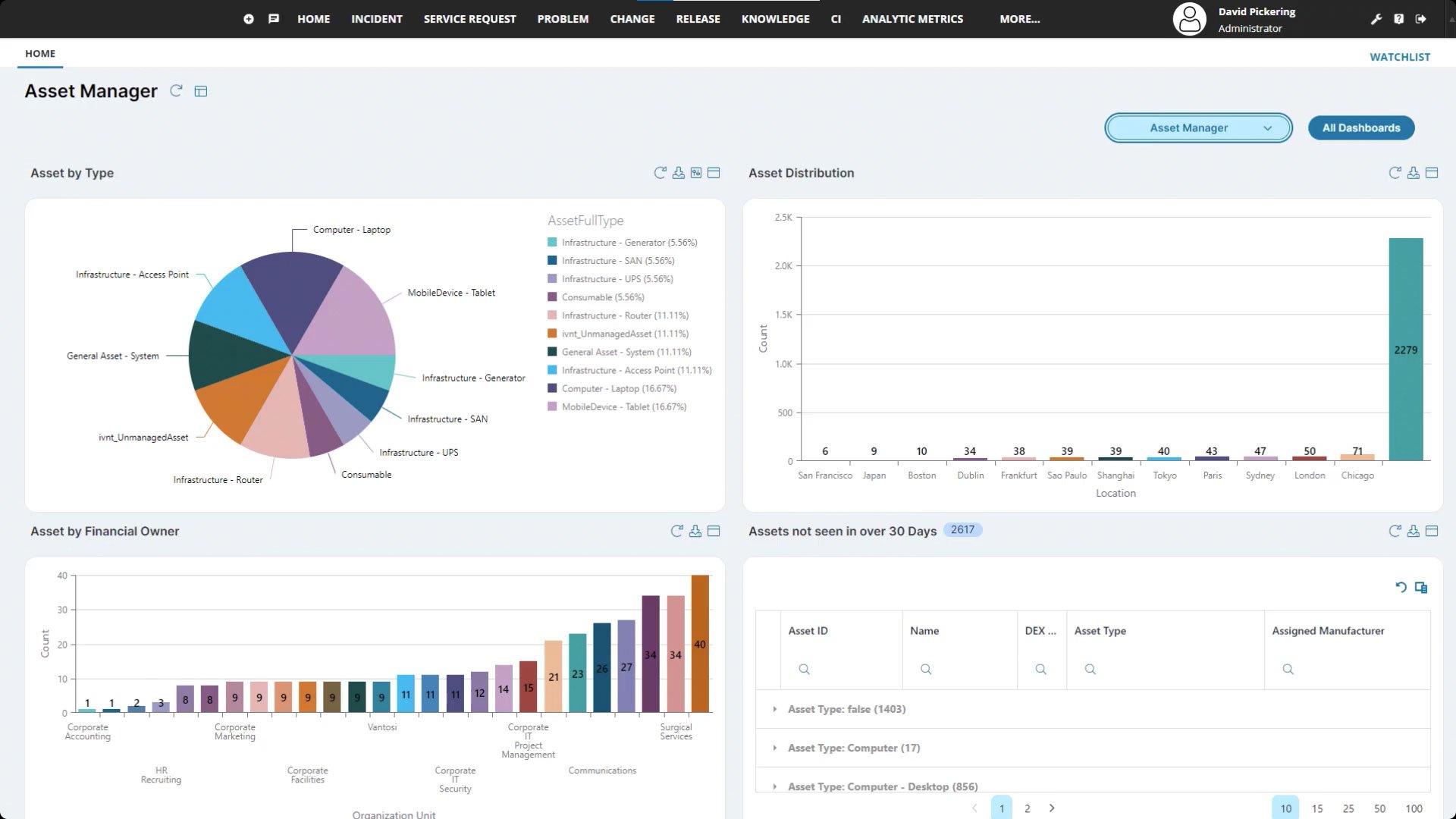
Start with asset visibility. Scale to full IT asset lifecycle management.
Ivanti ITAM delivers a powerful asset data foundation within the Neurons Platform. For organizations that need deeper lifecycle governance, full IT Asset Management capabilities extend this foundation through Ivanti ITSM.
Features and capabilities
The IT asset data your team and automations depend on
Built into the Neurons Platform and surfaced where your teams work, so there are no separate systems and no stale data — just one authoritative asset foundation. These capabilities focus on structuring and maintaining asset data within the platform system of record.
System of record for asset data
Maintain a single, continuously updated record of every asset, combining ownership, lifecycle and financial data in one place.
Asset repository
Gain centralized visibility into all assets with complete, continuously updated detail.
Discover & sync
Continuously discover and reconcile assets to maintain accurate, normalized records without manual intervention.
Asset lifecycle visibility
Track cost, depreciation and spend trends across your entire asset estate.
Asset assignment & ownership
Every asset has a known owner with assignment history and department mapping, with accountability built in.
Configuration relationship mapping
Preserve device dependencies, network connections and application relationships in one unified, CMDB-ready data layer.
Reporting across asset data
Built-in reporting across assets, ownership, lifecycle and financial data within the platform system of record.
Product catalog
Standardized hardware models and software products with manufacturer mapping and model standardization for consistent classification.
Related capabilities
Connected across the platform
Bring discovery, asset data, service context, and endpoint action together on a shared, trusted data foundation so each capability builds on the same accurate, real-time view of your environment and delivers more actionable outcomes.


FAQs
What is IT asset management software and how does it work?
IT asset management (ITAM) software helps organizations track, manage and optimize their technology assets across the full lifecycle — from acquisition and deployment through active use, end-of-life identification and retirement. Ivanti ITAM works by continuously discovering and normalizing asset data, connecting hardware identity, software inventory, ownership and lifecycle state into a single authoritative record within the Neurons Platform. That record feeds every team and workflow that depends on accurate asset context, from service management and endpoint operations to security and compliance.
How does IT asset management support autonomous endpoint management?
IT asset management supports autonomous endpoint management by structuring and maintaining accurate, continuously updated asset context across the platform. In Ivanti Neurons, ITAM ensures that every autonomous action, including patch, remediation and reconfiguration, is executed against an asset with a known identity, a known owner, and a current lifecycle state, so autonomous operations are governed and traceable rather than fast but blind. The result is faster, more precise remediation that adapts to current endpoint state rather than relying on static rules or isolated device signals.
What is the difference between IT asset management and CMDB?
IT asset management and CMDB serve complementary but distinct roles within the same data foundation. ITAM structures and maintains the authoritative record for each asset, such as hardware identity, software inventory, ownership and lifecycle state. CMDB takes that structured asset data and maps the relationships between assets, including configuration items, service dependencies and change history. In Ivanti Neurons, both work together as part of the same platform, so the asset record and the configuration model are always in sync, so there are no separate systems and no reconciliation overhead.
Why is asset lifecycle management important for IT teams?
Asset lifecycle management gives IT teams visibility into where every asset stands in its operational journey, from acquisition through active use, end-of-life identification and retirement. Without it, organizations risk operating on stale records, missing renewal windows, carrying compliance exposure from unretired or untracked devices, and making automation decisions without accurate context. In Ivanti Neurons, lifecycle data is maintained automatically as part of the platform system of record, so teams always have current, actionable lifecycle context without manual tracking or spreadsheets.
How does a system of record improve IT asset visibility and automation?
A system of record improves IT asset visibility by consolidating asset data into a single, accurate, continuously updated view, eliminating the gaps and inconsistencies that occur when asset information is scattered across multiple tools. In Ivanti Neurons, discovery feeds normalized data into the platform and ITAM structures it to support CMDB-ready relationships, giving every team and workflow a reliable foundation to act on. This unified visibility enables more trustworthy automation by ensuring every action is based on complete, current asset data rather than fragmented or outdated information.
See your asset database in action
Get a complete view of assets, ownership, lifecycle and cost — all from one platform built for IT and security.