


Key Takeaways
- Every autonomous capability runs on trusted data. Self-healing can't heal what it can't see, remediation can't act on data it doesn't have, and a weak data layer means everything built on top of it inherits the gap.
- A system of record is what separates autonomy from blind automation, giving operations the authoritative, governed data they need to act with confidence instead of guessing at scale.
- Autonomous endpoint management is built from the foundation up — data, governance, and endpoint context earned over years — not bolted onto a thin management layer after the fact.
Why Autonomous Endpoint Management Depends on Trusted Data
Back to Basics: AEM Fundamentals | Part 1 of 5
The market is rushing toward autonomous endpoint management. But most of the conversation skips past the infrastructure and jumps straight to the outcomes.
The market is loud, the promises are bold, and the buyers who got burned before are now the ones asking the hardest questions. They don't need another feature list. They need to know what's actually underneath the claims. IT teams have heard this story before. They've sat through the demos, read the analyst reports and signed the contracts, only to discover that "autonomous" was a label slapped on a dashboard that flags problems it can't fix.
And yet the claimed outcomes are the exact ones IT teams have been wanting for years:
- Self-healing endpoints that detect and resolve their own issues before a ticket is ever filed
- Automated remediation that fixes problems at scale without human intervention
- Autonomous patching that closes vulnerability windows without the usual manual cleanup
- A proactive employee experience where issues are resolved before the user notices anything is wrong
Every vendor is pitching these. Few are talking about what makes any of them possible.
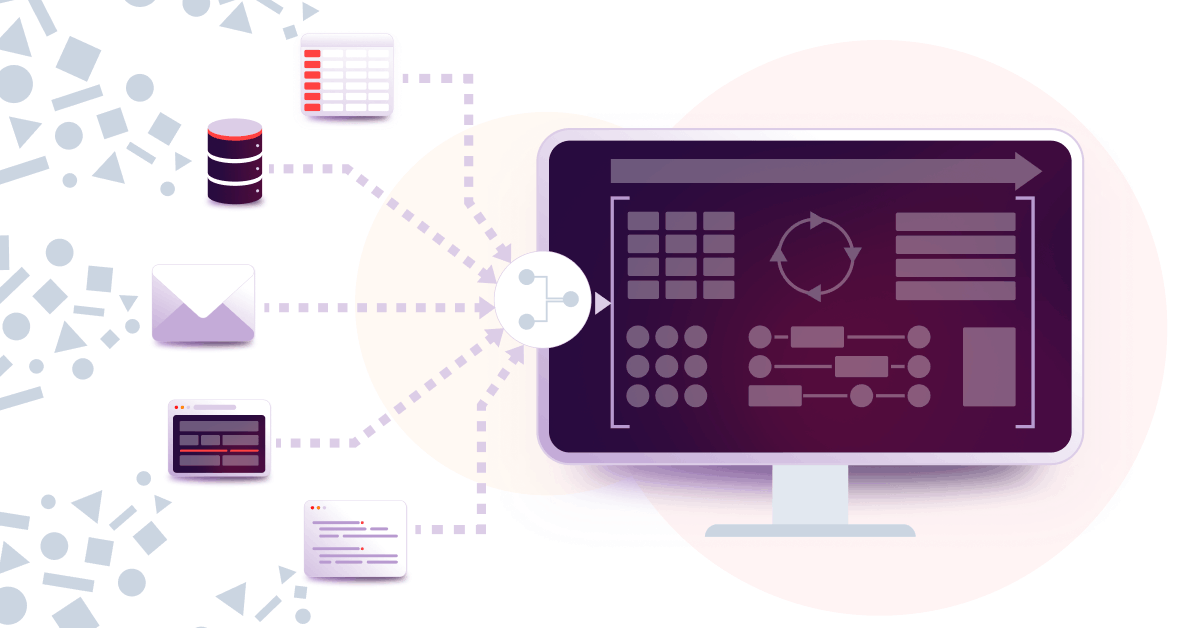
None of these capabilities exist without a mature data foundation underneath that acts as a single, authoritative system of record. Self-healing can't heal what it can't see. Automated remediation can't act on data it doesn't have. Autonomous patching can't reach endpoints it doesn't know about. A proactive experience can't get ahead of problems that can't be detected. Every autonomous capability depends on trusted data. If that data layer is weak, shallow or stitched together from point tools, everything above it inherits the gap.
Real autonomous endpoint management is not a collection of features. It depends on a foundation that connects trusted data, operational context and governed action. This is Part 1 of Back to Basics: The Autonomous Endpoint Management Fundamentals, a five-part series examining the system of record, unified endpoint management, autonomous patch management, digital employee experience with remediation and the complete AEM model.
How asset intelligence and service context enable safe automation
Endpoint visibility alone isn't enough. What separates real autonomous capability from blind automation is context, and the most valuable context comes from looking beyond the endpoint itself.
When you can see where an endpoint sits in its lifecycle — newly deployed, approaching refresh, or being decommissioned — you make different decisions accordingly. When you can use service relationship context to see which services depend on that endpoint running smoothly, you understand the downstream blast radius before you act.
An autonomous system that knows an endpoint supports a critical business service patches it differently than one it treats as isolated. That's the difference between acting on an endpoint and acting with full operational context.
This is where pulling IT and security data together matters. Discovery, asset intelligence, service relationships and exposure data, connected in one system of record, give autonomous decisions the context they need to be safe, not just fast. Organizations that can bring these sources together make better endpoint decisions; organizations that can't are automating on a narrow, isolated view.
Why does this matter for autonomous endpoint management? Autonomy depends on combining accurate, current-state data with historical context to identify patterns, predict, and act on degradations before they cause issues. An autonomous system acting on partial or stale visibility isn't autonomy. It's blind automation. And blind automation is how endpoints drift out of compliance and outages reach users before IT knows they're coming.
Why connected platforms create trusted autonomous operations
Organizations need more than point solutions. But before talking about connecting everything, it's worth being clear about what needs to connect first.
The core endpoint functions (Unified Endpoint Management (UEM), patch management, Digital Employee eXpereince (DEX), and security) are inherently interdependent. UEM provides the endpoint context. Patch management acts on it. DEX monitors the experience impact of those actions. Security validates the threat surface. When these four operate on the same data foundation, they stop being separate workflows and become one closed loop: a detected vulnerability gets prioritized, patched, validated for experience impact and confirmed secure, without anyone carrying data between tools. Each capability makes the others stronger because they share one source of truth.
That alignment is the prerequisite. Once the core endpoint functions are connected on a shared data foundation, extending to adjacent functions becomes straightforward rather than a new integration project. IT Service Management (ITSM) is the obvious example: when service management runs on the same system of record as the endpoint layer, a detected issue flows into a ticket, triggers a remediation and closes the loop automatically, because the data was already there. The platform didn't need to be stitched together; it was already connected at the data layer.
The same extends to asset management and compliance reporting; each one easier to add because the foundation is shared, not bolted on.
Stitch the same capabilities together with point tools and the opposite happens: hand-offs break, gaps open where a detection never becomes a resolution, and the team becomes the integration layer.
The key idea here is bigger than tool consolidation. The next generation of endpoint management isn't another tool. It's a connected platform, one where the core functions align first on a shared data foundation, and everything else extends from there. Building autonomous endpoint management that way isn't a convenience; it's what makes the autonomy real.
Data authority: The real foundation of autonomous endpoint management
Autonomous endpoint management depends on a strong and trusted data foundation. A system of record is that data foundation — the continuously validated, authoritative source that connects asset intelligence, service context and remediation workflows. Data authority is the governance that makes it trustworthy, giving the system the right to declare what's true and enforce it.
That's the combination of visibility, compliance, automation and control. Each one rests on trusted data, not on a thin management layer.
Mature platforms create sustainable autonomous operations because they've earned the right to act. Every autonomous decision inherits the quality of the data beneath it, and a data foundation built over years, fed by deep endpoint context, holds the weight where a thin or newly built one buckles.
Autonomous endpoint management isn't built from the top down. It's built from the foundation up, and that foundation is data, governance and context, not just a UEM stack.
What comes next: Why unified endpoint management matters
The system of record gives you the data foundation. But that foundation is only as deep as the endpoint context feeding it, and that context comes from the UEM layer underneath. In Part 2, we look at what a strong UEM is, which of its fundamentals matter most for autonomous endpoint management and why decades of endpoint management experience can't be replicated with a product pivot.
FAQ
What is a system of record for IT and security?
A system of record is a continuously validated, authoritative data foundation that connects asset intelligence, service context, exposure data and remediation workflows into a single source of truth. It's what gives autonomous operations the trusted data they need to act with confidence.
Why does autonomous endpoint management need a data foundation?
Every autonomous capability (self-healing, automated remediation, autonomous patching, proactive experience) depends on trusted data. Without an authoritative data foundation, autonomous decisions are guesses, and guesses at scale create risk, not relief.
What is data authority?
Data authority is the governance that gives a system the right to declare what's true and enforce it. Paired with a system of record, it provides what AI depends on but cannot create: trusted, official data that decisions and automation can be built on.
How does endpoint context enable autonomous operations?
Context from beyond the endpoint itself (asset lifecycle from ITAM, service dependencies from the CMDB, exposure data from security tools) lets autonomous systems understand the downstream impact of their actions. Acting with full operational context is what makes autonomy safe, not just fast.
What's the difference between UEM and a data foundation?
EM provides the endpoint management heritage and lifecycle-aware context that feeds the data foundation. The data foundation, the system of record and its governance, is what turns that context into something autonomous endpoint management can act on. UEM feeds the system; the system makes it actionable.