Key Takeaways
- Consumer browsers like Chrome, Safari and Edge aren't designed for the controlled, high-volume task workflows that supply chain and warehouse operations require.
- Ivanti Velocity delivers a controlled, task-optimized browsing experience that keeps workers focused on approved workflows — without address bars, open navigation or unrelated site access.
- Ivanti Velocity is built for enterprise environments and supports consistent workflows across rugged devices, wearable scanners and vehicle-mounted computers.
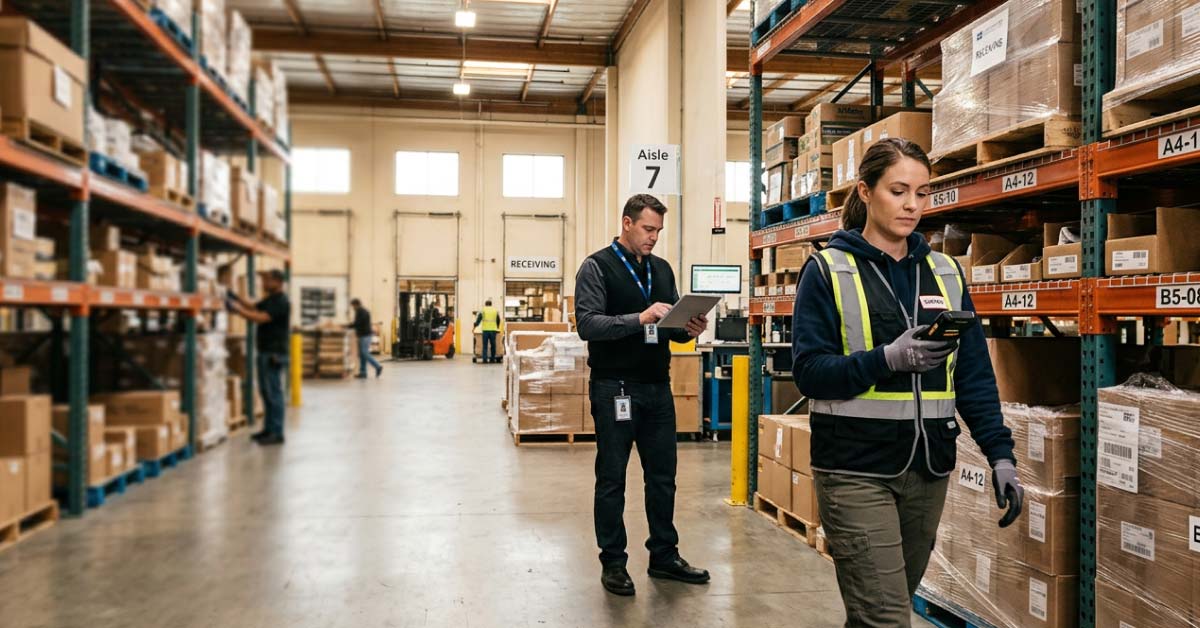
Warehouse workers don’t think about whether their mobile interface runs on a browser. They’re focused on getting the job done. But for operations and IT teams evaluating or upgrading mobile technology in supply chain environments, platform choice matters more than most people realize.
Consumer mobile browsers such as Safari, Edge and Chrome are useful tools designed for everyday web use. They help people search, shop, read, collaborate and access web applications from almost anywhere. That versatility is exactly what makes them the wrong choice for the warehouse floor.
Work in the supply chain and other industrial operations is different. Workers are using rugged handheld devices, wearable data-capture systems, vehicle-mounted computers and tablets built for long shifts, fast barcode scanning and repeated task transactions. They aren’t browsing the web. They’re completing assigned task workflows.
So, the question operations managers need to ask isn’t, “Can this page open in a browser?” The better question is, “Can this browser help my team complete tasks faster, more accurately and with fewer distractions?”
What makes an industrial mobile browser different?
Supply chain teams need an industrial mobile browser built for how supply chain work is done. Instead of treating WMS, ERP and other enterprise applications as ‘just another website,’ the right browser shapes the worker experience around the realities of the floor: scanning barcodes, entering data into specific fields, connecting with adjacent peripherals, completing workflows and immediately moving to the next task.
In a receiving or put-away task, the worker scans an item, confirms the quantity, captures the location and moves on to the next task. In a consumer browser, that experience depends on how the page renders, how the keyboard appears, whether the right field is active and whether the scan data lands where it should. Each friction point may seem minor in isolation. But across hundreds of tasks, thousands of data entry fields and an entire shift of workers, even small inconsistencies add up to significant lost labor hours.
To minimize those productivity risks, operations need mobile web browsing that supports task-specific keyboard experiences, barcode data parsing and workflow automation that consolidates steps. Instead of asking workers to adapt to a generic browsing experience, operations teams need a browser interface that adapts the experience to the task. That matters when the goal isn't simply to display a screen, but to keep goods moving accurately.
Why warehouse operations need a controlled browser experience
Consumer browsers are built for flexibility across varied consumer use cases. But in the warehouse, flexibility becomes a liability. Workers don’t need address bars, open navigation or access to unrelated sites while they’re picking, packing, receiving or replenishing. They need a controlled experience designed to keep them focused on completing tasks within approved workflows.
Connecting warehouse workflows to enterprise systems
Device consistency is another operational reality consumer browsers can’t address. Warehouses rarely run on a single form factor. A team may use a mix of rugged mobile devices, wearable scanners and vehicle-mounted computers across a single shift.
Ivanti Velocity is built to support a consistent workflow experience across varying mobile screen sizes, so operations teams can standardize how work gets done without requiring workers to relearn navigation every time they pick up a different device. That consistency is especially valuable for seasonal workers and new hires, where onboarding speed directly affects output.
The right mobile browser also reduces operational risk when integrating with enterprise systems. Ivanti Velocity is built to work with mission-critical supply chain environments — including SAP, S/4HANA and EWM — while preserving existing host systems without requiring modifications to the applications your operations already depend on. Choosing the right industrial mobile platform protects and extends the value of systems your business already depends on.
Different by design
Ultimately, consumer browsers are built for consumer use cases. Ivanti Velocity is built for throughput, accuracy and uptime in supply chain operations. That distinction isn't just technical but operational.
When a picker completes a task without extra taps; when a scan is parsed correctly the first time; when a worker stays in the workflow instead of backing out of it, the browser has done more than render a page. It's helped protect productivity.
For supply chain and warehouse operations managers, that's the real measure. The right browser shouldn't only support daily workflows. It should improve them.
Ready to move beyond consumer browsers? Learn more about how Ivanti Velocity helps supply chain teams work faster and smarter
FAQs
Why aren’t consumer browsers like Chrome, Safari or Edge suitable for warehouse operations?
Consumer browsers are designed for flexible, general-purpose web use, not controlled, task-specific workflows that warehouse and supply chain environments require. In industrial settings, features like open navigation, address bars and inconsistent keyboard behavior introduce friction that compounds across thousands of daily task transactions per shift.
What is Ivanti Velocity and what does it do?
Ivanti Velocity is an industrial mobile platform built for supply chain and warehouse operations. The platform foundation provides connectivity to enterprise systems via Telnet client or web browser and is designed to optimize task workflows on rugged handheld devices, wearable scanners and vehicle-mounted computers. It supports task-specific keyboard behavior, barcode data parsing and workflow automation to help workers complete assigned tasks faster and more accurately than consumer browsers allow.
How does Ivanti Velocity handle device consistency across a warehouse?
Ivanti Velocity delivers a consistent workflow experience across varying mobile screen sizes — including rugged handhelds, wearable scanners and vehicle-mounted computers — so operations teams can standardize how work gets done regardless of the device a worker picks up. This reduces training time and is especially valuable for onboarding seasonal workers and new hires quickly.
Does Ivanti Velocity integrate with SAP S/4HANA and EWM?
Ivanti Velocity is built to work with mission-critical supply chain environments including SAP S/4HANA and Extended Warehouse Management (EWM), without requiring modifications to existing host systems. This allows organizations to extend the value of enterprise applications they already depend on while improving the mobile worker experience on the floor.
What is a controlled browser experience and why does it matter in warehouse operations?
A controlled browser experience limits worker access to approved task workflows by removing address bars, open navigation and access to unrelated sites during picking, packing, receiving or replenishment tasks. This keeps workers focused on completing assigned workflows accurately and ensures compliance with approved operational processes.