Prioritize Patch Remediation Based on Risk and Compliance Impact

Forecast compliance risk so you can act early and stay ahead of remediation pressure.

What is Predictive Remediation for Patch Compliance?

Predictive Remediation helps organizations forecast whether remediation efforts are likely to achieve required compliance outcomes before deadlines arrive. As part of Autonomous Endpoint Management, predictive remediation extends the scope of Ivanti’s system of record to include asset visibility, exposure context, prioritization rationale, remediation action and progress tracking in the patch management workflow.

Why choose Predictive Remediation for Vulnerability Remediation?

Choose Predictive Remediation when patch success needs to be measured by outcomes, not activity. It gives IT Operations a forward-looking view of whether remediation targets are likely to be met, why compliance may be at risk, and which actions can improve readiness, before SLAs slip.

Forecast compliance outcomes

Know whether assets, vulnerabilities or endpoint conditions may prevent patch compliance before remediation deadlines arrive.
Find blockers before remediation slips

Take action sooner by surfacing configuration issues, targeting gaps, readiness problems and other remediation blockers.

Prioritize work by impact

Connect exposure context, endpoint readiness and remediation likelihood, so IT operations can focus effort where it is most likely to reduce risk and improve compliance outcomes.

Who is it for?

Predictive Remediation is designed for IT operations, endpoint management and security stakeholders who need to improve remediation readiness, reduce vulnerability exposure and meet patch compliance expectations — without creating unnecessary operational disruption.

Move from reactive patching to predicting compliance success

Most patch tools help teams deploy updates and confirm what happened after execution. Traditional vulnerability management shows teams what happened after execution.

Predictive Remediation forecasts whether patching will achieve compliance before it’s too late to act. It shows where remediation is likely to stall, identifies what puts outcomes at risk and guides teams to correct course early.

Forecast Patch Compliance outcomes

Know whether compliance targets are achievable.

Use predictive compliance insights to identify remediation gaps endpoint readiness issues and the improvements needed to achieve patch compliance targets.

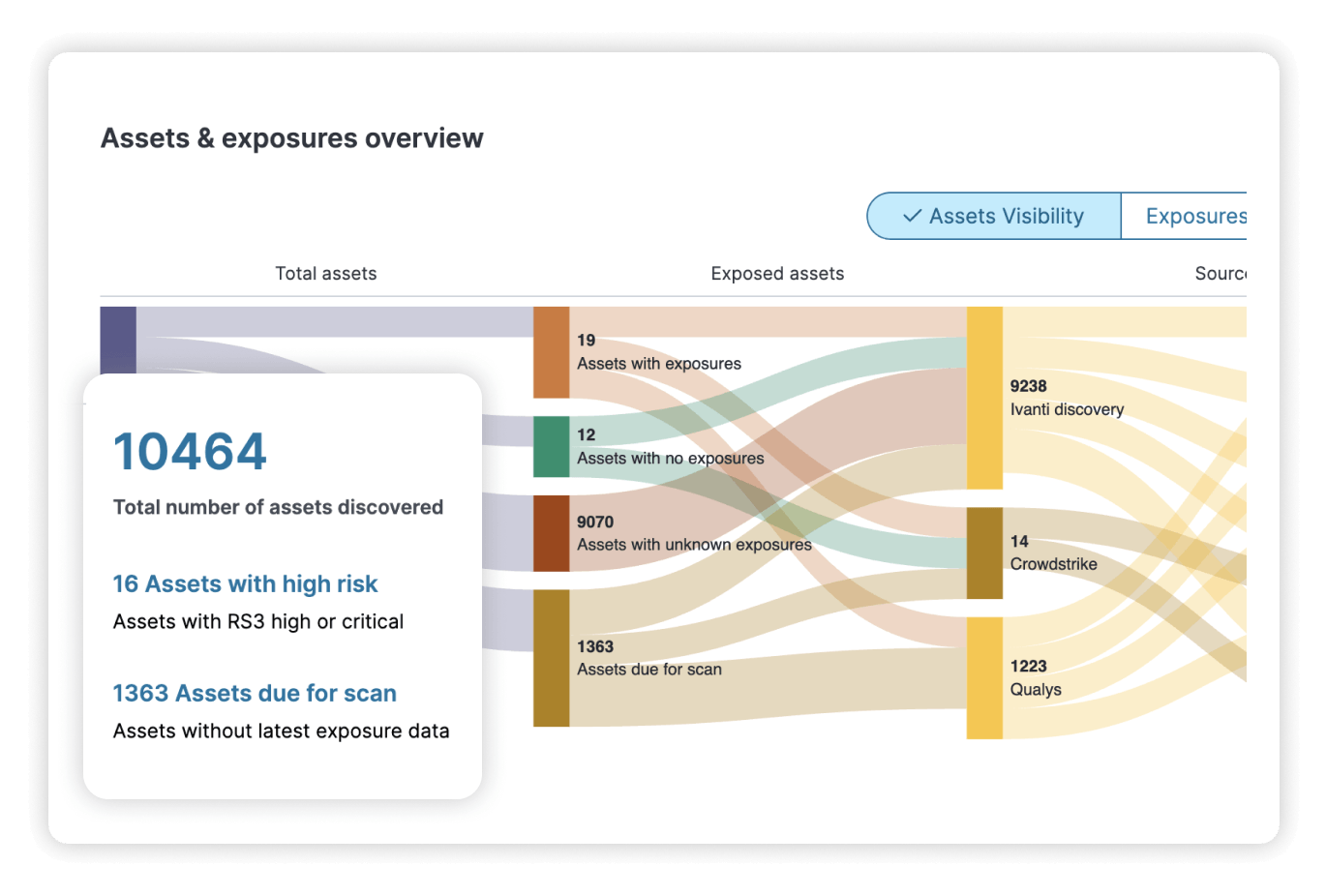
“Assets & exposures overview” dashboard featuring a Sankey-style flow diagram. It shows 10,464 total discovered assets, including 16 high-risk assets and 1,363 assets due for scanning. Asset categories branch into assets with exposures (19), without exposures (12), unknown exposures (9,070), and due for scan (1,363), which then connect to data sources such as Ivanti discovery (9,238), Qualys (1,223), and CrowdStrike (14).

Diagnose Patch Compliance blockers

See the blockers behind remediation gaps.

Surface configuration issues, targeting errors, incomplete visibility, endpoint readiness issues and other factors that can keep remediation goals from being met.

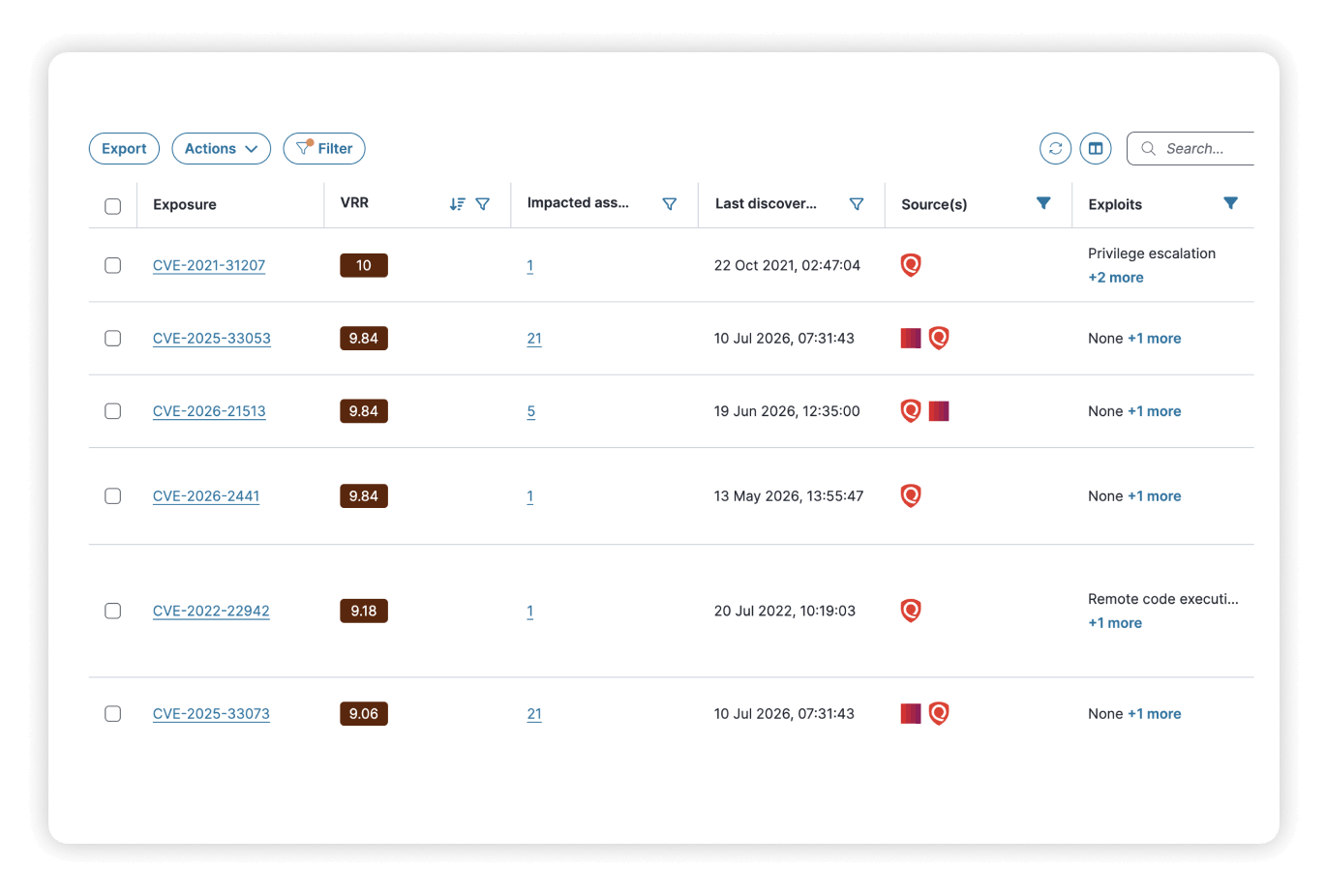
Dashboard table listing security vulnerabilities (CVEs) with columns for exposure ID, risk rating (VRR), number of impacted assets, last discovery date, sources, and exploit status. Entries show multiple high-risk CVEs (scores around 9–10), affected asset counts ranging from 1 to 21, discovery dates from 2021 to 2026, and notes such as privilege escalation or remote code execution exploits. Controls for export, actions, filtering, and search appear above the table.

Prioritize Vulnerability Remediation actions

Prioritize actions to improve remediation outcomes.

Go beyond CVSS ranking with VRR/R3 outcome-focused priorities to connect risk signals, endpoint context and business exposure to the actions most likely to reduce risk and improve compliance.

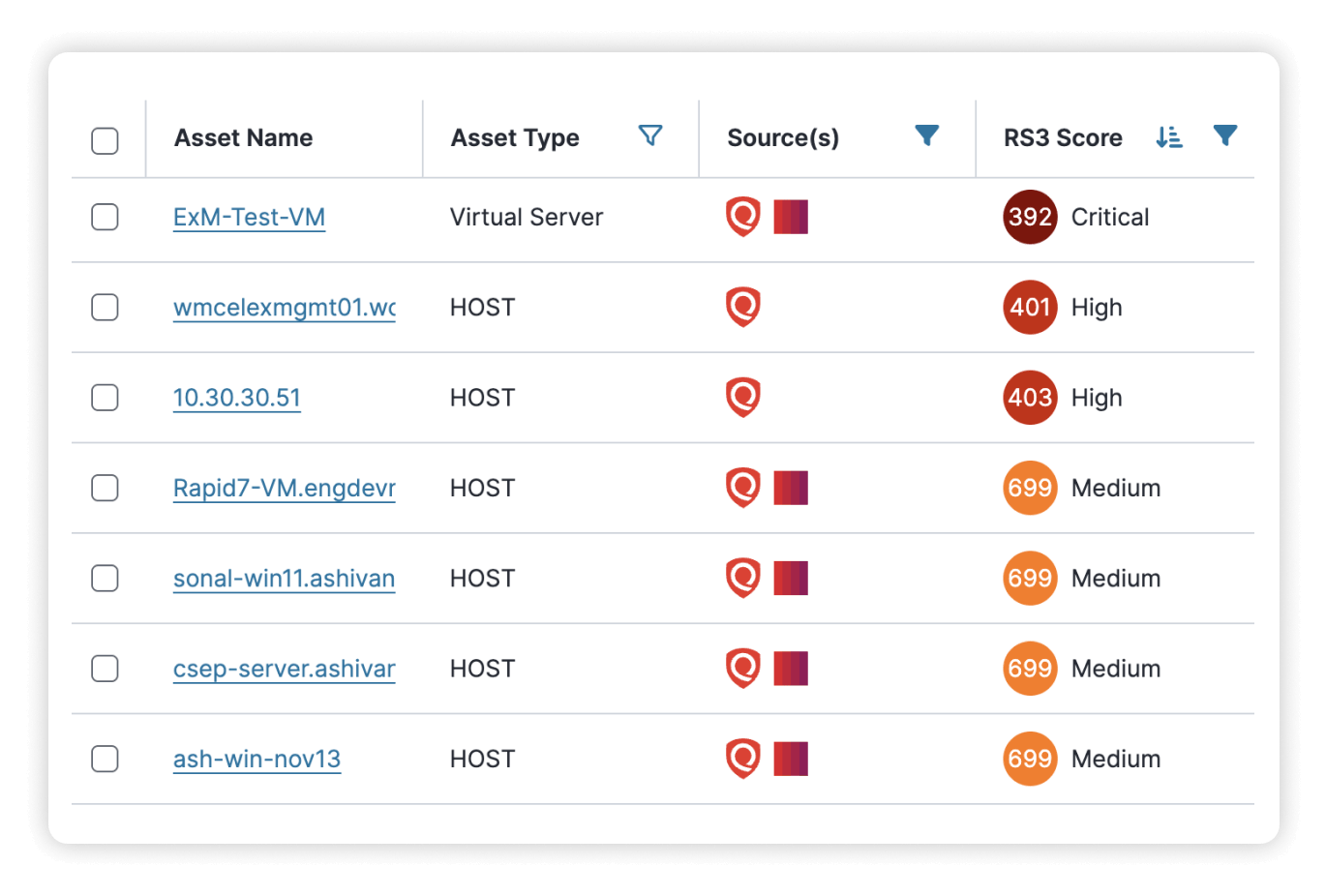
Table listing assets and their vulnerability risk details with columns for asset name, asset type, source icons, and RS3 score. Entries include items such as “ExM‑Test‑VM” (virtual server) with score 392 marked Critical; several hosts like “wmcelexmgmt01.wc” and “10.30.30.51” with scores around 401–403 marked High; and additional hosts with scores of 699 marked Medium. Each row includes selectable checkboxes and small source indicators next to the asset information.

Guide Endpoint Remediation efforts

Connect insight directly to execution.

Turn insight into corrective action by helping teams address blockers, improve endpoint readiness and verify progress against remediation goals.

Dashboard table listing security vulnerabilities (CVEs) with columns for exposure ID, risk rating (VRR), number of impacted assets, last discovery date, sources, and exploit status. Entries show multiple high-risk CVEs (scores around 9–10), affected asset counts ranging from 1 to 21, discovery dates from 2021 to 2026, and notes such as privilege escalation or remote code execution exploits. Controls for export, actions, filtering, and search appear above the table.

How Predictive Remediation improves Patch Compliance

Predictive Remediation connects asset visibility, exposure context, endpoint readiness, predictive compliance, and guided action into a practical workflow before patch execution. Teams move from knowing what needs to be patched to understanding whether patching will meet the required outcome.

Asset visibility

Understand what assets exist, where remediation is needed, and where endpoint coverage or configuration gaps may affect outcomes.

Exposure data

Bring exposure detail from authoritative security systems of record into the patch and Autonomous Endpoint Management context, so risk signals can inform remediation planning.

Remediation insights

Identify what needs to be remediated, why it matters, and which blockers may prevent success.

Predictive compliance

Forecast whether remediation and patch compliance targets are likely to be met before deadlines arrive.

Guided corrective action

Address blockers, improve endpoint readiness, and close remediation gaps before targets are missed.

Verification and progress tracking

Monitor progress against remediation goals and confirm whether corrective actions improve compliance readiness.

System-of-record alignment

Preserve authoritative vulnerability and exposure data , while connecting prioritization, supporting data, action taken, and residual risk to make remediation decisions easier to defend.

Endpoint assessment

Surface endpoint conditions that may affect remediation success before the maintenance window closes.

Compliance validation

Help teams move beyond patch deployment activity and understand whether compliance objectives are likely to be achieved.

Predictive Remediation use cases

Use Predictive Remediation when teams need to forecast compliance outcomes, reduce vulnerability exposure, and give IT and security stakeholders a shared view of remediation risk, readiness and progress.

Prevent missed patch deadlines

Forecast where patch compliance is at risk, and resolve blockers before remediation windows close.

Improve endpoint remediation readiness

Identify configuration issues, targeting gaps and endpoint conditions that could prevent successful patch deployment.

Turn security priorities into executable remediation plans

Translate vulnerability and exposure requirements into prioritized remediation actions that IT operations can execute and track.

FAQs

What makes Predictive Remediation different from traditional patch management?

Predictive Remediation adds predictive compliance to traditional patch management. Instead of only deploying updates and confirming results after execution, it helps teams forecast whether patching will meet required compliance targets, identify blockers, and take guided corrective action earlier in the patch cycle.

What is predictive compliance in patch management?

Predictive compliance is the ability to forecast whether patching and remediation work is likely to meet defined compliance targets before the deadline arrives. It helps IT teams see which assets, endpoint conditions, or blockers may put outcomes at risk so they can intervene earlier.

Does Predictive Remediation replace vulnerability management tools?

No. Predictive Remediation is not intended to replace authoritative security, exposure, or vulnerability tools. It brings timely, exposure-informed context into endpoint remediation workflows, so IT Operations can reduce risk sooner and improve confidence that compliance outcomes will be met.

How does Predictive Remediation utilize the system of record for remediation?

Predictive Remediation incorporates remediation into Autonomous Endpoint Management, connecting asset visibility, exposure context, prioritization rationale, remediation action, and progress tracking in the patch management workflow. Users gain a unified view of what needs attention, why it matters, what action is being taken, and whether compliance outcomes are likely to be met.

How does Predictive Remediation support Autonomous Endpoint Management?

Predictive Remediation supports Autonomous Endpoint Management by connecting endpoint visibility, exposure-informed context, prioritization, guided remediation, predictive compliance, and corrective action into a more proactive endpoint remediation workflow.

When should an organization use Predictive Remediation instead of standard patch management?

Organizations should use Predictive Remediation when they need to predict compliance risk, reduce vulnerability exposure, and understand remediation blockers before patch deadlines are missed. It is especially useful when IT and security teams need a shared view of risk, readiness, and corrective action.

How is predictive compliance different from automated patching?

Automated patching helps execute patch tasks with less manual effort. Predictive compliance helps teams understand whether those patch tasks are likely to meet the required outcome before deadlines arrive, and where corrective action is needed when compliance is at risk.

Close the gap between risk and remediation

See how Predictive Remediation helps IT Operations forecast compliance outcomes, resolve blockers earlier, and improve confidence that remediation targets will be met.