Configuration Management Database (CMDB)

Trusted Configuration Context Built for Real-Time, Relationship-Aware Data

Keep your configuration data accurate, connected and continuously up to date. Ivanti’s Neurons Platform brings together contextual CMDB data, live discovery data and ITAM context to create a trusted system of record, so your teams can act on accurate, connected insight.

Why CMDBs fail and how to fix your configuration data

Most CMDBs fall out of sync with reality: relying on manual updates, siloed data and point-in time snapshots. Ivanti's CMDB stays continuously aligned with your live environment, providing the accurate, contextual and relationship-aware data that change, incident and automation workflows depend on.
Real-time CMDB data configuration

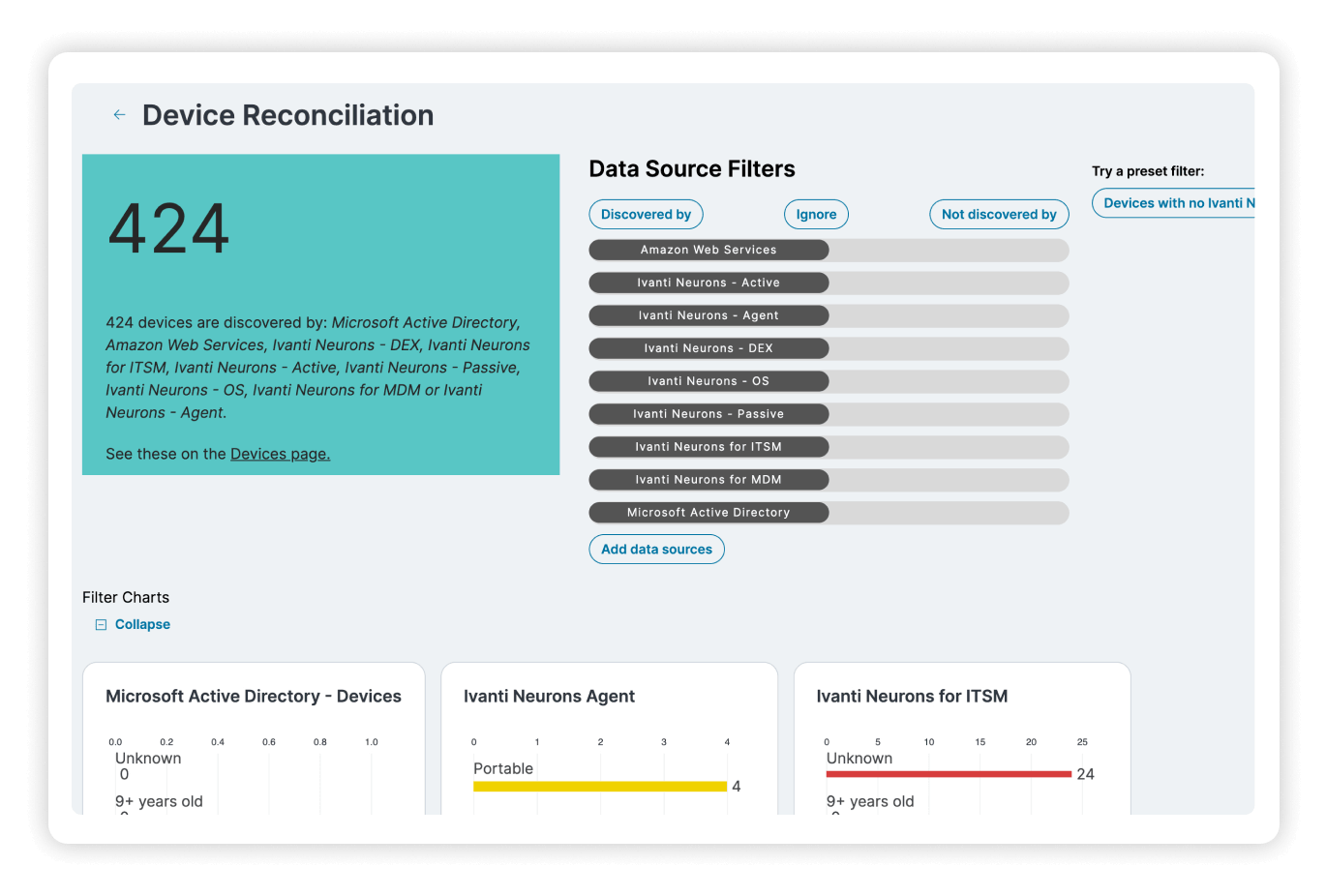
Connect directly to Asset Discovery to keep every configuration item aligned with the real-time state of your environment. Assets are automatically reconciled and normalised as they change, ensuring accuracy without manual updates.

Dashboard titled “Device Reconciliation” showing 424 discovered devices on the left and a panel of data source filters on the right, including options like “Discovered by,” “Ignore,” and “Not discovered by.” Below, filter charts display device data by sources such as Microsoft Active Directory, Ivanti Neurons Agent, and ITSM using horizontal bar graphs.

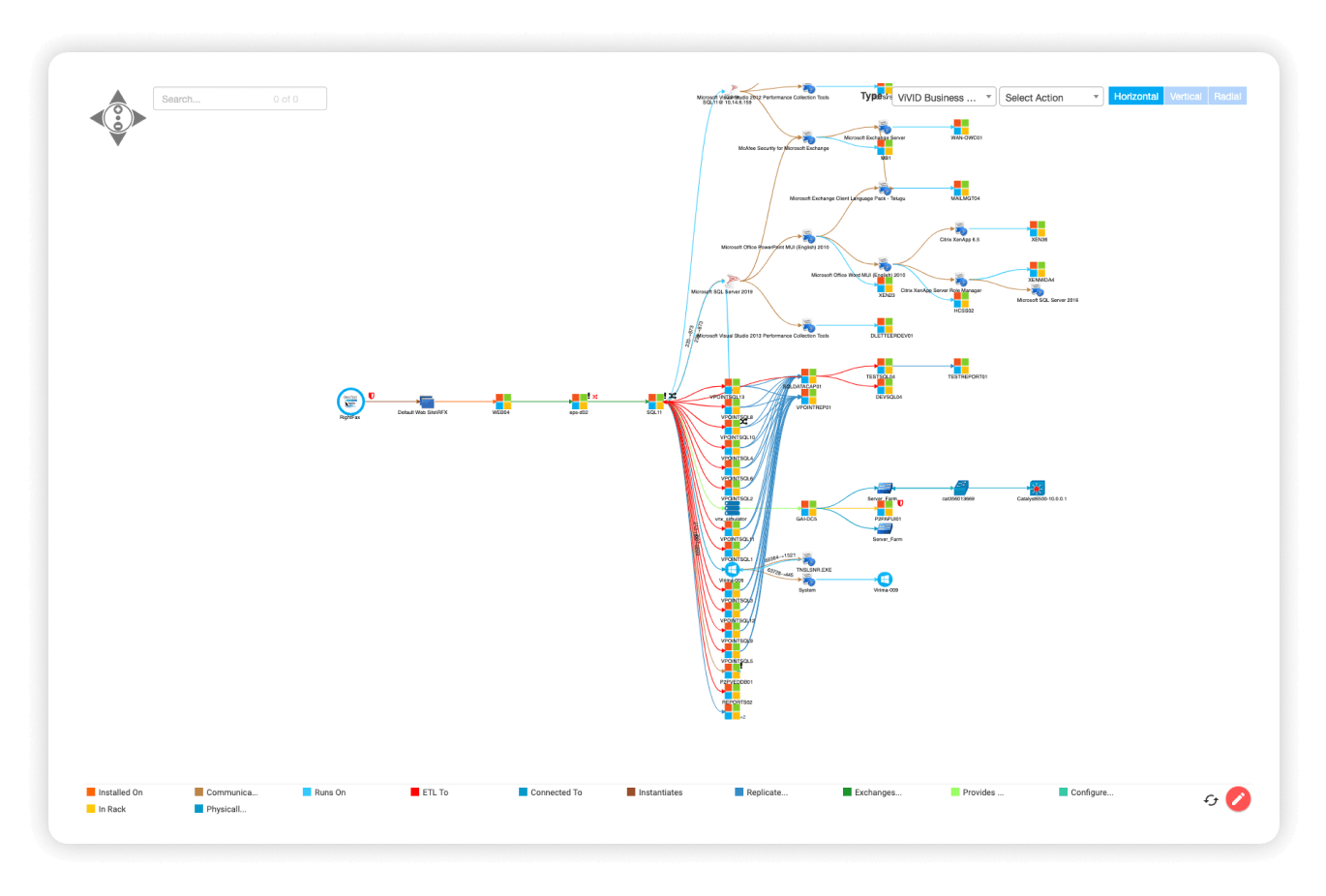
Service and infrastructure relationship mapping (CMDB)

Map dependencies across applications, network connections and business services to understand how everything connects. When something changes, you immediately know what's impacted.

Complex service and infrastructure dependency map showing interconnected servers, applications, and systems branching from a central node, with color‑coded lines indicating relationships such as connections, data flows, and services.

CMDB context for safer, more informed IT automation

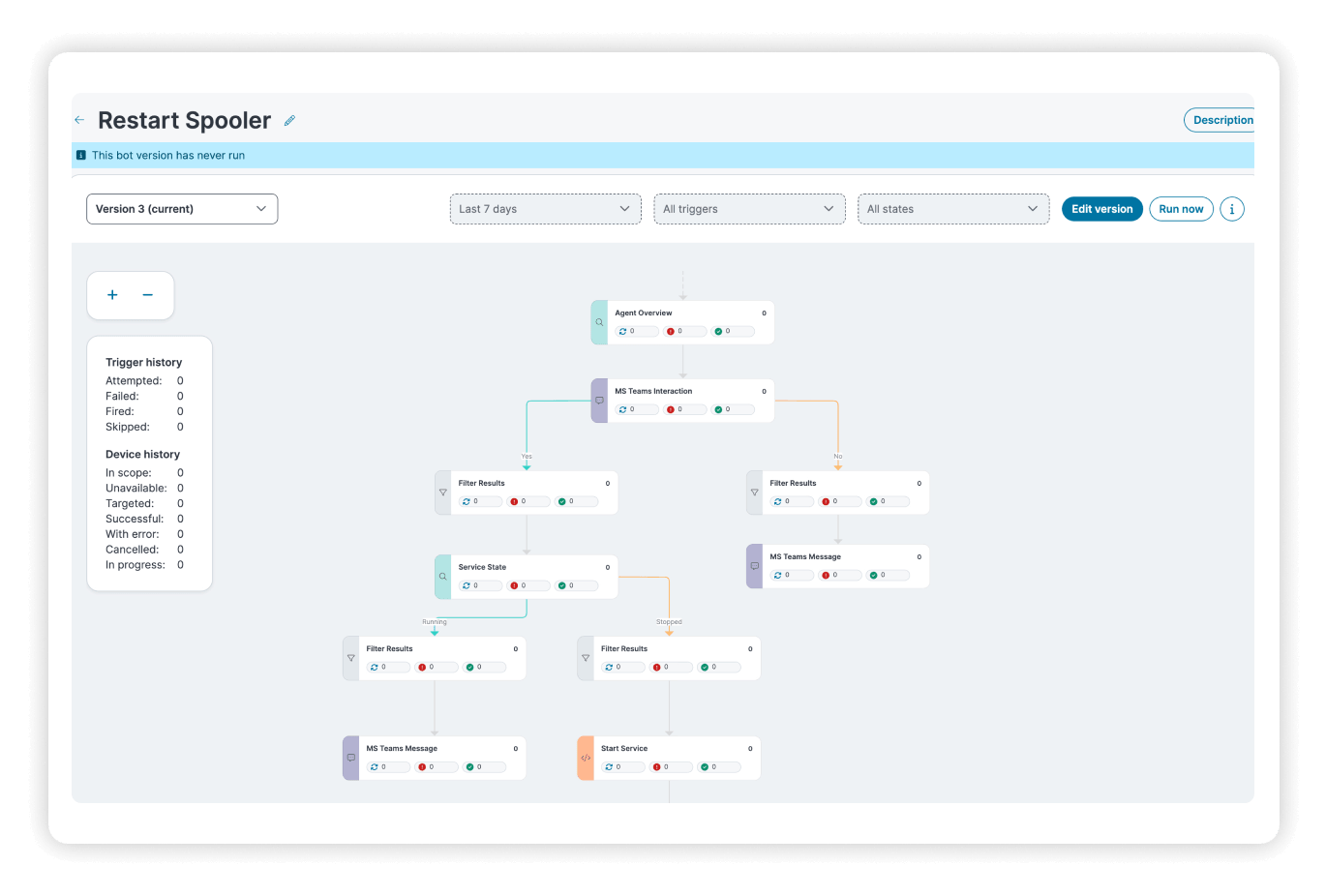
Automation without context creates risk. Provide the relationship data workflows need to evaluate impact, so automations stay grounded in up-to-date, verified configuration data.

Dashboard titled “Restart Spooler” showing an automation workflow diagram with connected nodes such as Agent Overview, MS Teams Interaction, Filter Results, Service State, and Start Service, along with a side panel displaying trigger and device history metrics.

Faster incident resolution with CMDB data

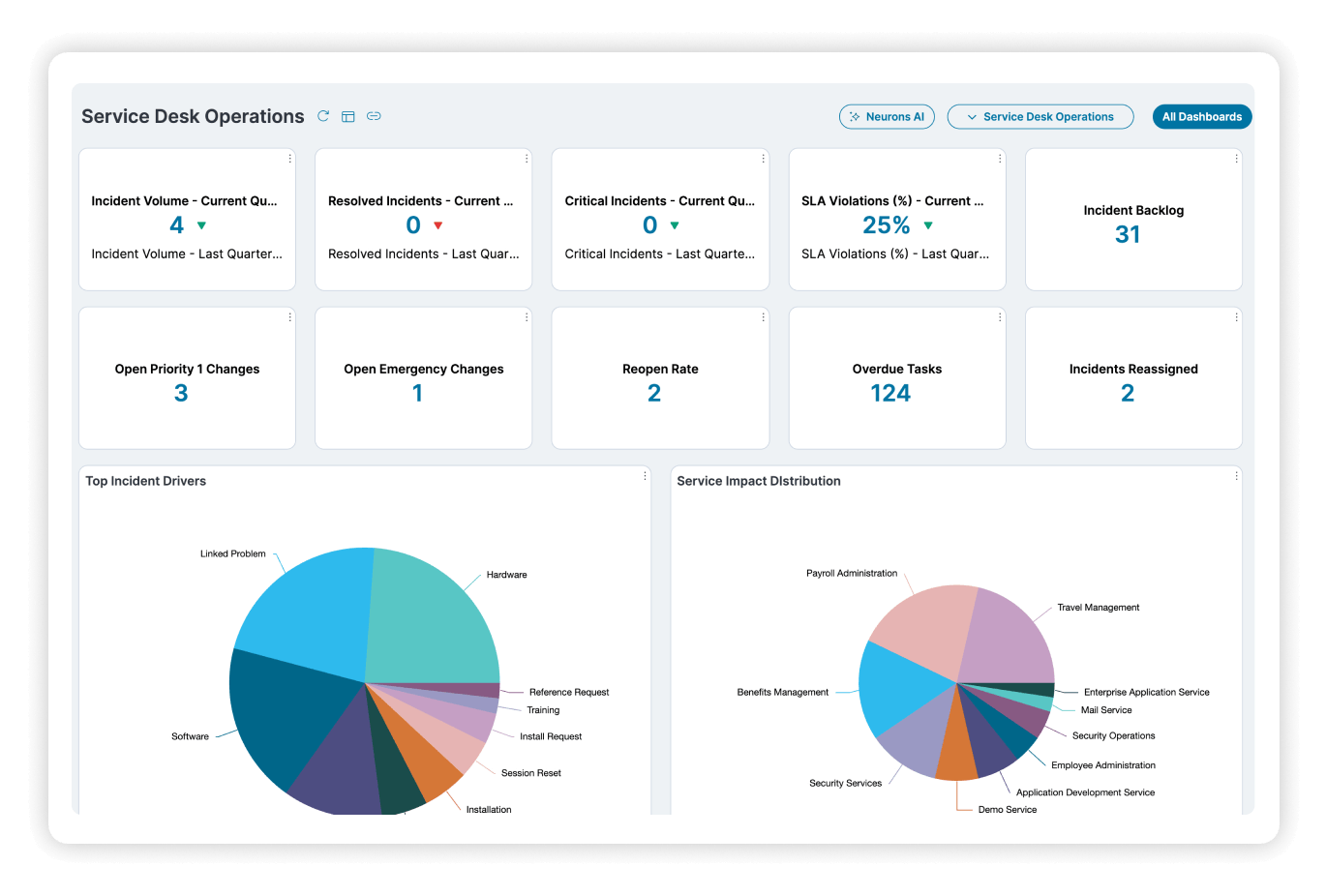
Quickly identify affected systems, dependencies and recent changes with accurate, real-time configuration data, reducing troubleshooting time and accelerating resolution.

Service Desk Operations dashboard displaying key metrics such as incident volume, resolved incidents, critical incidents, SLA violations at 25%, and an incident backlog of 31, along with panels for change activity, overdue tasks, and reassigned incidents, plus two pie charts showing top incident drivers and service impact distribution.

Contextual relationship data, key to a trusted System of Record

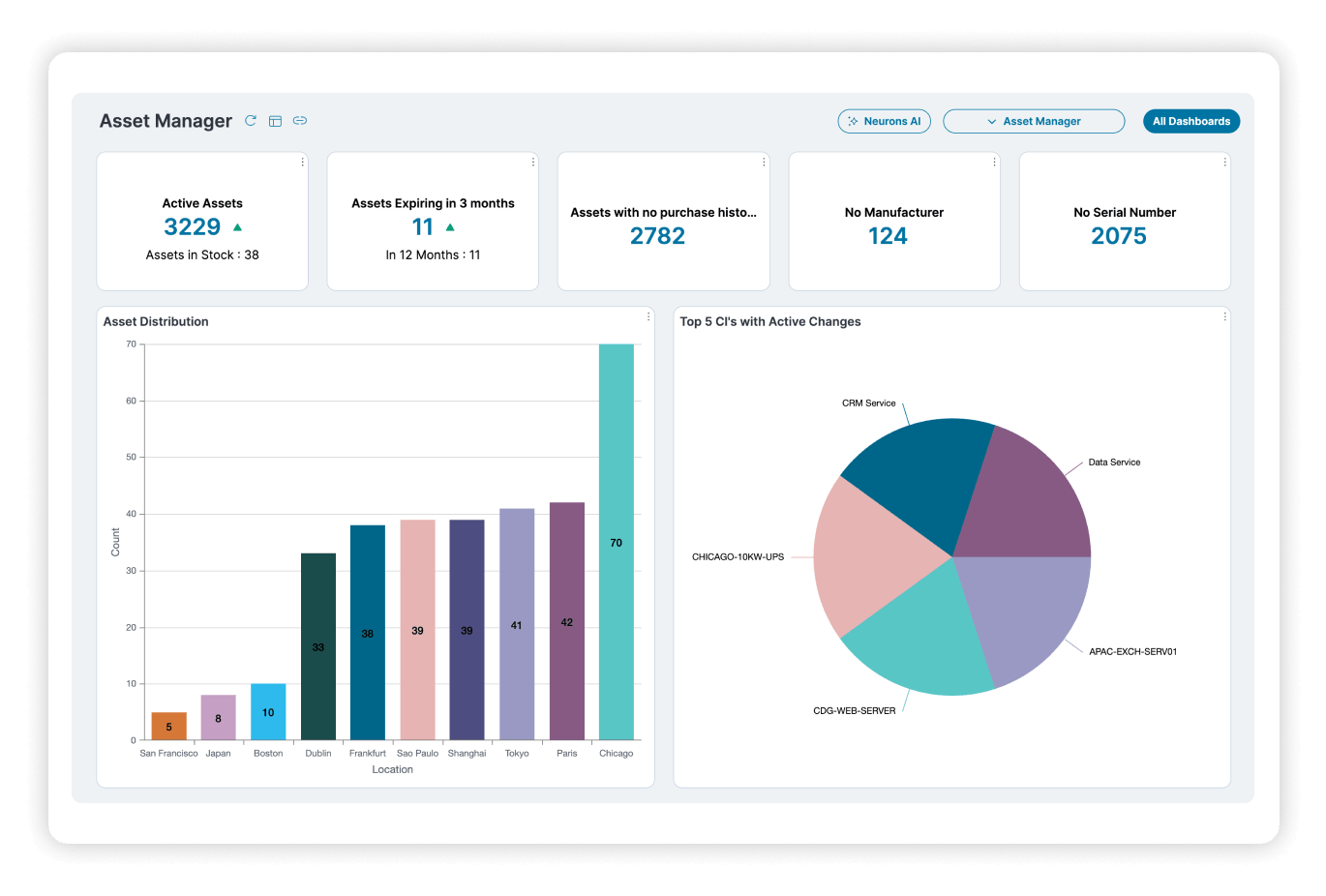
Asset Discovery feeds the data, Asset and Device Inventory structures it and contextual relationships and service context transform the Ivanti Neurons Platform into a single, authoritative system of record.

Asset Manager dashboard displaying key metrics such as 3,229 active assets, 11 assets expiring in three months, 2,782 assets without purchase history, 124 without manufacturer, and 2,075 without serial number, along with a bar chart showing asset distribution by location and a pie chart of top configuration items with active changes.

Features and capabilities

Contextual configuration data built for accuracy and designed for action

Give your configuration record the depth, reliability and connectivity your operations demand.

Automated CI discovery & reconciliation

Continuously discover and reconcile configuration items across your environment, ensuring accurate, consistent data without manual intervention.


Application dependency mapping

Map dependencies across infrastructure, applications and services to reduce risk and improve change and incident response.

Change history & configuration drift tracking

Preserve a detailed change history for every CI, so teams can identify drift, trace the origin of any issue and maintain the audit trail compliance demands.

ITSM workflow integration

Surface accurate CI data at the point of need across Change, Incident, Problem and Service Mapping, so every ITIL process runs on verified configuration truth, not memory or guesswork.

Business service modelling

Aggregate infrastructure, application and dependency data into end-to-end service views, so IT leaders can prioritise work by business impact rather than technical severity alone.

Role-based data governance & ownership

Assign CI ownership, data stewardship responsibilities, and review workflows to keep your configuration record accurate, accountable, and trusted. Because data authority is a discipline as much as a capability.

Open APIs for cross-enterprise context

Open APIs make CI data, relationships and service context available across your entire IT and security ecosystem, feeding your ITSM platform, SIEM/SOAR, AI agents and every automation layer that needs a trusted foundation.

AI-ready configuration context

Provide continuously updated, relationship-rich data that AI and automation depend on for accurate decisions.

FAQs

What is CMDB software and how does it differ from a CMDB?

A CMDB (Configuration Management Database) is a repository that tracks configuration items (CIs) and the relationships between them. CMDB software is what keeps that repository accurate, current, and actionable. Without it, a CMDB quickly falls out of sync with reality: manual updates lag behind changes, data siloes fragment the record, and point-in-time snapshots age the moment they’re taken. Ivanti’s CMDB addresses this by continuously synchronising with live Asset Discovery data, automatically reconciling CI records, and maintaining the contextual relationships that make the database genuinely useful, so your teams always know what exists in their environment, how it connects, and what depends on it.

How does CMDB software improve ITSM and incident management?

Every core ITIL process depends on accurate configuration data. In Change Management, contextual relationship data shows what will be affected before a change is approved, preventing failed changes before they happen. In Incident Management, accurate CI data surfaces what changed and what depends on what, eliminating the troubleshooting delays that stale configuration records create. In Problem Management, a complete change history enables root cause analysis grounded in verified state rather than guesswork. And in Service Mapping, dependency relationships connect infrastructure components to the business services that rely on them. When every ITIL process runs on verified configuration truth, outcomes improve across the board, from faster resolution times to fewer failed changes.

What makes a CMDB trustworthy and accurate?

Trust in a CMDB comes from continuous synchronisation, not periodic snapshots. Ivanti’s CMDB is natively integrated with Asset Discovery within the Ivanti Neurons Platform, ensuring every CI is automatically reconciled and normalised as the environment changes, so your configuration record reflects what actually exists, not what was last manually updated. But accuracy alone isn’t enough. Ivanti CMDB also maintains a full change history for every CI to detect configuration drift and support compliance audits, supports role-based governance and CI ownership assignment to keep the record accountable, and preserves contextual relationships that reflect how assets actually connect, so the data your teams act on is not just current, but meaningful.

How does CMDB software support automation and AI?

Automation and AI acting on inaccurate or incomplete configuration data creates risk, not value. Ivanti’s CMDB provides the contextual relationship data that automation workflows and AI agents depend on to make sound decisions: what assets exist, how they connect, what changed recently, and what depends on what. This is the institutional memory that AI cannot reconstruct on its own — the durable record of relationships, dependencies, and change history that gives automated actions the context they need to be safe and trustworthy. Within the Ivanti Neurons Platform, verified CMDB data is what allows Autonomous Endpoint Management to act at scale with confidence, writing results back to keep the record current after every action.

What is the difference between CMDB and IT asset management (ITAM)?

ITAM and CMDB are complementary capabilities within the Ivanti Neurons Platform that serve distinct but reinforcing roles. ITAM assigns ownership, lifecycle context, and financial accountability to every asset, tracking hardware and software from procurement to retirement and answering questions like “what do we have, who owns it, and what does it cost?” CMDB adds the layer of contextual relationships: how assets connect to each other, what depends on what, and how infrastructure components support the business services your organisation runs on. Together, they form the core of the platform’s unified data foundation. ITAM structures the asset record, CMDB enriches it with service context and relationship intelligence. You need both to have a system of record that’s truly authoritative.

A modern CMDB that keeps pace with your constantly changing IT environment

Know exactly what exists, how it connects and what depends on it.