Trusted data, self-healing and autonomous action

Autonomous Endpoint Management

Built on governed automation and trusted visibility to reduce risk, improve digital experiences, and respond with greater confidence.

$11.2M in financial benefits
over 3 years*

483% ROI with an 8-month
payback period*

66,000 manual tasks
automated annually*

*Please note these are ROI results from a specific implementation; customer results will vary based on  environment, configuration, usage.

Act faster, reduce risk and keep teams productive

Ivanti Autonomous Endpoint Management provides trusted data, clear oversight and automation IT and security teams can rely on to resolve issues proactively, reduce disruption, scale operations and strengthen resilience over time.

Features and capabilities

Autonomous, predictive and protective

Data, automation and AI combine to deliver greater visibility, smarter prioritization, faster remediation and superior digital experiences.

Trusted visibility and data authority

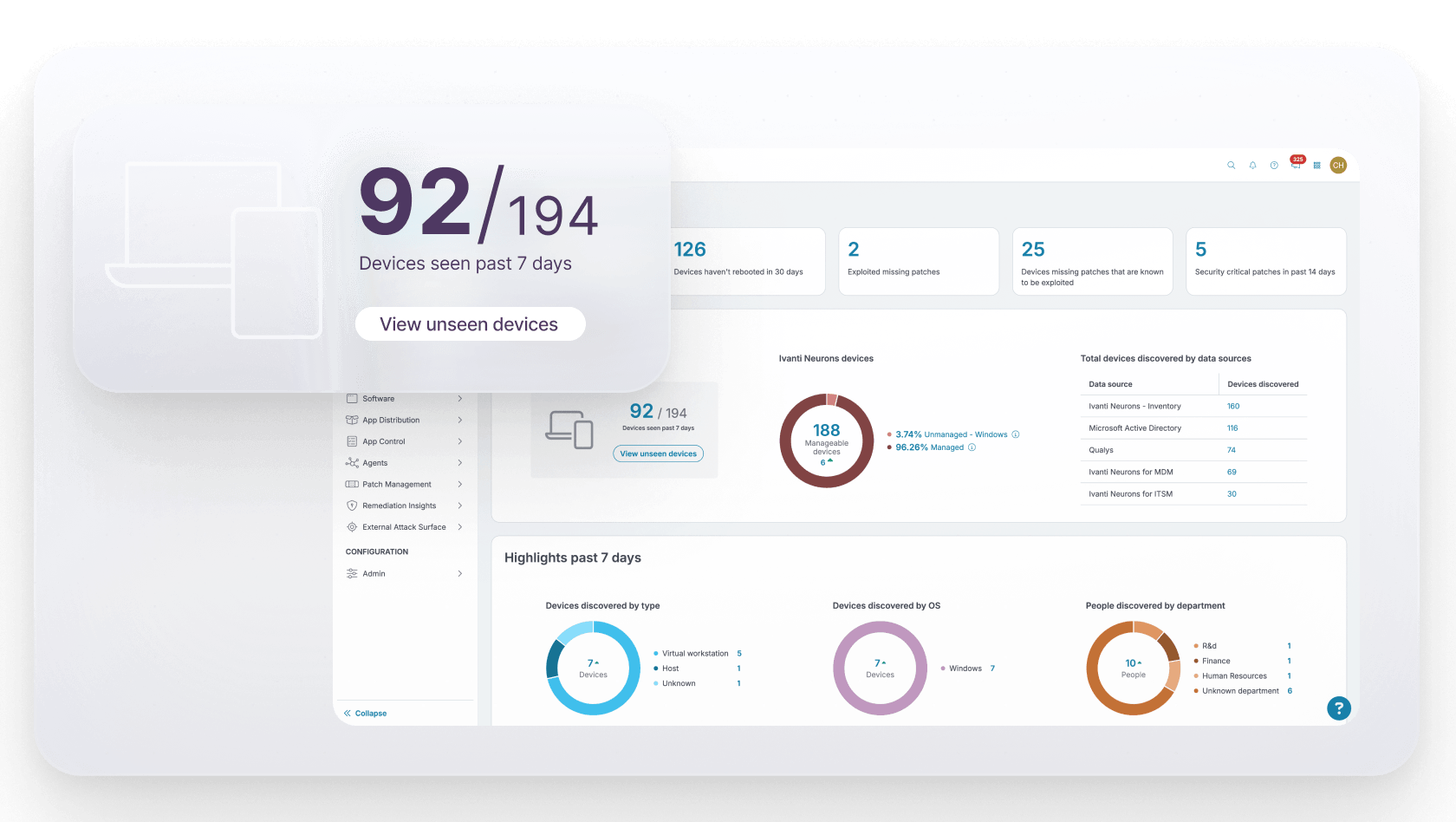
Establish a trusted, continuously updated view of devices, software, configurations and exposures so every decision starts with accurate context.
Governed AI for IT efficiency

AI-powered workflows to scale operations, improve IT efficiency and reduce service ticket volume, all while maintaining governance and human judgment.

Autonomous remediation

Self-healing and automated resolution prevents common endpoint issues, deflects tickets and frees IT and security teams to focus on strategic work.

Productive, frictionless digital experiences

Detect experience issues early, remediate automatically and reduce downtime so employees stay productive and IT delivers a more reliable digital workplace.

Autonomous patching and continuous compliance

Prioritize and automate patching based on risk, exposure and risk appetite, then verify results and maintain continuous compliance with governed workflows.

Security by design, built into operations

Build security into everyday operations with continuous discovery, policy enforcement, exposure reduction, compliance and coordinated workflows across IT and security operations.

Key use cases to support your business

Asset Visibility
Self-Healing
Digital Experience
Autonomous Patching

Gain total visibility of assets, software and exposures

At-a-glance view of all your assets so your teams can make faster decisions, automate with confidence and reduce blind spots across the environment.

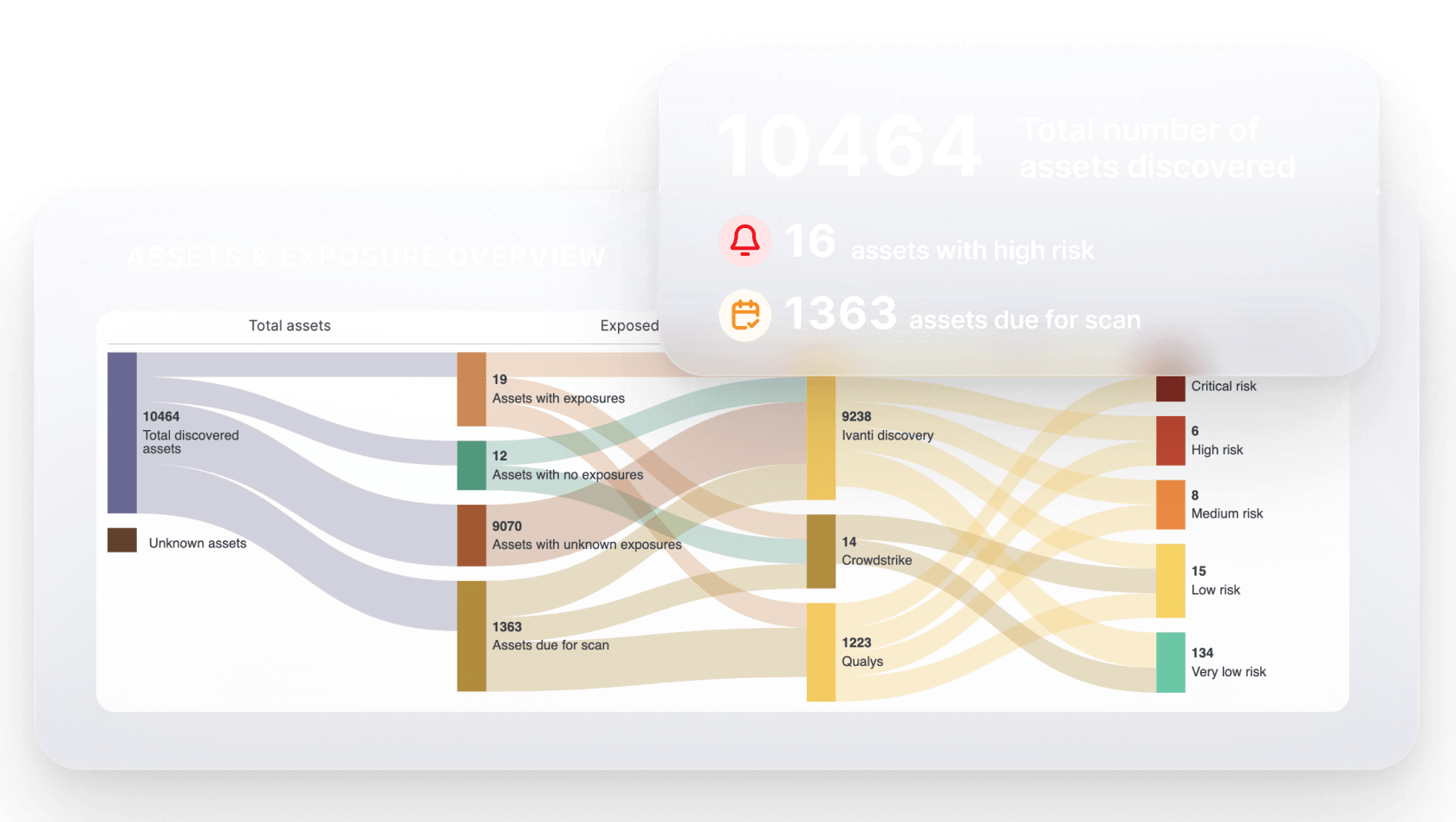
Sankey diagram visualizing asset exposure data, showing total discovered assets, exposure categories, data sources, and security risk scores ranging from critical to very low risk.

Resolve issues before they disrupt work

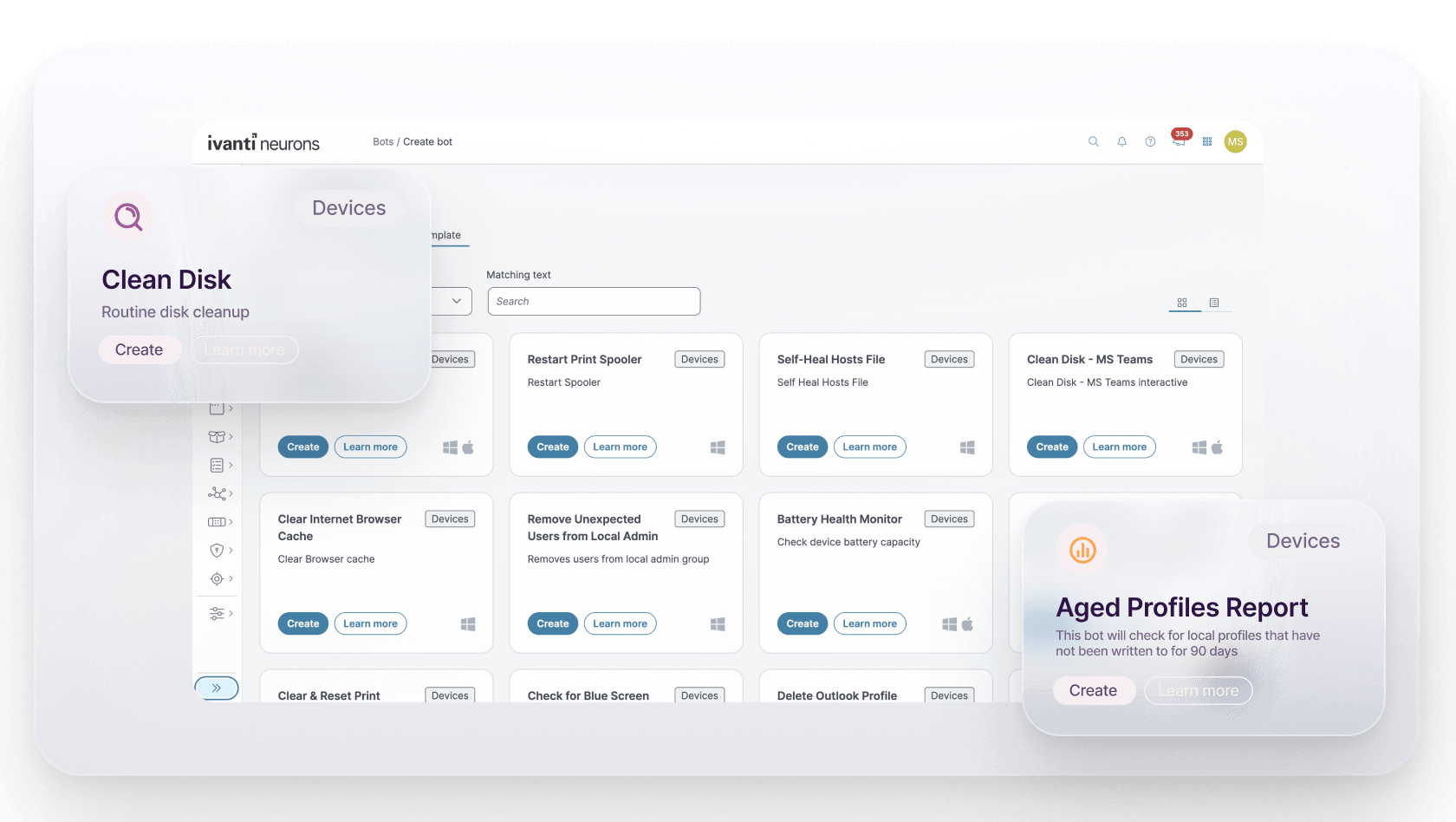
Automatically fix routine issues and reduce ticket volume so your IT team can spend less time on repeat tasks and more time on higher-value work.

Ivanti Neurons interface for creating self-healing automation bots, displaying a library of prebuilt remediation workflows such as printer fixes, disk cleanup, browser cache clearing, and device health monitoring.

Keep employees productive with a frictionless experience

Target and fix digital experience issues before they become downtime.

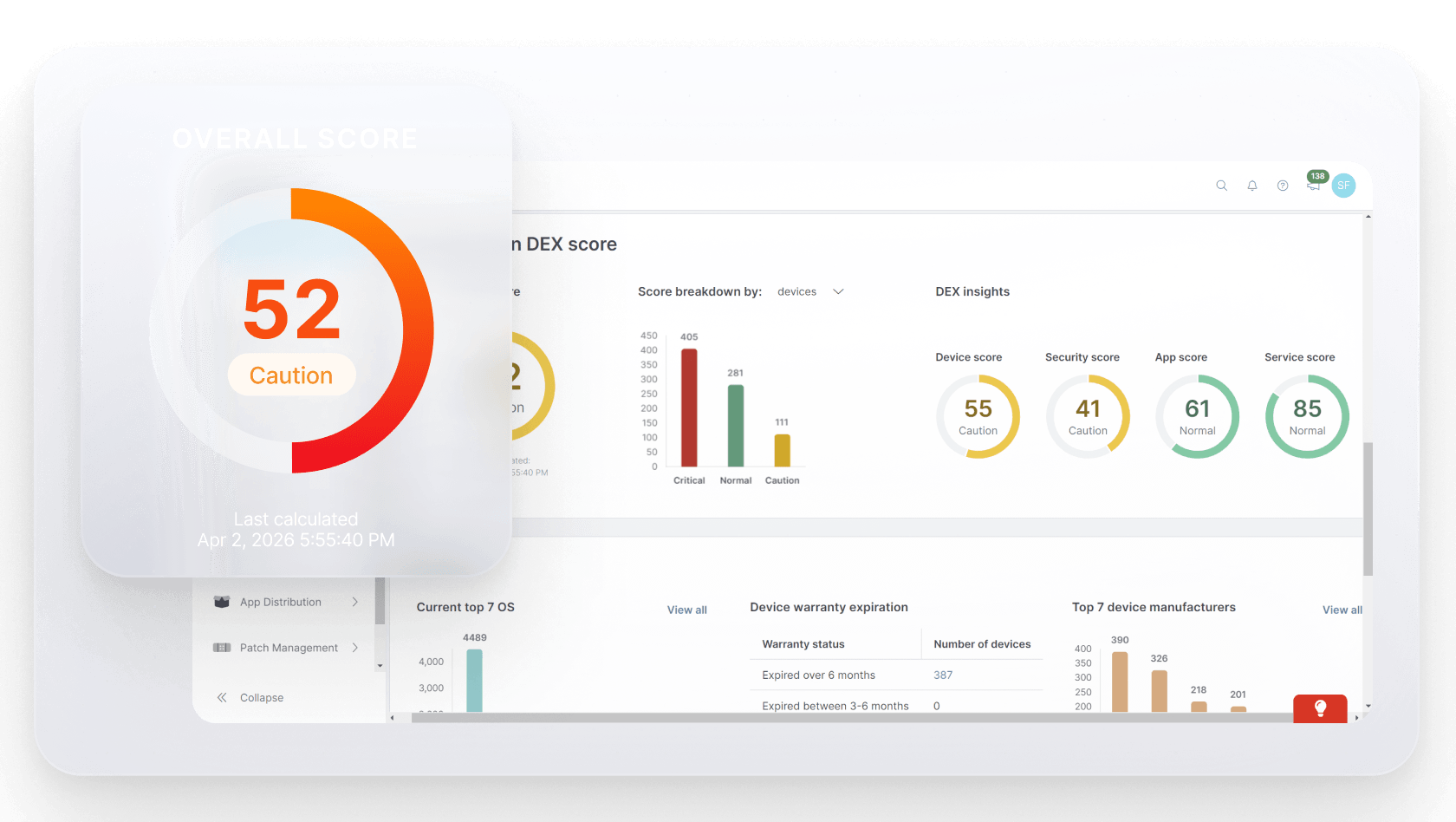
Ivanti Neurons Digital Employee Experience dashboard showing an overall DEX score, device health insights, security, application, and service scores, along with device inventory and warranty analytics

Fix the risks that matter most, faster

Prioritize the right vulnerabilities, automate patching and verify results so your teams can reduce exposure sooner and keep compliance on track.

Ivanti Neurons dashboard displaying device management metrics, including operating system distribution, device warranty status, top device manufacturers, and software inventory charts with installation statistics.

Empower teams to act with confidence

Ivanti Autonomous Endpoint Management provides a connected journey from trusted endpoint data to unified management, provisioning, app delivery, risk-based patching and troubleshooting to autonomous remediation and analytics.

Establish trusted visibility

Asset discovery

Continuously discover managed, unmanaged and shadow IT assets to reduce blind spots and create a trusted foundation for management, security and automation.

Device inventory

Maintain a continuously updated inventory of devices, configurations, ownership details and endpoint context so teams can act with confidence.

Software estate management

Understand software, usage, versions and exposure across the estate to rationalize applications, reduce risk and make smarter endpoint decisions.

Manage and deploy at scale

Multi-OS endpoint management

Manage every endpoint across enrollment, policy, configuration, app delivery, security and retirement.

Device enrollment and OS provisioning

Prepare and provision new devices faster with modern enrollment and setup workflows that improve consistency and speed time to readiness.

App deployment and self-service

Distribute apps, publish a self-service catalog and streamline software delivery so employees get what they need while IT stays in control.

Protect, patch and support

Risk-based patch management
Deliver risk-aware, autonomous patch management to continuously reduce exposure and keep devices protected.

Secure access, app access and governance
Apply conditional access, secure connectivity, app controls and governance policies across device types to strengthen compliance and reduce risk.

Remote support, control and device actions
Run scripts, reboot devices, trigger key actions, remotely control endpoints and provide support to resolve issues more effectively.

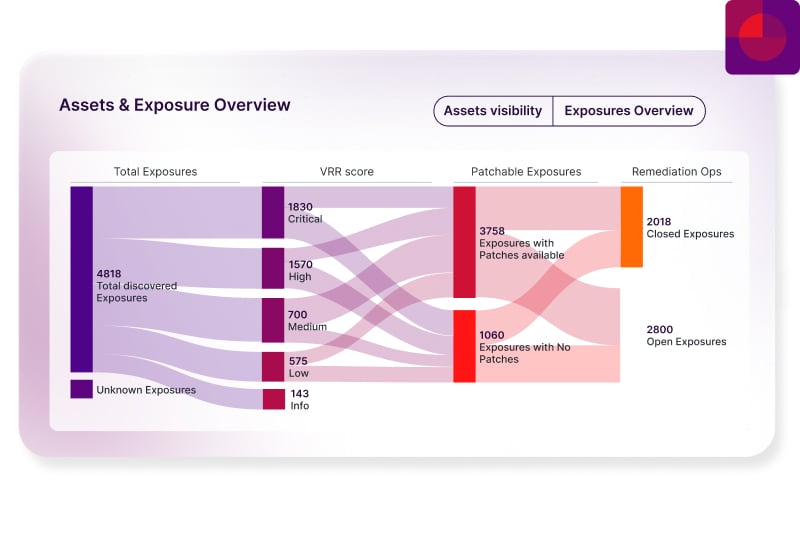
Assets & exposure dashboard with a Sankey-style flow diagram titled “Assets & Exposure Overview.” It shows 4,818 total discovered exposures flowing into risk levels (1,830 critical, 1,570 high, 700 medium, 575 low, 143 informational). These connect to patchable exposures (3,758 with patches available and 1,060 with no patches) and then to remediation outcomes, with 2,018 closed exposures and 2,800 open exposures. Gradient purple, red, and orange flows illustrate the volume between each stage.

Automate and optimize operations

Fleet remediation and bulk actions
Take one-to-many action across device groups to resolve issues, enforce changes and reduce manual effort at scale.

Autonomous actions and bots
Use bot actions and autonomous remediation to diagnose, fix and automate routine work with governance and control so teams can scale without added complexity.

Experience and endpoint analytics
Monitor device health, measure digital experience, surface insights and use live endpoint data to make faster decisions and continuously improve outcomes.

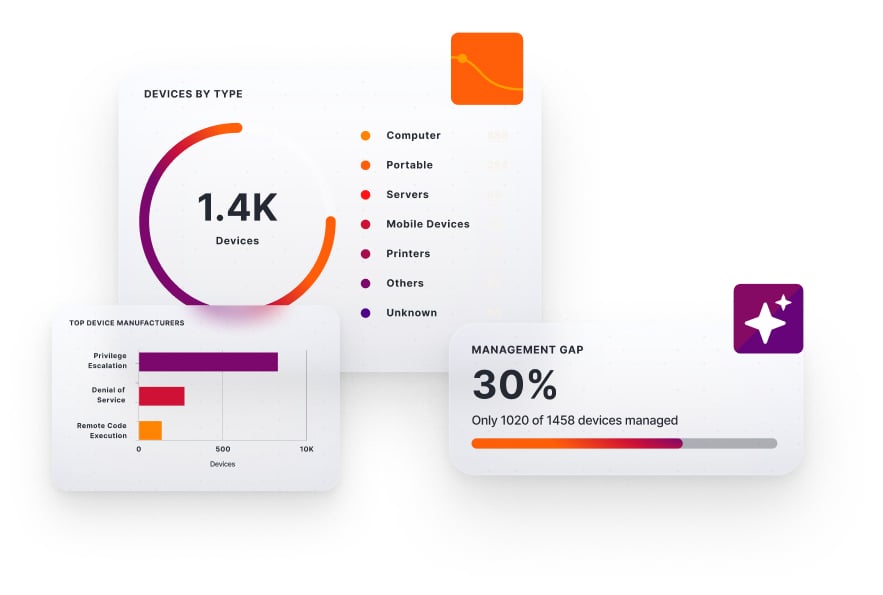
Dashboard-style graphic with multiple data cards showing device inventory metrics. A circular chart labeled “Devices by Type” displays “1.4K Devices,” with categories listed to the right such as Computer, Portable, Servers, Mobile Devices, Printers, Others, and Unknown. A bar chart titled “Top Device Manufacturers” compares counts for Privilege Escalation, Denial of Service, and Remote Code Execution. Another card titled “Management Gap” shows “30%” with a note stating only 1020 of 1458 devices are managed, accompanied by a horizontal progress bar. Bright gradients in orange, purple, and pink appear throughout the design.

Award recognition

2026 product of the year winner for Autonomous Endpoint Management

Ivanti Autonomous Endpoint Management was named a 2026 Product of the Year winner by Cloud Computing Magazine, recognizing its role in helping organizations reduce manual effort, improve security and scale IT operations more efficiently.

POTY Cloud Computing Winner badge

Resources to help you explore Autonomous Endpoint Management

FAQs

What is Autonomous Endpoint Management?

Autonomous Endpoint Management (AEM) is an AI-driven approach to managing and protecting endpoints that can detect, decide and resolve issues without manual intervention to reduce effort while improving speed, accuracy and outcomes.

How is AEM different from UEM?

Unified Endpoint Management (UEM) provides centralized visibility and control across devices. Autonomous Endpoint Management builds on this foundation by adding intelligence and autonomous action shifting from managing endpoints to enabling devices to self-heal.

How does autonomous remediation work?

Autonomous Endpoint Management continuously monitors endpoints, uses AI to analyze context and prioritize issues to automatically execute remediation actions such as patching, configuration changes and then verifies continuous compliance.

What problems does AEM solve?

Autonomous Endpoint Management helps IT and Security teams to reduce manual workload, eliminate visibility gaps, improve compliance, strengthen security and scale operations more efficiently across complex endpoint environments.

What are examples of autonomous endpoint actions?

Examples include automatically applying patches, fixing configuration drift, resolving digital performance issues, isolating risk devices and provisioning new endpoints for onboarding without manual setup.

How can autonomous endpoint management improve IT security for businesses?

Autonomous Endpoint Management improves security by continuously identifying risks, prioritizing vulnerabilities based on impact and automatically remediating them reducing exposure windows and ensuring consistent compliance across all endpoints.

See what Autonomous Endpoint Management can do for your team

Talk with Ivanti to see how trusted data, governed AI and proactive remediation can help your organization move forward with confidence.