Key Takeaways
- Patching silos stem from technology fragmentation, not team dysfunction. IT and security teams operate from different tools showing conflicting endpoint inventories, vulnerability counts and patch deployment status, creating misalignment that collaboration alone can't fix.
- Autonomous endpoint management (AEM) eliminates data conflicts by unifying visibility AI intelligence can correlate endpoint discovery, vulnerability data, device health and patch status into a single continuously updated view that both IT and security teams can trust.
- AI-driven patch prioritization accelerates risk reduction by focusing on real-world threats — Instead of relying solely on severity scores, AI factors in exploit activity, asset criticality, and exposure context to align teams on which vulnerabilities to patch first.
"We see 10,000 critical vulnerabilities!"
"We patched everything last week!"
This conversation happens in enterprise IT departments every single day. Security teams present dashboards filled with red alerts. IT teams show deployment reports at 98% success. Both teams are looking at real data. Both are absolutely correct. And both are totally blind to what's actually happening across the endpoint environment.
This isn't a people problem — your teams aren't incompetent. It's not a process problem — your workflows aren't broken. It's a technology problem: you're asking two teams to manage the same risk using systems that show them different realities.
Security teams are given one version of reality through vulnerability scanners and threat intelligence. Meanwhile, IT teams see things differently when looking at their device management and patch deployment reports.
The tricky part is that both views can be correct in isolation and still be misleading in practice. That's how you end up in the familiar stalemate: security reports thousands of critical vulnerabilities; IT reports that patches are successfully deployed. The disconnect lives in the gap between those systems.
Why IT and security are misaligned on patching
Most organizations approach patching misalignment between IT and security by improving communication between IT and security. They schedule more meetings. They create escalation paths. They implement SLAs. And six months later, they're having the exact same argument with better PowerPoint slides.
Here's what nobody wants to admit: you can't collaborate your way out of a data fragmentation problem. When IT and security are working from fundamentally different inventories of what exists, what's vulnerable and what's been fixed, adding more coordination overhead just slows down an already broken process.
This is why the same conversation plays out again and again inside many organizations. Both teams are confident in their data, and both are “right” within the narrow context of the tools they rely on.
And that’s the problem. While both views are “right,” neither reflects the full lifecycle of risk. Vulnerability data doesn’t always reflect whether affected devices are managed or reachable. Patch reports don’t always account for unmanaged, misclassified or newly discovered endpoints that still have access to corporate resources. What’s missing is a reliable answer to the only question that actually matters: which endpoints are exposed right now?
Technology silos create conflicting realities
Most enterprises manage endpoints through a hodgepodge of systems that have evolved independently over time, each capturing only a fragment of reality.
One system may surface critical exposure without knowing whether the device is being managed. Another may confirm successful remediation without accounting for newly discovered or misclassified endpoints that still have access. The result? No reliable way to trace risk from detection through deployment to actual exposure.
Consider this: the average organization manages only 60% of their edge devices, according to Ivanti's Securing the Borderless Digital Landscape Report. That means 40% of potential entry points exist outside IT's view and outside their patch workflows. Security sees them. IT doesn't. That's your vulnerability gap. Without that continuity, teams are forced to reconcile partial views manually. Data gets debated instead of acted on.
Different data views lead to friction
Imagine it’s Monday morning: Security discovers a critical zero-day in a widely used VPN client. They send an urgent alert to IT: "30,000 vulnerable endpoints detected — patch immediately."
IT checks their deployment console: "VPN client already updated across 28,000 devices last Thursday."
Both statements are true. Security is scanning the entire network — including contractor laptops, BYOD devices and systems that briefly connected to the VPN but aren't under IT management. IT patched everything in their device inventory.
Meanwhile, 2,000 genuinely vulnerable endpoints remain exposed because they exist in Security's view but not IT's. The patch that should have taken 24 hours now requires three days of manual reconciliation.
When IT and security operate from different data sources, misaligned vulnerability management priorities are inevitable. Security teams focus on vulnerability counts, severity scores and exploit intelligence. IT teams prioritize deployment success, system stability and user impact. Both perspectives are necessary, but without a shared frame of reference, they pull in different directions.
What follows isn’t just tension; it’s decision paralysis. Remediation slows while teams reconcile inventories, validate findings and argue about scope. Vulnerabilities remain open longer than they should, not because patches aren’t available, but because there’s no single view that connects detection, deployment and exposure.
The risk of misaligned patching priorities
Misalignment slows collaboration, but more so, it creates measurable risk that extends well beyond internal friction.
Ivanti’s Autonomous Endpoint Management research reflects this challenge in practice:
- 38% of IT professionals report difficulty tracking patch status.
- 35% struggle to meet remediation timelines due to incomplete endpoint visibility.
When vulnerabilities remain open longer than necessary, the window of exposure grows. Attackers don’t wait. The CISA KEV catalog reveals the difficult truth: 30% of vulnerabilities being actively exploited right now were originally disclosed more than five years ago.
That's not a patching problem; it’s a visibility problem. Organizations aren't ignoring available patches; they're missing the endpoints that still need them.
Prolonged exposure windows and breach risk
Fragmentation stretches exposure windows in subtle ways. Devices that were never enrolled in management platforms, such as shadow BYOD, unsecured contractor devices or remote endpoints outside the traditional perimeter, often go unnoticed.
Research from Ivanti shows that only one in three employers have implemented zero trust network access for remote workers, leaving significant gaps in visibility across distributed environments. Newly discovered endpoints appear after patch reports are generated. Systems drift out of compliance between scan cycles. Each delay compounds the risk, extending the time attackers have to weaponize known weaknesses.
Common post-patch issues and IT ticket overload
Even when patches are deployed on schedule, manual patching often creates downstream issues. Failed updates, broken agents, performance problems and unexpected reboots trigger support tickets and emergency fixes. What starts as a security task quickly becomes an operational drain.
IT teams spend time resolving predictable failures instead of improving endpoint posture. Security teams see delays as unresolved risk. Users associate patching with disruption. That friction persists across teams, even when their goals are aligned.
Transforming patch management with autonomous endpoint management
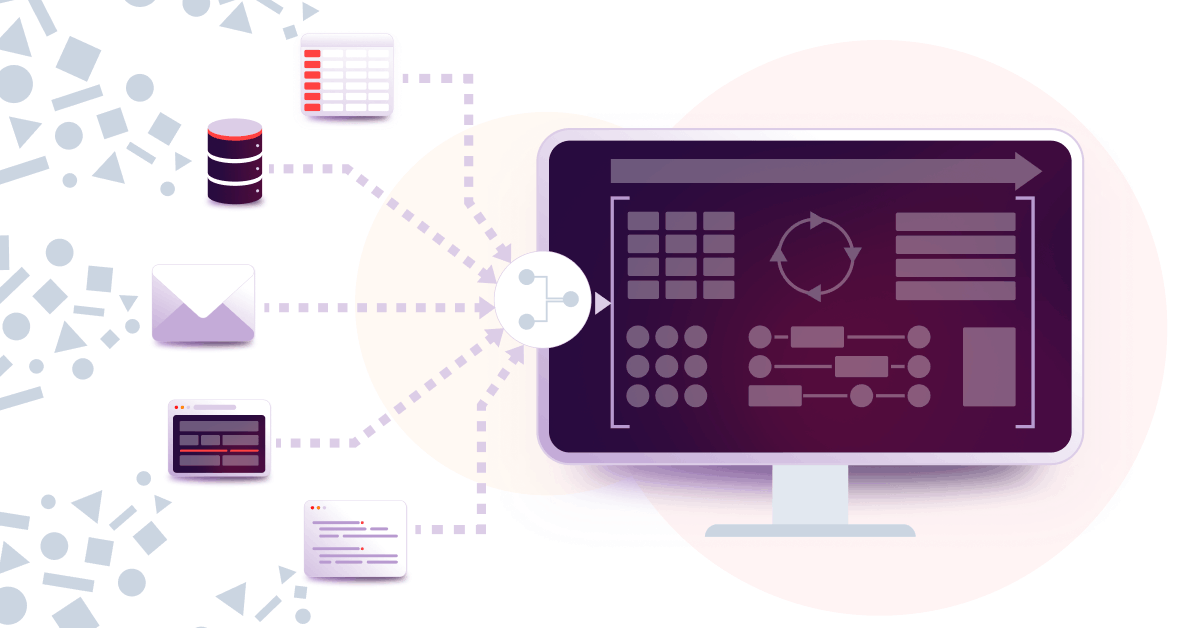
AI and automation address the core disconnects in patch management by unifying visibility and reducing manual coordination. When endpoint discovery, vulnerability data, device health and patch status are correlated into a unified view, IT and security teams can work from the same facts instead of reconciling partial data across tools.
Autonomous endpoint management (AEM) brings clarity to the confusion by using AI intelligence and automation to give IT and security a single, continuously updated view of endpoints, their health and their exposure.
How AI improves patching decisions
AI improves patching decisions by prioritizing vulnerabilities based on real-world risk rather than severity scores alone. By factoring in exploit activity, asset criticality and exposure context, teams can align on what to patch first and focus effort where it will reduce risk fastest.
With autonomous endpoint management, that same Monday morning scenario plays out differently:
The vulnerability is detected, and AI immediately cross-references it against a unified endpoint inventory. It identifies 1,560 devices running the vulnerable version, including 217 devices that were previously unmanaged.
Automated patch workflows simultaneously: enroll the unmanaged devices, prioritize patching based on exposure risk and asset criticality. They then schedule deployment during low-usage windows, and begin ring-based rollout.
By the time the security team sends the alert, IT already has a real-time dashboard showing remediation in progress — with the same device count, the same exposure data and the same prioritization logic. No reconciliation necessary.
How automation accelerates remediation
Automation then turns those decisions into action. Patch workflows can be orchestrated end to end: identifying affected devices, deploying updates and validating remediation without constant manual intervention.
AI-powered intelligent patch scheduling minimizes user impact by aligning deployments with device usage patterns, maintenance windows and operational constraints. Ring-based rollouts allow patches to be validated on smaller groups before wider deployment, reducing disruption while accelerating remediation. The result is faster patching, less downtime and a more predictable process for both teams.
Self-healing workflows detect and resolve common issues automatically, such as restarting services, reinstalling agents or correcting misconfigurations. These workflows prevent avoidable incidents before they turn into support tickets.
From data debates to unified intelligence and shared visibility
AI-driven platforms unify endpoint visibility by correlating discovery data, vulnerability context, device health and patch status into a single endpoint record, with enrollment and access controls ensuring that devices are continuously discovered and managed throughout their lifecycle. IT and security teams see the same devices, the same exposure and the same remediation status in real time.
This unified intelligence eliminates debates over whose data is correct and replaces them with agreement on which risks to address first. By integrating remediation into broader endpoint workflows, teams reduce manual effort and maintain consistent patch outcomes at scale. By integrating remediation into broader endpoint workflows, teams reduce manual effort and maintain consistent patch outcomes at scale.
Shared patch ownership: powering IT and security collaboration
AI and automation only improve patch management when they’re paired with shared ownership. When IT and security teams operate from the same endpoint data and remediation workflows, accountability shifts from defending individual reports to jointly reducing exposure.
A data-driven patch process starts with mutual goals. Instead of tracking success in isolated tools, organizations align IT and security around common metrics that reflect real-world risk and operational impact. This shared measurement creates clarity on priorities and removes ambiguity around ownership.
Effective collaboration depends on metrics both teams trust and act on together. Common KPIs include:
- Mean Time to Remediate (MTTR): How quickly critical vulnerabilities are resolved
- Patch compliance rates: Across both managed and previously unmanaged endpoints
- Exposure duration: How long high-risk vulnerabilities remain open
- Endpoint visibility: Percentage of devices fully discovered and managed
These metrics shift conversations from patch volume to measured risk outcomes and help teams focus on outcomes instead of activity.
Joint ownership requires workflows that span the entire patch lifecycle. AI-driven platforms support this by automating routine tasks while surfacing exceptions that require human judgment.
IT and security leaders define guardrails for automation, including approval thresholds, testing requirements and rollout constraints. Within those boundaries, automation executes remediation consistently and at scale, without constant manual coordination. Over time, trust in the process grows, coordination overhead decreases, and patching becomes a cooperative operational responsibility rather than a point of friction.
Visit our solutions page to discover how Ivanti's autonomous endpoint management solutions give IT and security teams the unified visibility they need to eliminate patching silos and close vulnerabilities faster.
FAQ:
What is autonomous endpoint management?
Autonomous Endpoint Management (AEM) represents the next generation in endpoint tooling by leveraging AI/ML to automate tasks traditionally handled by IT admins, such as patching, configuration, compliance, performance, troubleshooting and Digital Employee Experience (DEX) without requiring constant human intervention.
How does autonomous endpoint management differ from traditional endpoint management?
Traditional endpoint management relies on manual processes and fragmented tools where IT sees patch deployment reports while security sees vulnerability scans, often with conflicting data. Autonomous endpoint management unifies these views using AI to correlate data into single endpoint records, then automates remediation workflows and risk-based prioritization, reducing response times from days to hours.
Does Ivanti offer autonomous endpoint management (AEM) solutions?
Yes, Ivanti offers autonomous endpoint management (AEM) solutions through the Ivanti Neurons platform.